


Chinese Brush Pot
A Chinese brush pot organises the scholar's desk with disciplined elegance, holding writing implements while displaying material ingenuity.
Chinese Brush Pot
The versions most commonly met on this page date from the nineteenth century, produced during the Qing dynasty and the later Republic period. Alongside cylindrical brush pots, the listings include related desk accessories such as brush washers and lidded boxes.
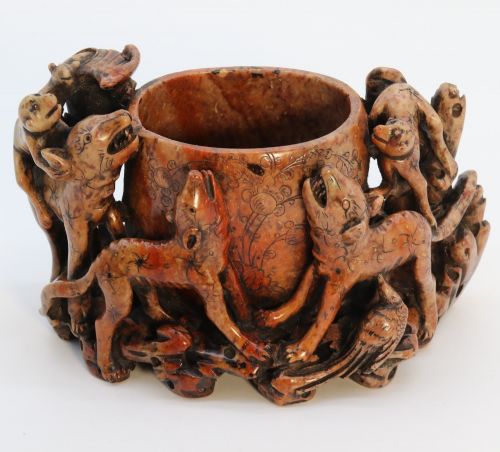
Forms span from simple geometric cylinders to vessels carved with figural scenes, official processions, and landscape motifs. They served a functional purpose in the studio while acting as objects of quiet contemplation.
How they were made
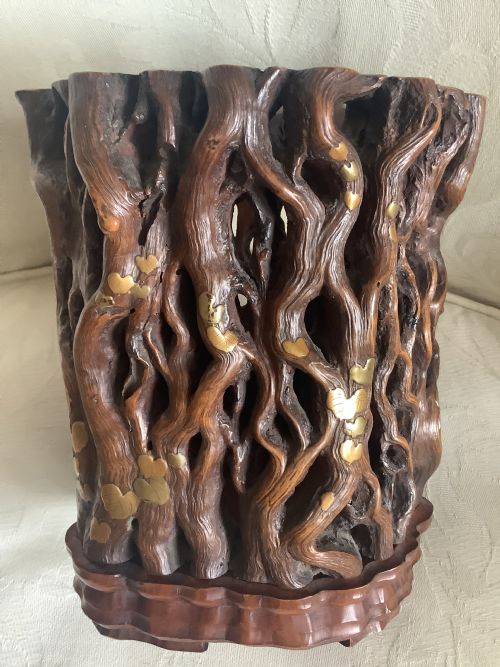
Makers utilised organic materials such as bamboo and dense hardwoods, carving deeply into the grain to exploit natural nodes and textures. Bamboo vessels often reveal layered relief work, while hardwood pieces display rich patination and polished surfaces.
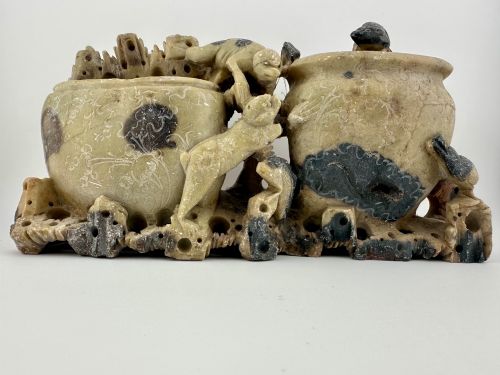
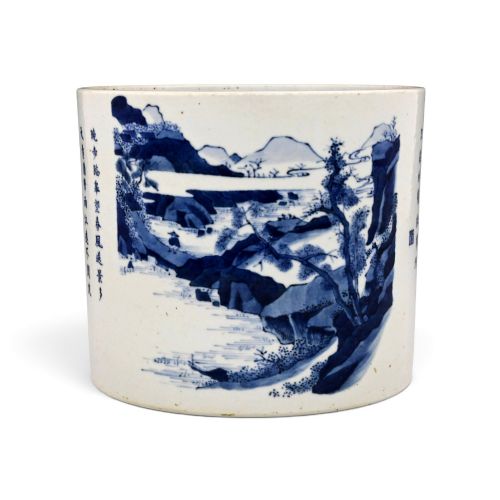
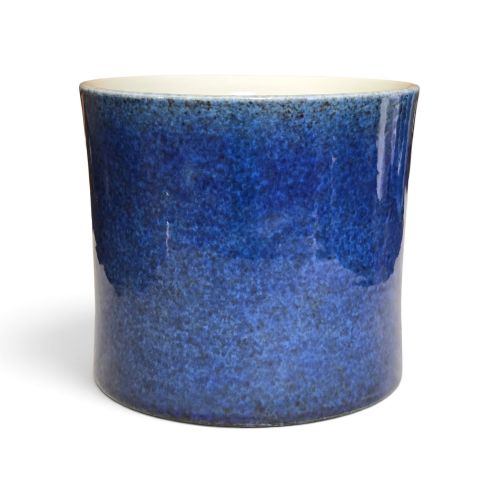
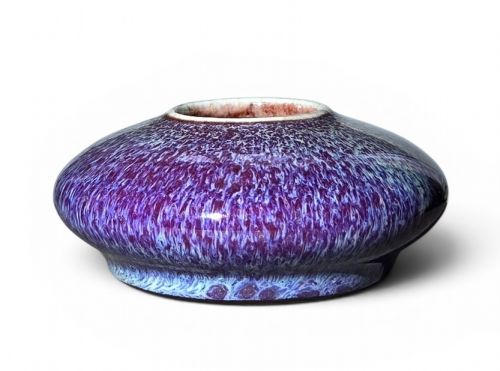
Ceramic examples demonstrate technical mastery over porcelain, employing cobalt underglaze, monochrome glazes like powder-blue and flambé, and enamelled palettes including famille rose and famille verte. Soapstone and bronze pieces show precision in casting and hand-carving.
Listings feature pieces spanning the seventeenth century through to the early twentieth century, encompassing bamboo, porcelain, hardwood, and soapstone.
What varies in quality
Quality rests upon the depth and clarity of the carving, where master carvers achieved spatial perspective within stubborn organic material or porcelain. Surface texture, retention of original patination, and the balance of proportion separate exceptional studio pieces from standard production.
Porcelain quality depends on the refinement of the clay body, the control of high-temperature kiln glazes, and the precision of hand-painted enamel detail. Imperial-quality pieces display superior pigment control and sophisticated glaze effects such as crackle patterns.
The Chinese Brush Pot Glossary
- Bitong
- The traditional Chinese term for a cylindrical brush pot used in a scholar's studio. These vessels typically lack handles and stand upright to receive writing brushes.
- Famille Rose
- A palette of opaque enamels introduced in the Qing dynasty featuring pink and rose colours derived from colloidal gold. This technique allowed for nuanced shading and detailed pictorial scenes.
- Kangxi Period
- The era of the Qing dynasty spanning from 1662 to 1722 noted for technological innovation in porcelain production. Pieces from this time often exhibit vibrant blue and white painting or brilliant monochrome glazes.
- Qing Dynasty
- The final imperial dynasty of China ruling from 1644 to 1912. This period produced the vast majority of carved bamboo, hardwood, and porcelain brush pots seen today.
- Brush Washer
- A shallow ceramic or stone vessel used for rinsing ink from brushes before resting them. These companion pieces share the studio aesthetic of the brush pot.
Chinese Brush Pot: Frequently Asked Questions
What is a bitong?
A bitong is the traditional Chinese term for a cylindrical brush pot used to hold writing brushes on a scholar's desk.
These vessels form part of the essential equipment associated with the Chinese literati and scholars' studio traditions.
How were Chinese brush pots used?
Scholars and officials used these pots to keep bamboo-handled calligraphy brushes upright, organised, and ready for writing or painting.
Beyond functional desk storage, the vessels signified cultural refinement and served as objects for quiet aesthetic contemplation.
What materials are brush pots made from?
Makers constructed brush pots from organic materials such as bamboo and dense hardwoods, as well as porcelain with various glazes.
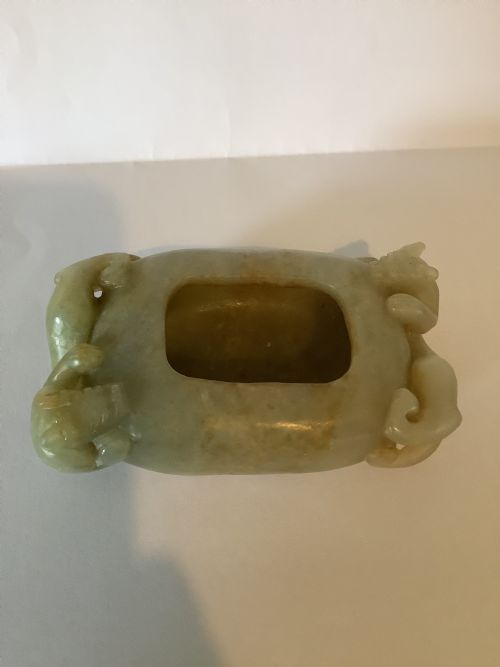
Additional materials found in the studio include carved soapstone, bronze, brass, and jade.
How do you tell periods apart?
Dating relies on stylistic markers, glaze chemistry, carving depth, and reign marks attributed to specific imperial periods like the Kangxi or Qianlong eras.
Early Qing pieces often exhibit robust carving and vibrant cobalt painting, whereas nineteenth-century examples display distinct enamel palettes and varied patination.