



Chinese Armorial Porcelain
Chinese armorial porcelain brings together European heraldry and Oriental craftsmanship, offering a glimpse into the grand dining rooms of the eighteenth and nineteenth centuries.
Chinese Armorial Porcelain
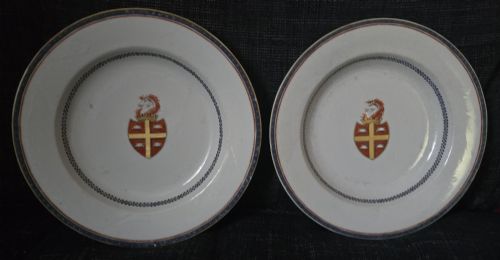
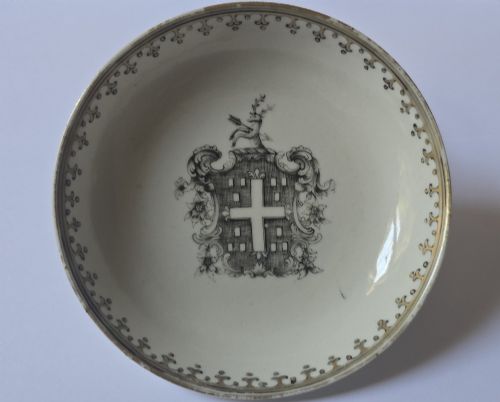
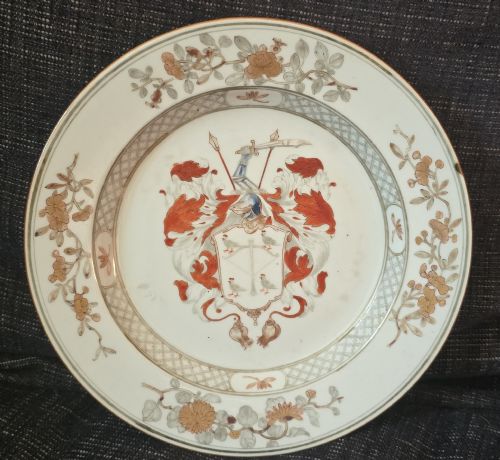
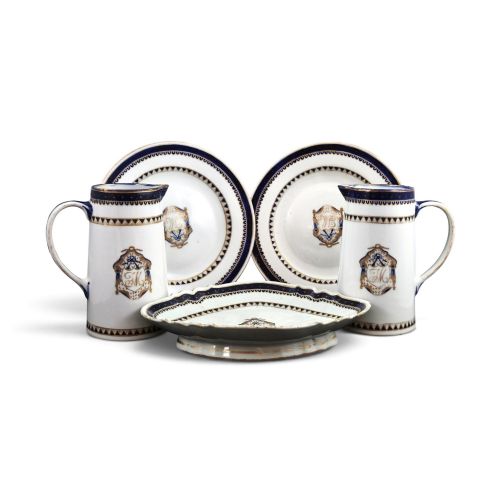
Chinese armorial porcelain pieces are private-order tablewares and decorative objects painted in China with specific European coats of arms, crests or monograms. Buyers exploring Chinese armorial porcelain typically encounter eighteenth-century export examples bearing hand-painted family insignia alongside later nineteenth-century European interpretations.
The objects take various domestic forms designed for elite households, ranging from soup plates and sauce boats to large rectangular dishes, mugs and chestnut baskets. Surviving examples reflect both the Qianlong period of the eighteenth century and subsequent Victorian revivals.
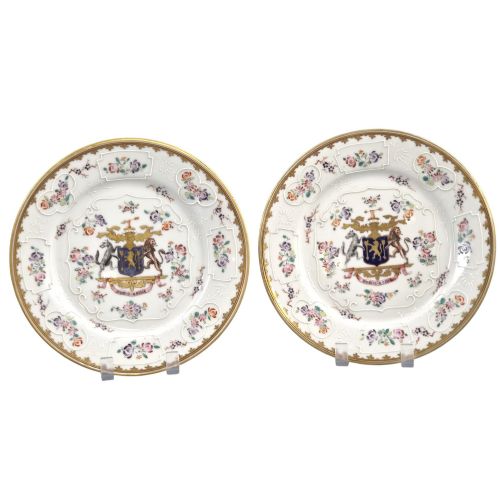
Many of the items on this page combine traditional Chinese porcelain bodies with intricate armorial shields, sometimes accompanied by additional famille rose or famille vert enamelling. This blend of Eastern manufacture and Western heraldic design creates a distinct category of antique ceramic.
Materials and production
The foundation of these objects is hard-paste porcelain, shaped by potters in China before being decorated with overglaze enamel and occasionally gold leaf or gilding. Artisans applied heraldic colours and intricate crests by hand, following drawings sent from Europe by the commissioning families.
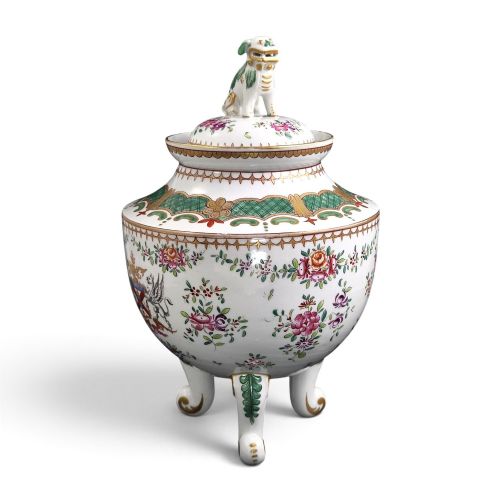
Later nineteenth-century revival pieces, particularly those from French workshops such as Samson of Paris, utilise similar hand-painted enamel and gilt techniques on porcelain bodies. These later items often incorporate additional brass mounts or elaborate French styling alongside the traditional armorial motifs.
Chinese Armorial Porcelain Retail Price Guide 2026
Typical asking prices for chinese armorial porcelain among the pieces listed under this phrase on Sellingantiques today, from the lower quarter to the upper quarter. They describe what is for sale here now, not the wider market.
Materials recorded across the selection include hard-paste porcelain, overglaze enamel, gold leaf, and brass.
Judging the work
Quality in these ceramics rests on the precision of the heraldic painting and the delicacy of the surrounding enamel work, such as famille rose detailing. Finer pieces display crisp lines in the coat of arms and careful adherence to correct heraldic tinctures.
The distinction between eighteenth-century export pieces and later nineteenth-century Paris reproductions also shapes the character of the object. Earlier pieces show the specific potting traits of the Qianlong era, whereas later interpretations reflect distinct European aesthetic choices in their gilding and form.
Samson Paris·Edmé Samson And Cie·Samson Of Paris
The Chinese Armorial Porcelain Glossary
- Armorial
- Bearing a coat of arms or heraldic device. In this context, it refers to porcelain decorated specifically with the insignia of a European family.
- Famille Rose
- A palette of opaque rose-pink and other soft enamel colours introduced to Chinese porcelain during the eighteenth century. It frequently frames the armorial shields on export plates and dishes.
- Hard-Paste Porcelain
- A dense, durable ceramic material fired at high temperatures, composed of kaolin and petuntse. It forms the structural base for traditional Chinese export pieces.
- Qianlong Period
- The era of the Chinese Qing Dynasty spanning from 1736 to 1795, associated with significant production of export porcelain for Western markets.
- Overglaze Enamel
- Coloured glass decoration applied on top of the already-fired and glazed porcelain surface before undergoing a secondary, lower-temperature firing.
Chinese Armorial Porcelain: Frequently Asked Questions
What is Chinese armorial porcelain?
Chinese armorial porcelain consists of ceramic vessels and tableware ordered by European families from Chinese kilns, featuring their specific coats of arms or crests.
These pieces were commissioned as part of large dinner services, allowing noble households to display their lineage and wealth during formal dining.
How can I date these pieces?
Dating relies on examining the porcelain body, the style of the armorial painting, and the surrounding enamel colours like famille rose or famille vert.
Eighteenth-century examples typically show period potting characteristics from the Qianlong era, whereas nineteenth-century pieces often reflect later European revival styles, such as those from French makers.
Were these items used for dining?
Yes, many of these objects served practical functions at elite tables, including soup plates, sauce boats, mugs, and chestnut baskets.
They formed part of extensive porcelain services designed for daily use or special banquets by affluent families across Europe.
Who made the nineteenth century pieces?
Nineteenth-century pieces often originated in European workshops rather than China, with French makers like Samson of Paris producing careful replicas and interpretations.
These revival pieces utilised hand-painted enamels and gilding to mimic earlier export styles for collectors of the Victorian period.