


Chiming Oak Longcase Clock
When you want a chiming oak longcase clock, you are choosing a floor standing timepiece that fills the room with melodies and strikes.
Chiming Oak Longcase Clock
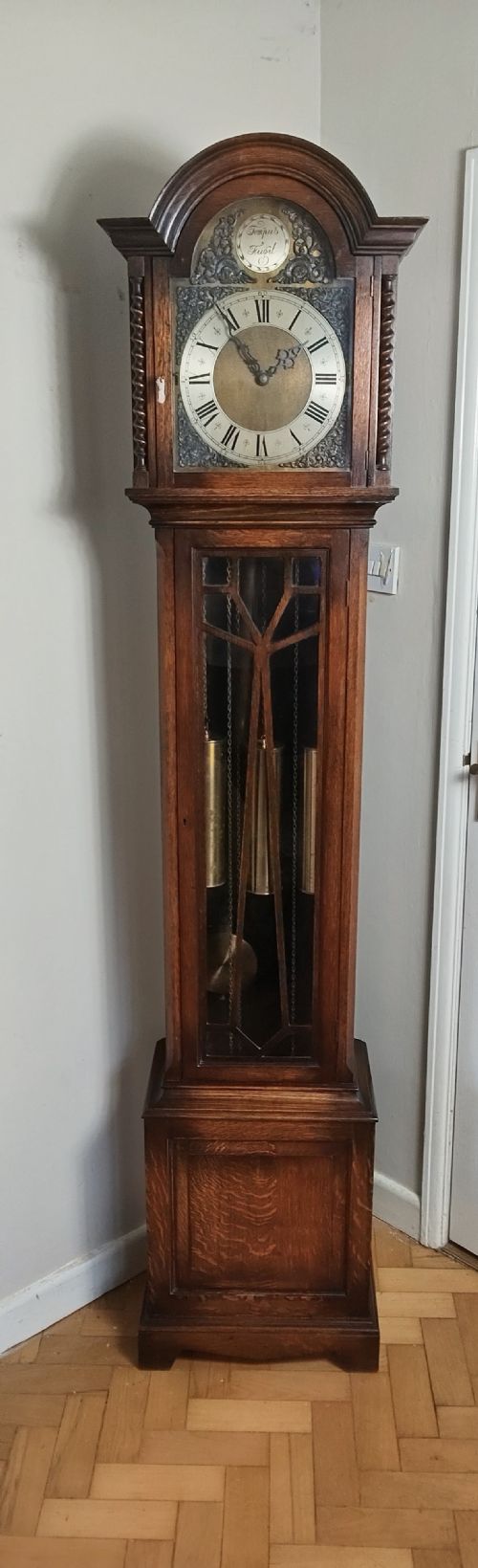
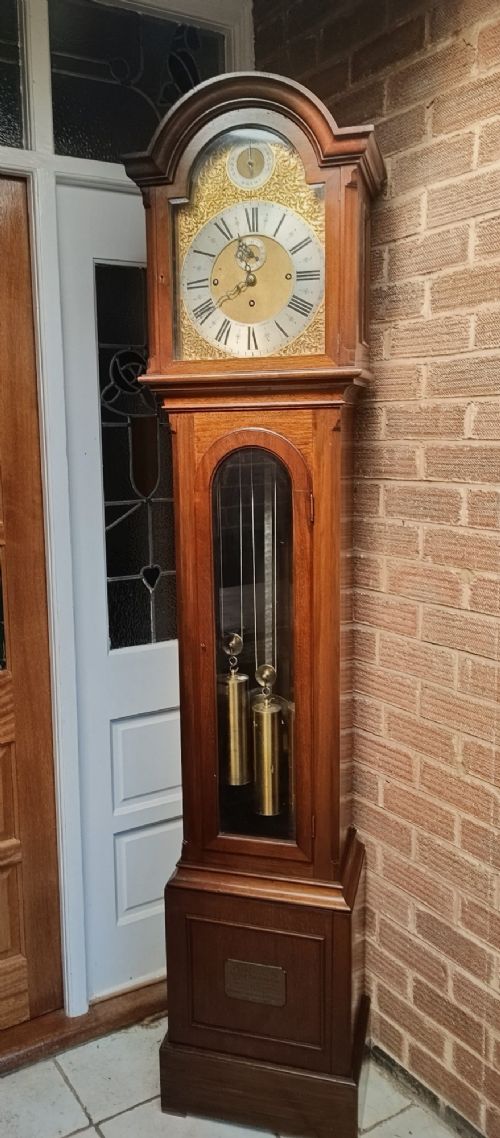
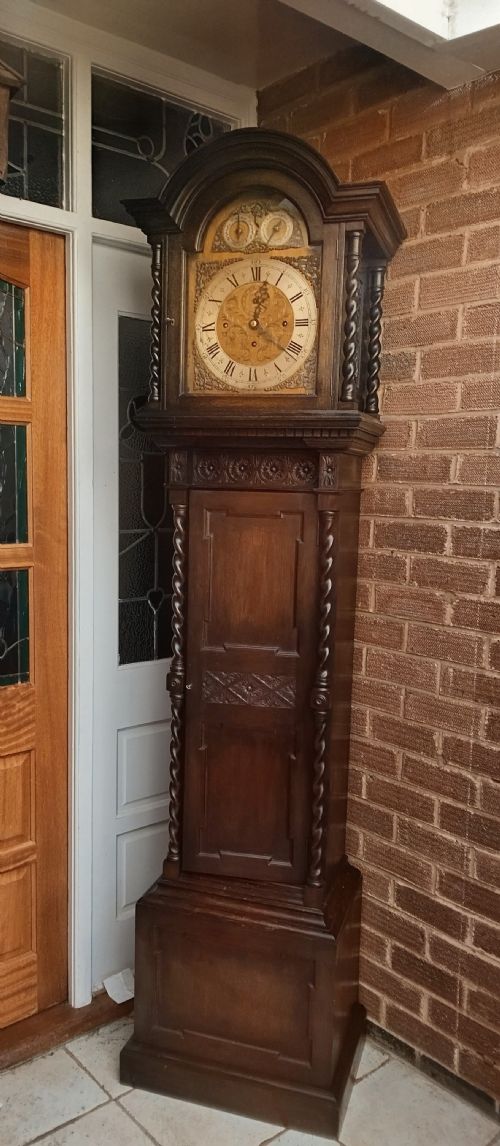
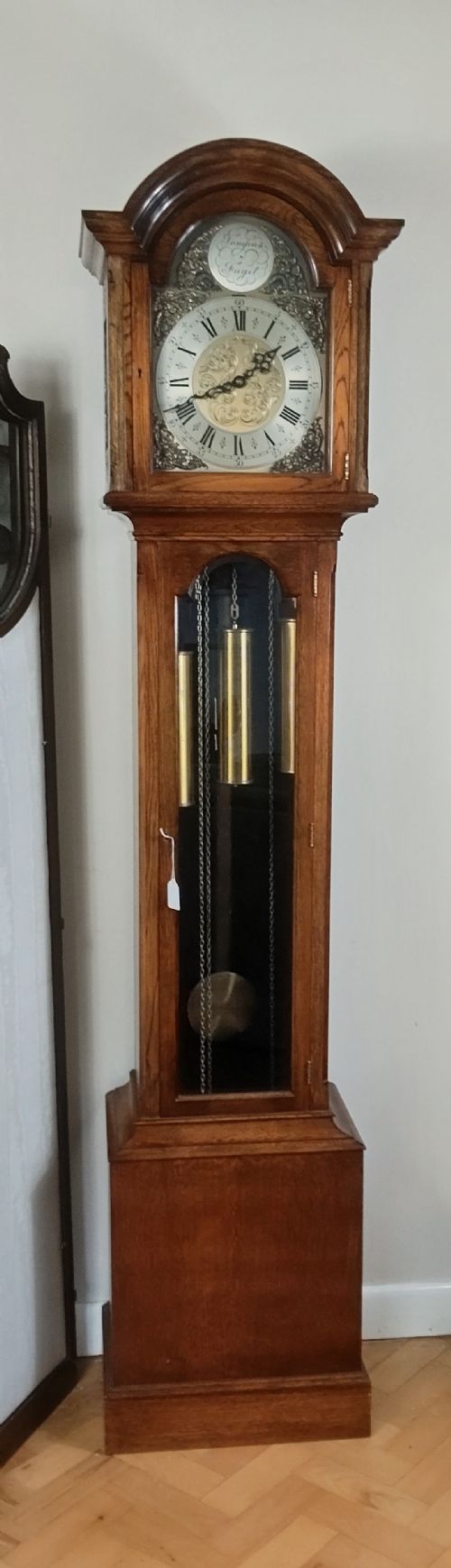
A chiming oak longcase clock combines tall wooden casework with weight-driven or spring-driven movements that sound the hours and quarters. You will frequently find pieces dating from the Edwardian era through the 1920s and 1930s, often described as grandfather or smaller grandmother clocks.
The casing is predominantly built from oak, occasionally accented with mahogany or carved details, and houses brass dials behind glass doors. These floor-standing pieces range from compact models under seventy inches to substantial triple-weight musical clocks.
Makers and retailers represented across the records include names such as Elliott, Enfield, W Prior, and Bravingtons, alongside German movements housed in English cases. They reflect Revival styles including Jacobean, Georgian, and subtle Art Deco influences.
How They Were Made
The structural framework relies on solid oak and wood veneers, frequently featuring glass panels in the trunk door and brass components within the dial and movement. Movements range from eight-day spring-driven mechanisms to heavier triple-weight systems that power quarter chimes and melody bars.
Cabinetmakers shaped the timber with turned columns, bracket feet, and carved enrichments typical of early twentieth-century revivals. Dial construction typically incorporates brass faces, silvered chapter rings, and specialised levers for silent modes or tune selections.
Listings feature oak longcase clocks spanning the Victorian era, Edwardian period, and the 1920s and 1930s, incorporating brass and glass elements.
What Varies in Quality
The acoustic richness of the chimes and the complexity of the musical movement distinguish standard pieces from superior examples. Triple-weight systems playing multiple tunes or carillons indicate higher mechanical ambition than simple hour-striking variants.
Cabinetwork execution and timber selection dictate visual presence, where rich honey tones, well-proportioned astragal glazing, and crisp carving elevate the piece. The inclusion of named makers, retailers, or specialised mechanisms adds notable merit.
Elliott·Enfield·W Prior Skipton·Waite and Son·Camerer Cuss·Bravingtons
The Chiming Oak Longcase Clock Glossary
- Grandmother clock
- A smaller version of the traditional longcase clock, typically standing under seventy inches tall. They were particularly popular during the early twentieth century.
- Triple weight
- A movement driven by three separate weights that power the timekeeping, the hour strike, and the musical chime train respectively. These setups allow for multiple tunes and quarter-hour melodies.
- Astragal glazing
- Glass panels divided by narrow wooden strips or bars within the trunk door. This technique allows a clear view of the swinging pendulum and weights inside.
- Silent lever
- A mechanical control that allows the owner to silence the chimes at night. It disengages the strike train without stopping the clock's timekeeping.
- Chapter ring
- The outer ring on the clock face that displays the numerals for the hours and minutes. They are frequently silvered brass on better movements.
Chiming Oak Longcase Clock: Frequently Asked Questions
How do I wind a chiming oak longcase clock?
You pull the chains or wind the arbors using a dedicated key, depending on whether the movement is weight-driven or spring-driven. Care must be taken not to over-wind the mechanism.
For triple weight models, each weight must be raised to its correct height to ensure the timekeeping and musical trains function properly throughout the week.
What is the difference between a grandfather and a grandmother clock?
The primary difference lies in the overall height and proportions of the oak floor-standing case. Grandmother clocks are more compact, often measuring under seventy inches tall.
Both types house similar eight-day movements and chiming capabilities, but the smaller scale suits lower ceilings and modern room dimensions.
Can I turn off the chimes at night?
Many Edwardian and 1920s models feature a silent lever or silent cord designed specifically to disable the melody and strike trains. This lets you sleep undisturbed while the clock continues to keep accurate time.
Older or simpler movements may lack this feature, requiring the chimes to run continuously unless the strike weight is left unattached.
How do I date an oak longcase clock?
Dating relies on stylistic clues within the oak casework, such as Jacobean twist columns, Art Deco geometric details, or Edwardian carving. Movement types and retailer signatures also provide clear chronological markers.
The majority of oak chiming examples found today date from the late Victorian period through the 1930s.