


Chesterfield Wingback Chair
These chesterfield wingback chair examples combine deep buttoning and sheltering sides to offer substantial comfort and enduring presence.
Chesterfield Wingback Chair
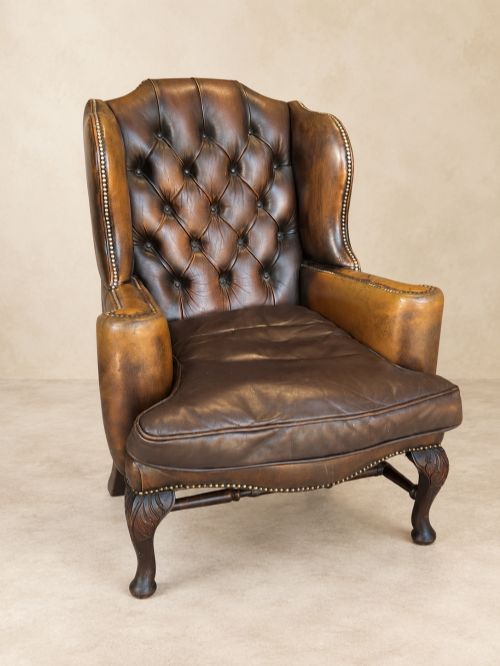
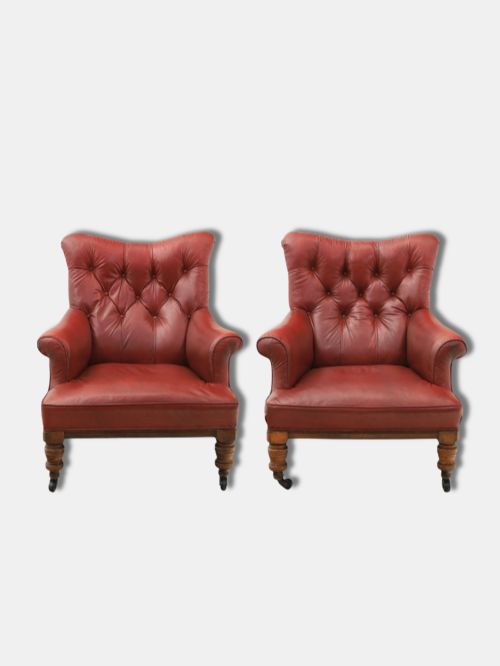
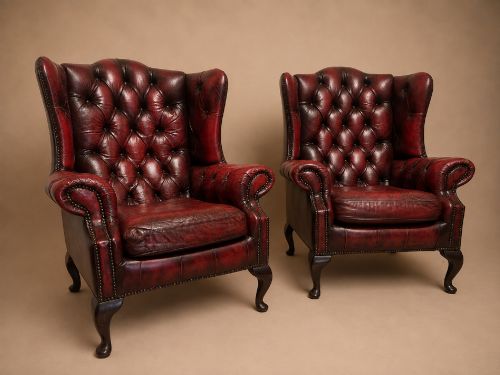
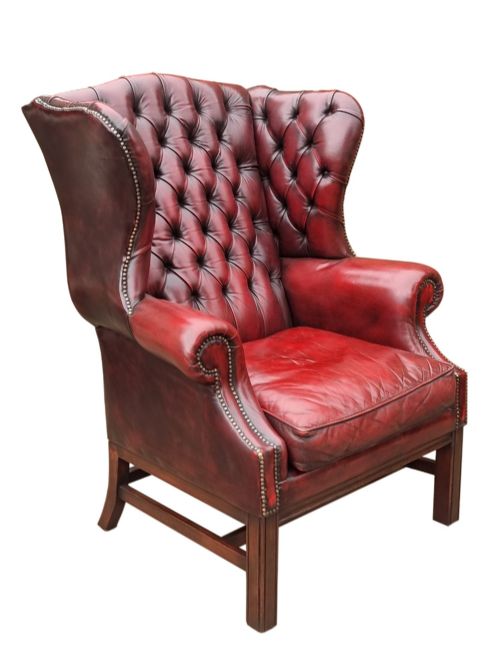
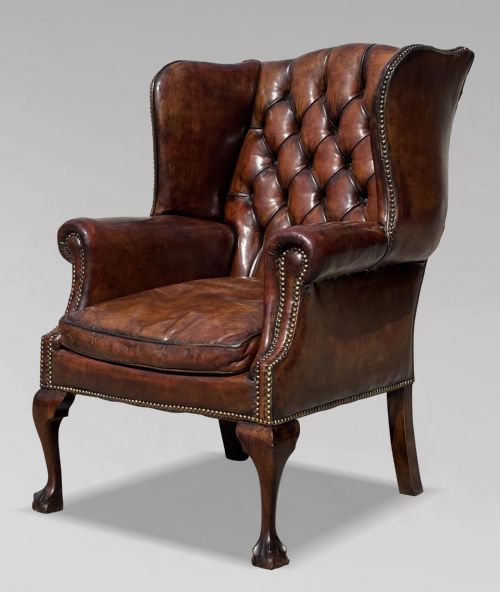
A chesterfield wingback chair brings together the high, protective sides of a traditional draught-excluding armchair and the deep-buttoned upholstery characteristic of a classic chesterfield. The pieces seen span from the eighteenth century through the Victorian, Edwardian, and nineteen-twenties periods, showcasing both original antiques and later revival interpretations.
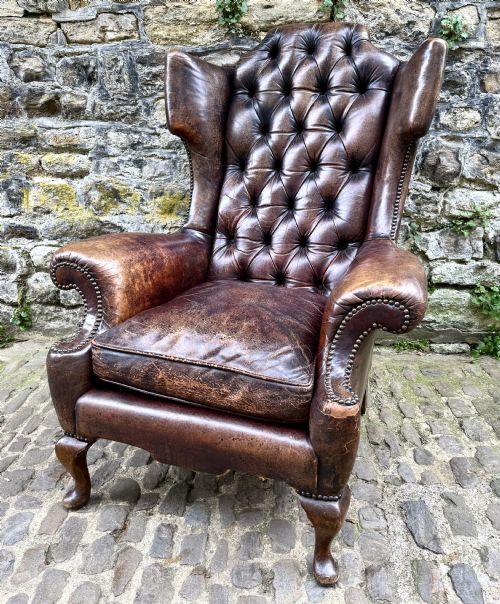
Most examples encountered here are upholstered in leather, ranging from tan and brown to red oxblood and faded green, though alternative materials like rexine also appear. Buyers will find single armchairs, matching pairs, and combinations complete with footstools, reflecting domestic seating traditions across generations.
Materials and Construction
The structural frames rely on solid timbers such as mahogany, oak, and general hardwood, providing the necessary rigidity for the high back and deep seat. These frames support traditional upholstery methods involving buttoning and hand-dyed leather finishes.
Detailing often incorporates brass hardware, such as decorative stud work securing the leather edges, alongside carved wooden elements like the lion carvings seen on certain Victorian iterations.
Chesterfield Wingback Chair Retail Price Guide 2026
Typical asking prices for chesterfield wingback chair among the pieces listed under this phrase on Sellingantiques today, from the lower quarter to the upper quarter. They describe what is for sale here now, not the wider market.
Certain Victorian armchairs feature carved lions guarding the arms, adding an unexpected touch of theatre to a quiet corner.
Judging Quality
Quality in these armchairs rests upon the integrity of the timber frame and the depth of character in the leather upholstery. Earlier pieces from the eighteenth century demonstrate refined cabinet-making in the mahogany frames, while later revival models rely on the quality of their hand-dyed finish and buttoning technique.
Proportion and stance dictate the visual success of the piece, with superior examples exhibiting balanced wing profiles and harmonious integration of the arms with the padded back.
The Chesterfield Wingback Chair Glossary
- Wingback
- An armchair featuring projecting side panels designed to shield the occupant from drafts and retain heat from a fireplace.
- Buttoning
- An upholstery technique where indentations are formed across the padded surface using tightly pulled twine secured with buttons.
- Rexine
- A brand of artificial leather cloth utilised as an alternative upholstery material on mid-period chairs.
- Porters armchair
- A high-backed, fully enclosed seating form originally designed to protect hall porters from cold draughts in large houses.
Chesterfield Wingback Chair: Frequently Asked Questions
What is a chesterfield wingback chair?
It is an upholstered armchair that combines the sheltering side wings of a fireside seat with the deep buttoning typical of a classic chesterfield.
These pieces use traditional forms intended to provide comfort and warmth in domestic interiors.
How do I date a leather wingback chair?
Dating relies on examining the timber frame construction, the type of leather finish, and stylistic cues from periods like the Georgian era or Victorian times.
Secondary woods and joinery methods provide the clearest physical evidence of age.
Are these chairs comfortable for daily use?
Most examples offer substantial padding and supportive high backs designed specifically for prolonged sitting.
Their ergonomic design was originally refined for reading or resting near a hearth.
What colours of leather are available?
The selection includes various shades of brown and tan, alongside distinctive tones such as red oxblood and faded green.
Many surfaces feature hand-dyed finishes that develop patina over time.