
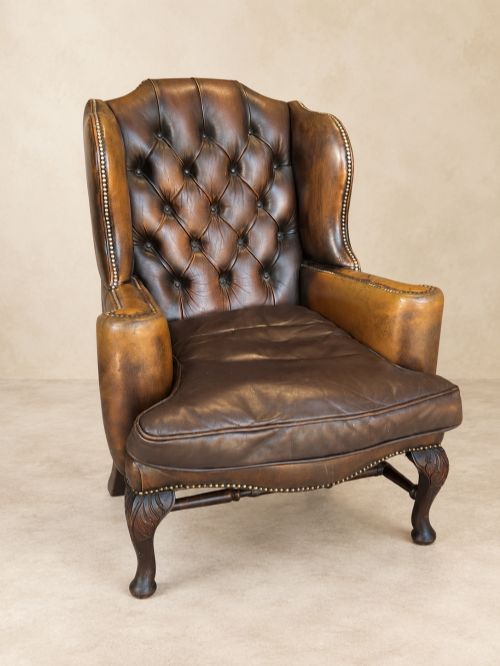
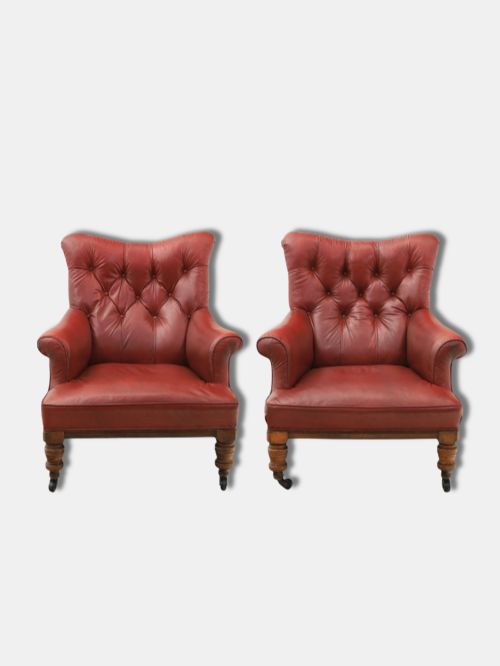
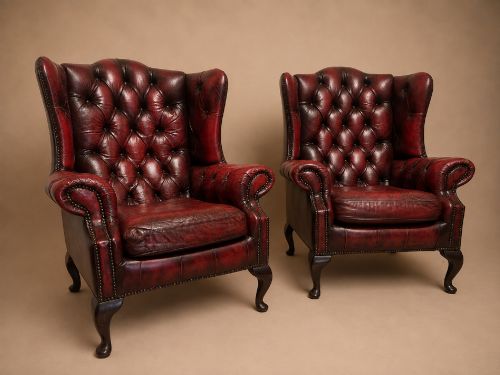
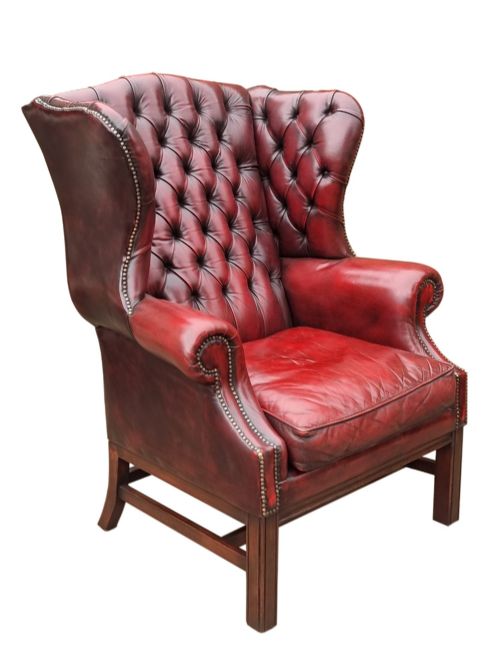
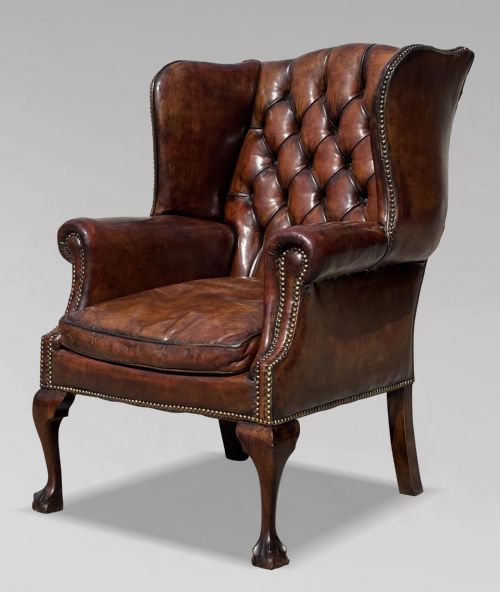
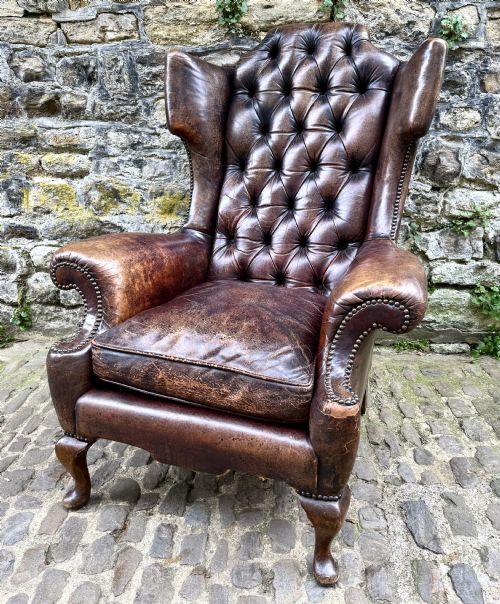


Chesterfield Wingback Armchair
A chesterfield wingback armchair brings deep buttoning and sheltering sides together, offering a stately seat built for comfort.
Chesterfield Wingback Armchair
A chesterfield wingback armchair combines the high sides and sheltering wings of a traditional fireside seat with the deep buttoned upholstery characteristic of a classic chesterfield. Buyers searching for a chesterfield wingback armchair encounter forms ranging from eighteenth century originals to twentieth century revivals.
The pieces on this page span the Georgian, Victorian, Edwardian, and later periods, including specific years such as nineteen twenty and nineteen thirty. Styles lean towards George III, Victorian, and traditional British designs.
Most examples appear in leather, with alternative finishes like rexine also represented alongside timber elements such as mahogany and oak.
Materials and construction
Makers constructed these armchairs using sturdy frames of hardwood, mahogany, oak, and general timber to support the heavy upholstery. Brass elements often appear as decorative detailing or castors.
Upholstery relies heavily on leather, hand dyed variants, and rexine, secured with traditional full buttoning techniques. Carved wooden details sometimes adorn the frame, as seen in lion carved examples.
Materials recorded across the inventory include leather, rexine, mahogany, oak, brass, and hardwood.
Distinctions in quality
Quality rests in the proportional balance of the wings, the depth and precision of the buttoning, and the integrity of the underlying wooden frame. Finer examples display careful hand dyeing and superior timber selection.
The distinction between an eighteenth century piece and a later revival lies in the hand shaping of the internal woodwork and the character accumulated in the leather over generations.
The Chesterfield Wingback Armchair Glossary
- Wingback
- An armchair featuring protective side panels designed to shield the sitter from draughts. These wings merge into the armrests.
- Buttoning
- A traditional upholstery method where depressions are pulled into the padding using twine and secured with buttons. This creates a diamond pattern across the leather.
- Rexine
- A type of artificial leather fabric utilised as an upholstery alternative on twentieth century pieces. It mimics the appearance and texture of genuine hide.
- Porters chair
- A heavily enclosed variant of the armchair originally designed to keep draughts away from attendants stationed in entrance halls. These pieces often feature high hooded backs.
- George III style
- A revival aesthetic reflecting the neoclassical furniture designs popular during the reign of King George III. Pieces in this style emphasise classical proportions and mahogany frames.
Chesterfield Wingback Armchair: Frequently Asked Questions
How do I date a leather armchair?
Dating relies on examining the timber frame construction, the type of leather, and stylistic markers associated with periods like the Georgian or Victorian eras.
Details such as hand carved woodwork and the specific style of buttoning help distinguish between eighteenth century originals and later revivals.
Were these chairs used only in libraries?
While frequently associated with studies and libraries, these armchairs served as general seating in reception rooms and grand halls.
Enclosed variants like porters chairs were specifically placed in draughty entrances to protect sitters.
What timber was used for the frames?
Frame construction typically utilised durable hardwoods such as mahogany and oak.
These sturdy timbers provided the necessary structural support for heavy leather upholstery and deep buttoning.
How do I care for antique leather?
Maintaining antique leather requires gentle cleaning and conditioning to keep the hide supple and prevent cracking over time.
Avoiding direct sunlight and excessive heat preserves the natural finish of hand dyed leather surfaces.