
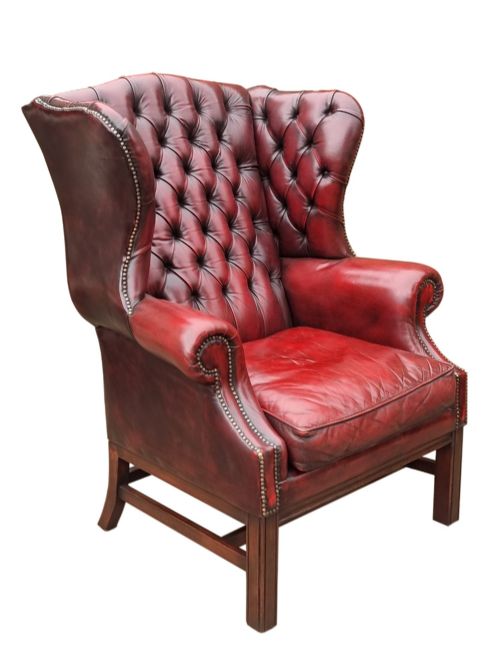
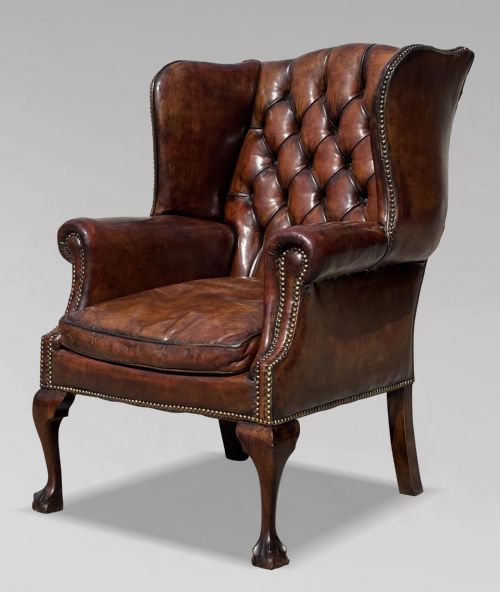


Buttoned Back Wingback Chair
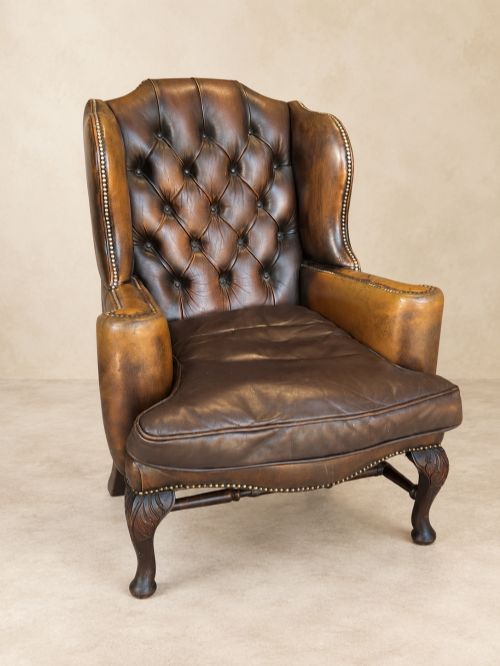
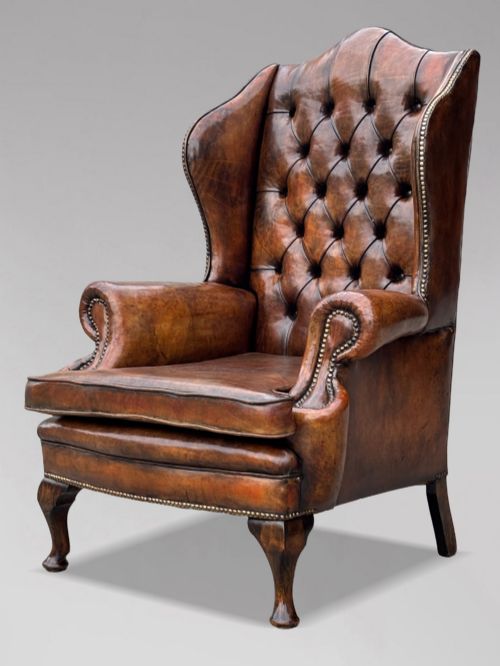
A buttoned back wingback chair offers deep-seated comfort and draught-excluding side panels, making it the quintessential fireside seat.
Buttoned Back Wingback Chair
When you search for a buttoned back wingback chair, you encounter seating designed to keep body heat close and shield the occupant from cold draughts. These pieces range from authentic 18th-century and Victorian examples through to later 20th-century revivals.
The form typically combines high padded backs, protective side wings, and scrolling arms. Leather upholstery featuring deep tufting occurs frequently across the selection.
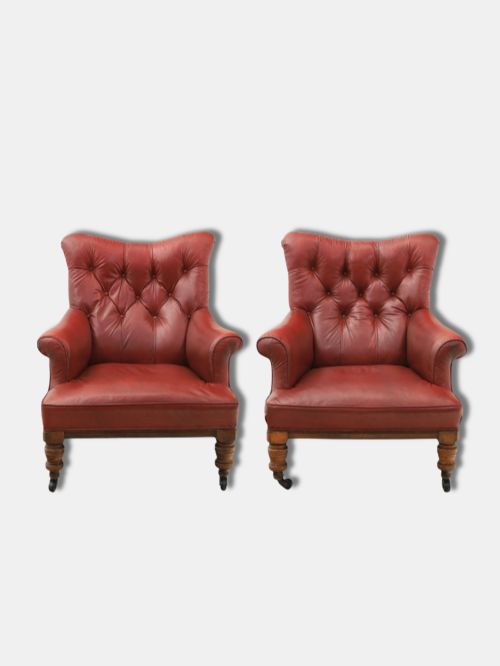
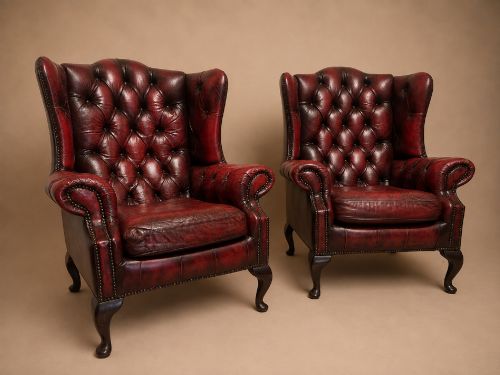
Examples on this page span the Georgian, Victorian, and Edwardian eras, alongside 1920s and 1930s interpretations. You will find single armchairs as well as matched pairs.
Materials and construction
Frames rely on sturdy timbers such as mahogany and assorted hardwoods to support the substantial weight of the upholstery. Exposed wooden legs often show traditional carving or simple straight profiles.
Upholstery relies on leather - frequently hand-dyed or finished in tones like tan, brown, and oxblood - secured with deep buttoning. Brass studwork frequently traces the margins of the arms and wings.
Early draftsmen added wings to chairs specifically to catch the heat of the coal fire while keeping the occupant's ears safe from sudden indoor gales.
Distinguishing quality
Superior examples demonstrate proportion and balance in the sweep of the wings and the rake of the back. The quality of the timber frame determines the structural longevity of the chair.
The grade and treatment of the leather define the tactile appeal, with hand-dyed hides developing character over decades. Buttoning depth and tension reveal the precision of the upholsterer's work.
Sopwith
The Buttoned Back Wingback Chair Glossary
- Wingback
- An armchair featuring projecting side panels designed to trap heat and deflect draughts. These wings frame the occupant's head.
- Buttoning
- A tufting technique where buttons are pulled deep into the upholstery to secure the stuffing and create a diamond pattern. This method adds firmness and texture.
- Rexine
- A brand of artificial leather fabric used as an upholstery covering on mid-century seating. It provides a durable, wipe-clean surface.
- Chesterfield
- A traditional style of heavily upholstered seating featuring arms and back of the same height. These pieces often incorporate deep buttoning and brass studs.
Buttoned Back Wingback Chair: Frequently Asked Questions
What is a wingback chair?
A wingback chair is a traditional upholstered armchair featuring high sides and protruding wings attached to the back. These extensions were originally designed to protect the sitter from fireplace draughts.
Over centuries, the form evolved into a symbol of formal seating. Today, these chairs remain prized for their distinctive silhouette and enclosed comfort.
How do I date a wing chair?
Dating relies on examining the woodwork, leg style, and construction methods underneath. Georgian examples often feature mahogany frames with distinct stretcher arrangements and hand-carved details.
Later Victorian and Edwardian iterations show shifts in padding thickness and hide preparation. Comparing the frame's joinery to known period styles clarifies the era of origin.
Where should I place this chair?
These armchairs suit studies, libraries, and living rooms where their substantial proportions act as focal points. Pairing them with a low reading lamp enhances their functional purpose.
Because of their high backs, they look best against a solid wall or positioned near a fireplace. Adequate clearance around the piece allows the wings and arms to be fully appreciated.
What is the difference between revival and period?
Period pieces were constructed during the actual historical reign or era they represent, such as the reign of George III. They carry the patina and structural traits of active historic use.
Revival pieces, such as those made in the Georgian style during the 1930s, borrow those earlier aesthetics while utilising contemporary workshop methods. Both types offer distinct historical appeal.