




Chesterfield Ottoman
These chesterfield ottoman pieces offer traditional English seating and footrests, combining buttoned hide with timber frames for any room.
Chesterfield Ottoman
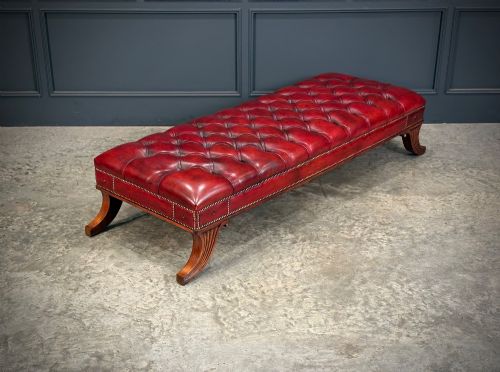
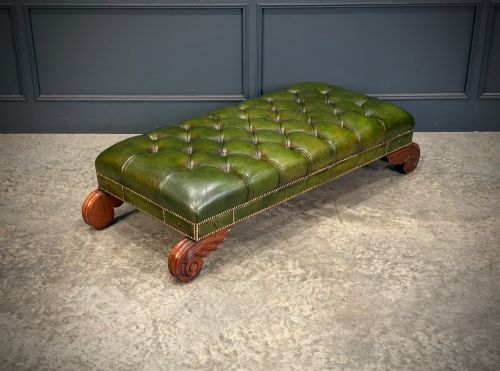
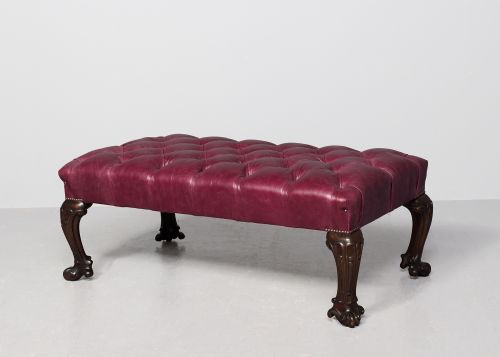
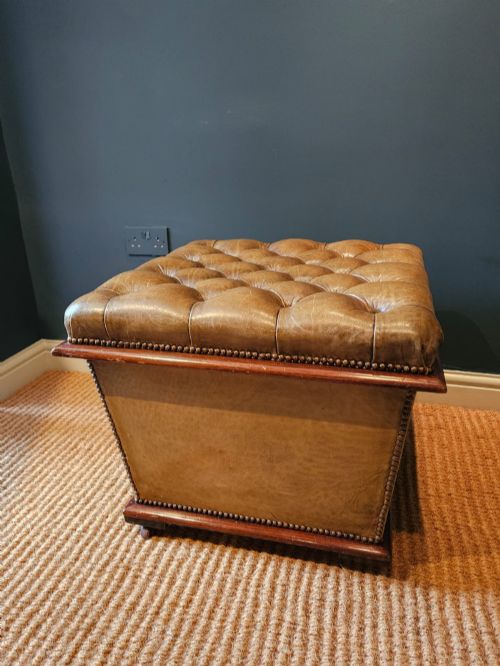
A chesterfield ottoman brings together deep buttoning and sturdy timber framing, appearing frequently as footstools and library window stools in various sizes.
The pieces on this page span several eras including Regency, Victorian, and the early twentieth century, reflecting traditional English country house tastes.
Forms range from compact footstools to large centre stools upholstered in leather and hide, offering practical seating and resting surfaces.
Materials and construction
Upholstery typically employs hand-dyed or coloured leather and hide, secured with traditional buttoning techniques.
Chesterfield Ottoman Retail Price Guide 2026
Typical asking prices for chesterfield ottoman among the pieces listed under this phrase on Sellingantiques today, from the lower quarter to the upper quarter. They describe what is for sale here now, not the wider market.
Listings feature timbers including mahogany, walnut, oak, and various hardwoods, combined with leather upholstery across multiple periods.
Judging quality and craft
Quality rests on the depth and precision of the buttoning work alongside the richness of the leather or hide upholstery.
The character of the timber frame, whether mahogany, walnut, or oak, dictates the overall refinement of the piece.
The Chesterfield Ottoman Glossary
- Ottoman
- A padded seat or footstool without a back or arms, often upholstered in leather.
- Buttoned
- Upholstery secured with deep indentations held by buttons, creating a distinctive diamond pattern across the leather.
- Hide
- The natural skin of large animals, used extensively for durable upholstery on traditional seating.
- Centre stool
- A large freestanding stool designed to sit in the middle of a room rather than against a wall.
Chesterfield Ottoman: Frequently Asked Questions
What is a chesterfield ottoman?
A chesterfield ottoman is a traditionally styled upholstered footstool or low seat featuring deep buttoning and leather covering.
These pieces originate from various periods including the Regency and Victorian eras, designed for libraries, drawing rooms, and country houses.
How do I date a leather ottoman?
Dating involves examining the timber species used in the frame, such as mahogany, walnut, or oak, alongside the style of the legs.
Construction methods and the specific treatment of the leather also provide clues to whether a piece belongs to the Regency, Victorian, or later periods.
Where should I place an ottoman stool?
These stools work well in living rooms as central footrests, or placed beside windows in libraries and studies for extra seating.
Large centre stools suit spacious rooms, while more compact footstools fit easily in smaller seating areas.
Are these ottomans comfortable for seating?
The firm padding and supportive timber frames make them suitable for sitting as well as resting feet.
Their sturdy construction ensures they function reliably as occasional seats in busy rooms.