

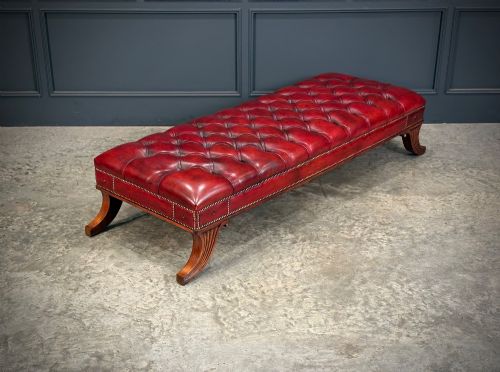
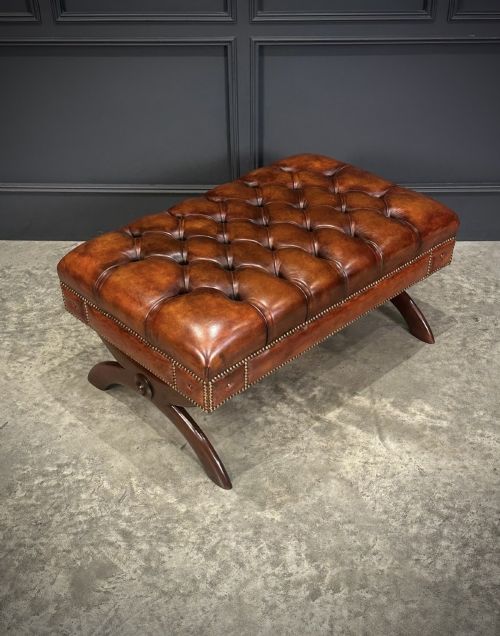
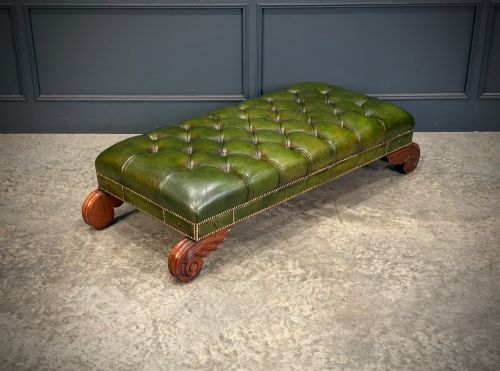
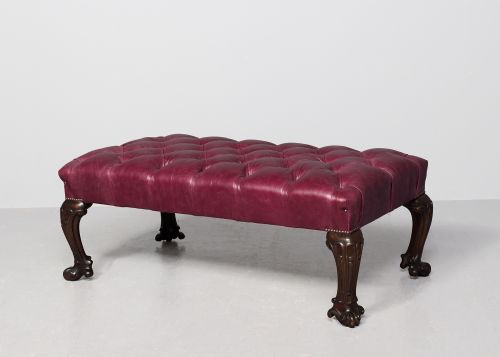


Chesterfield Bench
These chesterfield bench pieces bring deep buttoned leather and classic frames to a room, offering both seating and heritage character.
Chesterfield Bench
When you search for a chesterfield bench, you are looking at substantial seating and footstools defined by buttoned upholstery and traditional forms. The listings here range from compact footstools and ottomans to large club fenders and pub benches.
You are most likely to meet Victorian and Regency examples finished in buttoned leather. Mahogany frames and low profiles recur across the periods recorded on this page.
The objects span footstools, ottomans, club fenders, and settees originating from the eighteen hundreds through to the early twentieth century. Each version shares the heavy upholstery and sturdy construction typical of the style.
How they were made
Makers built these pieces using solid wood frameworks, predominantly mahogany and other hardwoods, to support heavy daily use. Upholsterers then applied deep buttoning to hides and velvets, securing the material with brass details.
Cast metal elements appear on specific forms like club fenders, where brass or chrome structures combine with leather seats. Hand dyeing techniques gave the leather surfaces their distinct colour depth across Victorian and Regency pieces.
Chesterfield Bench Retail Price Guide 2026
Typical asking prices for chesterfield bench among the pieces listed under this phrase on Sellingantiques today, from the lower quarter to the upper quarter. They describe what is for sale here now, not the wider market.
The listings on this page span the Regency period through to the nineteen twenties, featuring leather, mahogany, chrome, and velvet.
What varies in quality
The standard of a chesterfield bench rests on the depth of the buttoning work and the integrity of the timber frame beneath. Finer examples display precise pleating in the hide and substantial hardwood structures that remain rigid over time.
Material choice also separates grades, with hand-dyed hides and solid mahogany framing sitting at the upper end of the craft. Lesser pieces show simpler construction methods and more uniform, less tactile surface finishes.
The Chesterfield Bench Glossary
- Buttoned
- Upholstery technique where buttons are pulled deep into the padding to create a diamond pattern. This secures the filling and forms the characteristic surface texture of the style.
- Club fender
- A low-seated hearth structure featuring upholstered bench tops on a metal frame. Originally designed for warmth around a fireplace.
- Hide
- Heavy, durable animal leather used for traditional upholstery. It develops a rich patina with handling and age.
- Ottoman
- A low upholstered seat or footstool without a back or arms. Often built with internal storage space or on a large scale.
Chesterfield Bench: Frequently Asked Questions
What is a chesterfield bench?
A chesterfield bench is a heavily upholstered seat or footstool defined by deep buttoning and traditional hide or velvet coverings. The category includes footstools, ottomans, club fenders, and hall benches.
These pieces draw on Victorian and Regency designs, combining sturdy timber or metal frames with dense padding built for public or domestic use.
How were club fenders used?
Club fenders were placed around large fireplaces in stately homes and clubs to provide low seating close to the hearth. The padded tops allowed people to sit comfortably while warming themselves.
Today, they function as distinct architectural seating pieces in reception rooms and libraries, often retaining their original brass or chrome frames.
How do I date a leather footstool?
Dating relies on examining the timber frame, the tanning methods of the leather, and the style of the buttoning work. Regency and Victorian pieces show specific woodwork joints and frame proportions characteristic of their era.
Hand-dyed hides and traditional stuffing materials further help distinguish nineteenth-century examples from later twentieth-century reproductions.
Are these benches comfortable?
Yes, they were built with dense padding and resilient springs or webbing to support prolonged sitting. The deep buttoning keeps the internal filling firmly distributed across the seat.
Footstools and ottomans offer a firm surface suited for resting feet or as secondary seating in a living space.