
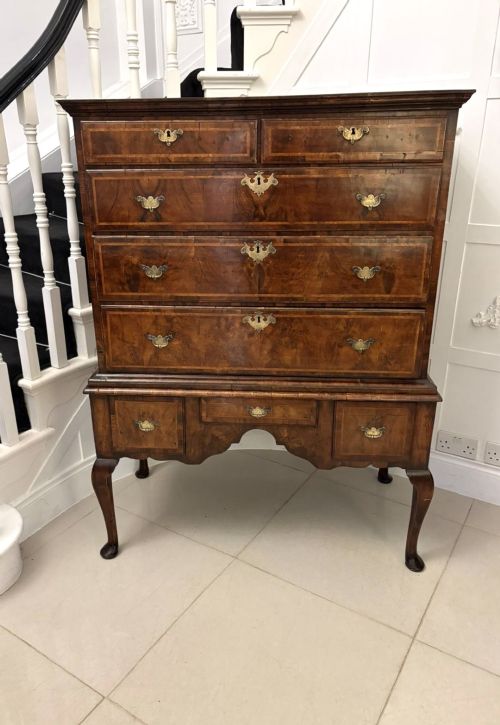
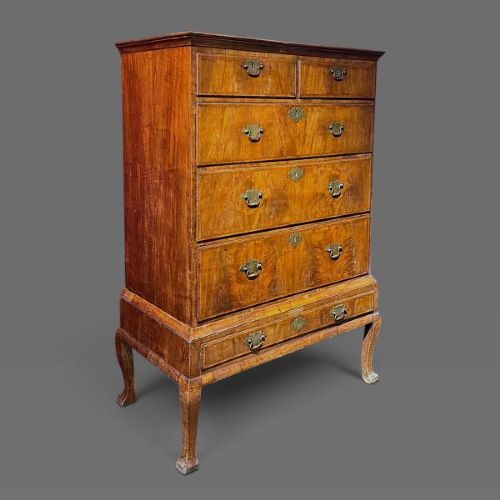
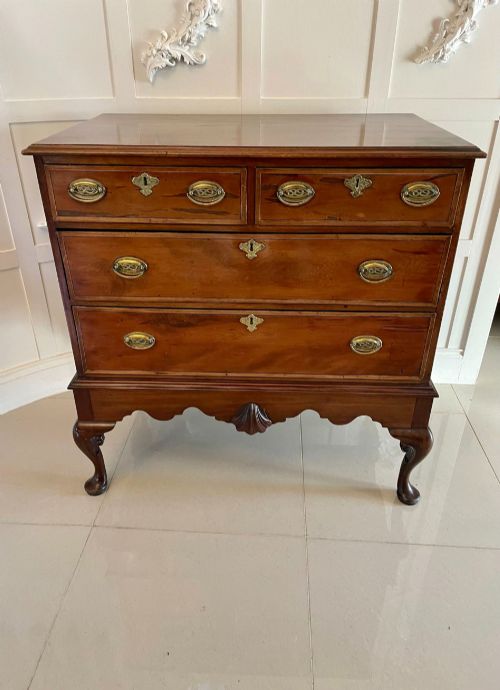

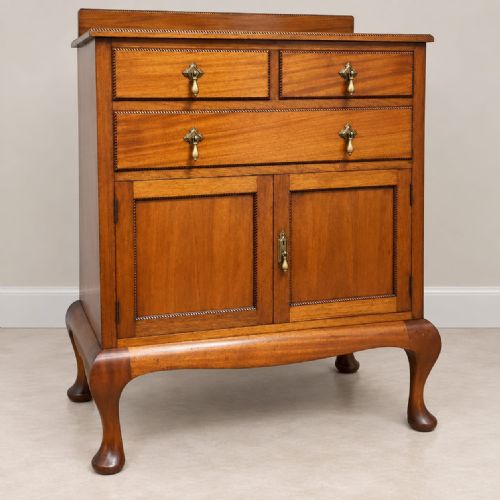
Chest of Drawers on Stand
A chest of drawers on stand combines upper drawer storage with a raised base, offering architectural presence and proportion.
Chest of Drawers on Stand
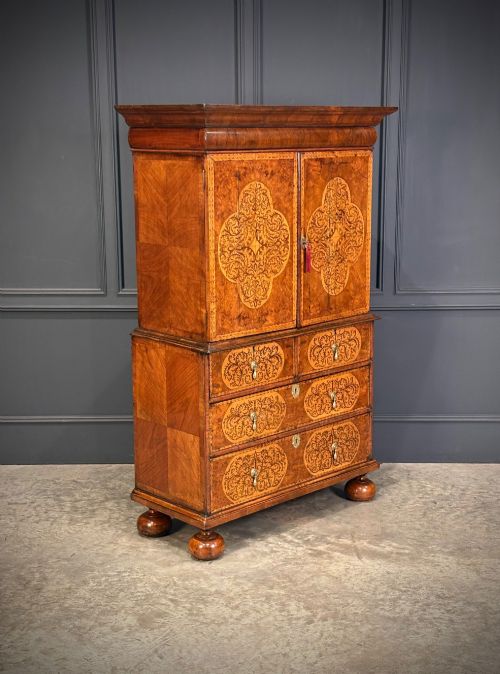
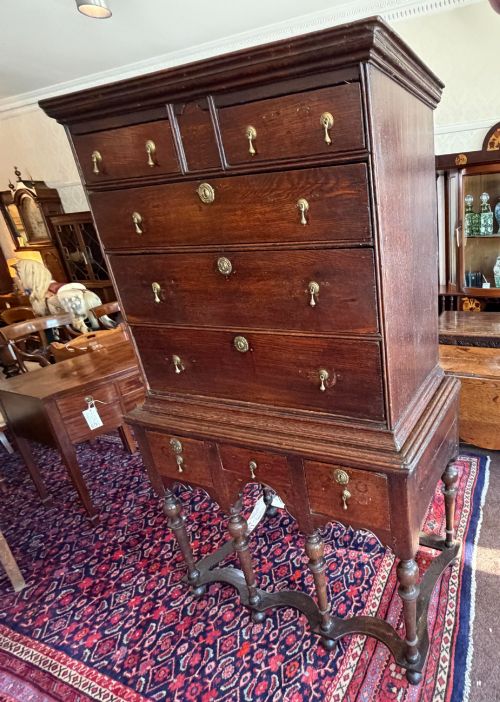
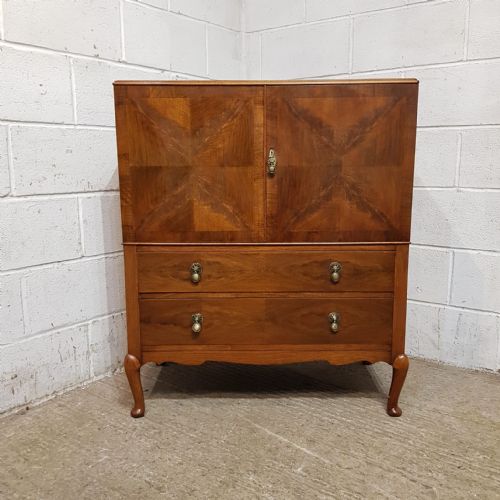
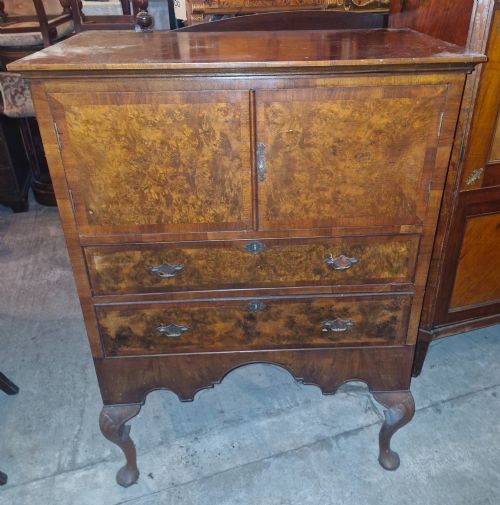
A chest of drawers on stand brings together a compartmentalised upper storage section raised upon legs or an integrated frame, creating a lighter visual footprint than a standard floor-standing carcase. These pieces date across several centuries, with early examples emerging from the seventeenth and eighteenth centuries alongside later revival interpretations.
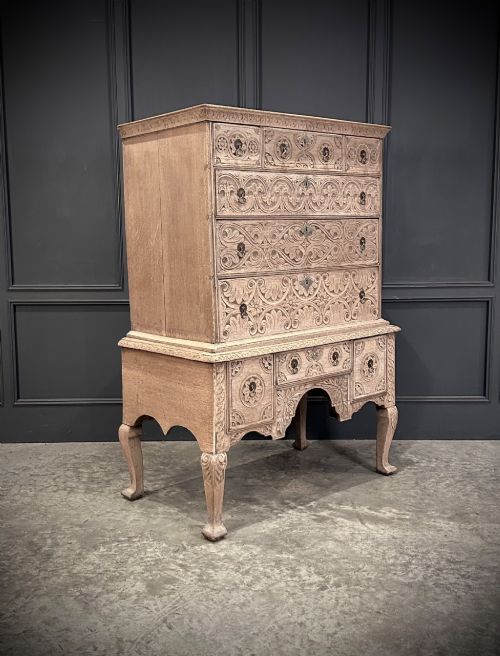
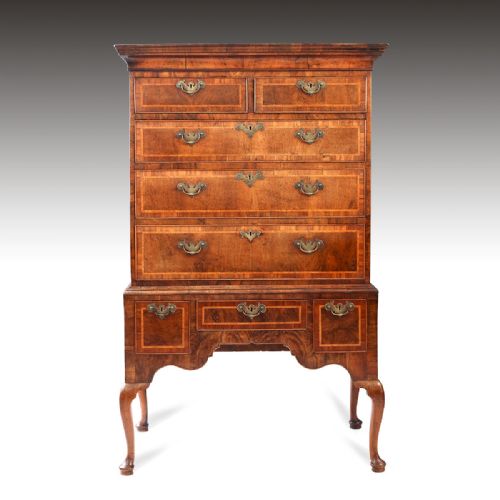
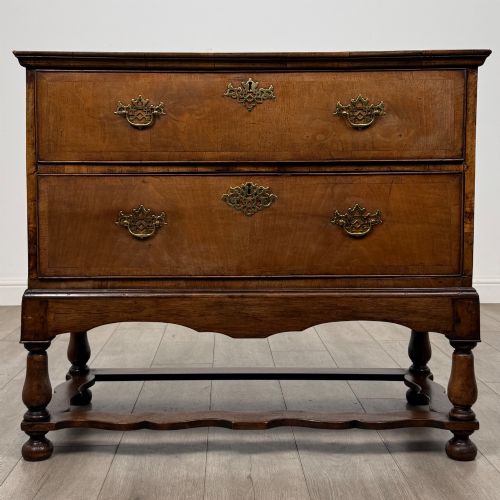
The format typically pairs a compact set of drawers with a supporting stand featuring turned, cabriole, or straight legs. On this page, walnut and oak versions from the Queen Anne and Georgian periods appear frequently alongside later mahogany and burr walnut adaptations.
What Varies in Quality
Construction fidelity dictates structural integrity, separating pieces with tight dovetail joints and matching timber grains from those with mismatched replacements. The preservation of original surface finishes, hardware, and underlying timber character significantly influences the integrity of the piece.
Proportion and scale distinguish finer examples, where the relationship between the upper chest and the supporting stand maintains harmonious visual balance. The presence of period-correct mounts and unaltered drawer linings further defines the standard of the work.
Some seventeenth-century examples combine tortoiseshell, bone, and ebony, proving that elaborate desk organisation is older than modern stationery.
Heals
The Chest of Drawers on Stand Glossary
- Chest on stand
- A form comprising a drawer section mounted upon a separate or integrated table base. This configuration elevates the storage space off the floor.
- Crossbanding
- A narrow strip of veneer applied to the borders of drawer fronts or tabletops running perpendicular to the main grain. This technique frames the primary wood surface.
- Oyster veneer
- Circular slices cut transversely from small branches or roots, arranged to form patterned surfaces resembling oyster shells. This method creates distinctive repeating motifs on seventeenth and eighteenth-century furniture.
- Cabriole leg
- A furniture leg that curves outward at the knee and tapers inward toward the foot, often ending in a pad or hoof. The design draws inspiration from animal limbs.
- Tallboy
- A tall chest of drawers consisting of one chest stacked upon another, or upon a stand, providing extensive vertical storage. These pieces maximise capacity while occupying a compact floor area.
Chest of Drawers on Stand: Frequently Asked Questions
What is a chest of drawers on stand?
A chest of drawers on stand is a dual-component furniture form featuring an upper cabinet of drawers elevated on a raised base or frame. This design lifts the main storage volume off the floor, offering a lighter silhouette than standard floor-standing chests.
Historically developed to maximise storage while maintaining domestic elegance, these pieces range from early oak and walnut iterations to later mahogany and revival models. The raised base often incorporates turned legs, cabriole supports, or integrated stretchers.
How were they used historically?
These pieces served primarily as secure storage for personal valuables, linens, and documents within domestic bedchambers and private living spaces. The elevated design kept contents away from cold, damp floors while providing a convenient working height for the upper drawers.
Over successive periods, the form adapted to changing interior fashions, functioning as bedside storage, collector cabinets, or decorative statement pieces in refined rooms. The lower stand sometimes included supplementary drawers or open display surfaces.
How do I live with one today?
Living with a chest of drawers on stand involves placing it in spaces where its proportions can be appreciated without crowding the room. They function effectively as bedroom storage, hallway focal points, or living room statement pieces for holding smaller items.
Maintenance requires stable indoor humidity and temperature to protect historic timber and veneers from splitting. Regular dusting with a soft, dry cloth preserves the waxed or polished surface finishes without chemical buildup.
How can I tell periods apart?
Distinguishing periods relies on observing wood selection, leg styling, and construction techniques characteristic of specific eras. Seventeenth and early eighteenth-century examples frequently feature oak or walnut with geometric mouldings, oyster veneers, and bun feet.
Mid-eighteenth-century pieces introduce mahogany, refined brass drop handles, and cabriole or straight bracket feet. Later nineteenth and twentieth-century interpretations often exhibit revival styling, machine-cut dovetails, or alternative secondary woods.