


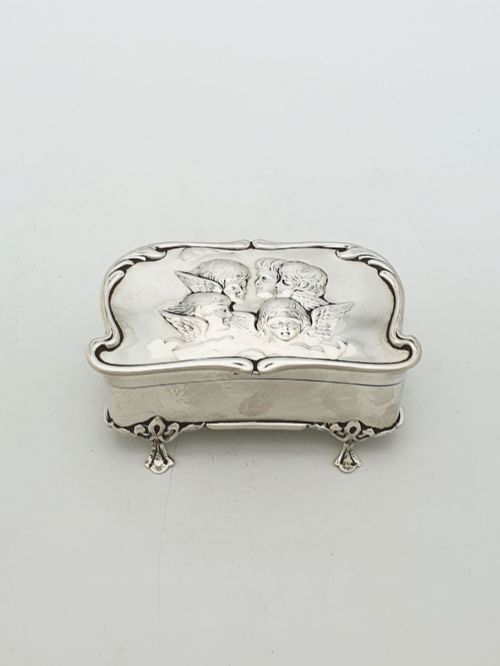


Cherub Trinket Box
Cherub trinket box selections bring together intricate metalwork and porcelain, offering a small, decorative receptacle for keepsakes that collectors prize.
Cherub Trinket Box
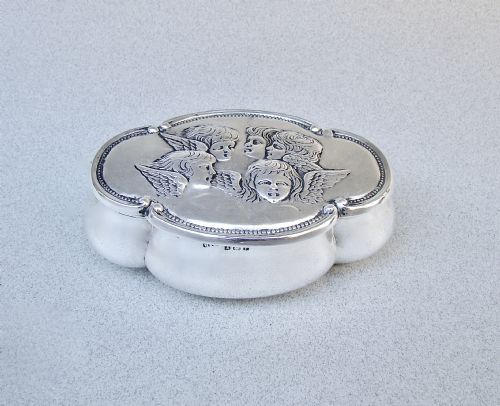
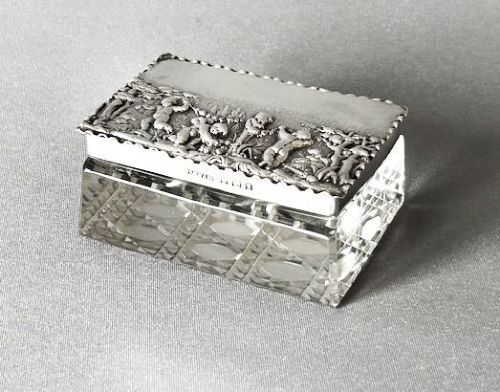
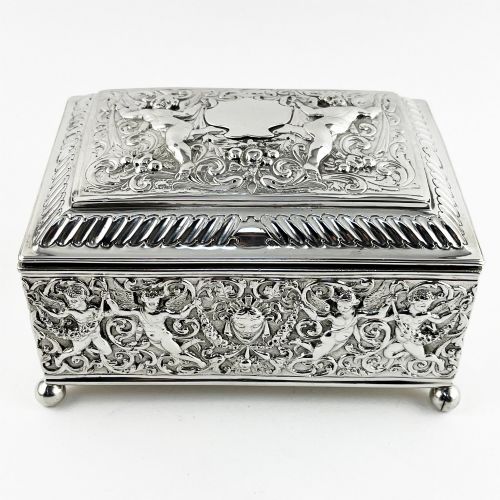
A cherub trinket box is a small receptacle designed for holding jewellery, pins, or small keepsakes, frequently ornamented with figural cherub motifs. Buyers searching for a cherub trinket box will encounter various forms, including jewellery boxes, ring boxes, caskets, and small snuff boxes.
The examples gathered here span from the Georgian period through the Victorian and Edwardian eras, reaching up to around nineteen hundred. Most pieces on this page are fashioned from sterling silver or solid silver, often featuring detailed relief work or figural scenes.
Origin points range from English workshops in Birmingham and Chester to continental European centres, including French and German makers. Alongside silver, the selection includes porcelain, gilt metal, walnut, and brass constructions.
How they were made
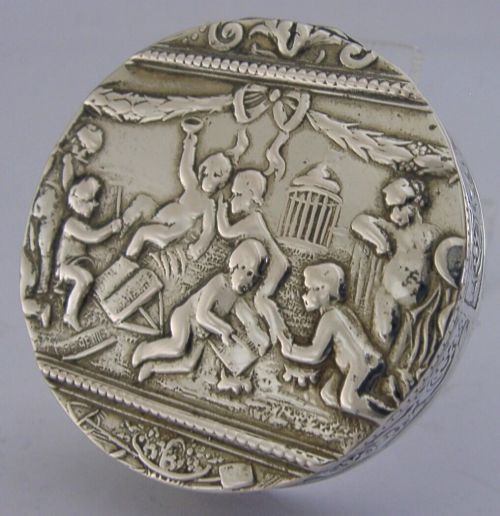
The construction of these boxes relies heavily on sterling silver and solid silver, shaped through pressing, casting, and hand-chasing. Silversmiths created raised cherub relief scenes by hammering the metal from behind or casting figures separately to attach to the lid.
Alternative materials include porcelain bodies mounted with ormolu or gilt metal mounts, alongside wood structures such as burr walnut caskets. Electro-forming techniques also appear in late nineteenth-century French pieces, coating forms in metal deposition.
Cherub Trinket Box Retail Price Guide 2026
Typical asking prices for cherub trinket box among the pieces listed under this phrase on Sellingantiques today, from the lower quarter to the upper quarter. They describe what is for sale here now, not the wider market.
Materials recorded across the selection include sterling silver, solid silver, silver gilt, burr walnut, brass, and porcelain.
What varies in quality
The interior finish and the integrity of any gilt layers or velvet linings also distinguish the standard of manufacture. Maker marks and clear hallmarks contribute to the standing of silver pieces, marking out distinct workshops.
Paul Storr·William Comyns and Sons·H Matthews·Trussell Brighton
The Cherub Trinket Box Glossary
- Sterling silver
- An alloy containing ninety-two point five percent silver by mass, standard for British silver boxes since the medieval period. It provides the durable yet malleable body for most chased trinket containers.
- Ormolu
- Gilded bronze or brass mounts applied to porcelain and wood caskets during the eighteenth and nineteenth centuries. This decorative technique adds metallic framing to ceramic bodies.
- Relief
- Sculptural technique where figures or ornamentation project from a flat background surface without being entirely detached. Cherub trinket box lids frequently utilise high or low relief to depict putti scenes.
- Hallmark
- Official stamp applied by an assay office to precious metal items indicating purity, origin city, and date letter. British silver pieces carry these marks to verify metal standards.
- Pot pourri box
- A small lidded container with a pierced or perforated top designed to hold dried scented plant material. Some variants double as general jewellery receptacles.
- Casket
- A small ornamental box or chest, often larger than a standard pocket snuff container, used for storing valuables. These frequently feature hinged lids and fitted interiors.
Cherub Trinket Box: Frequently Asked Questions
How do I date a silver cherub box?
Dating relies heavily on the hallmarks stamped into the metal, which indicate the assay office, standard, and specific year of production. Stylistic clues such as Rococo Revival curves or Edwardian restraint also help assign a decade.
Maker marks provide further context, linking pieces to known silversmiths active during specific operational windows in Birmingham, Chester, or London.
What is the difference between a casket and a trinket box?
In general usage within these listings, a casket denotes a larger, more substantial box often built with a domed lid or heavier framework. A trinket box is typically smaller, designed specifically for rings, pins, or daily jewellery.
Both forms utilise similar decorative motifs, including cherub reliefs and embossed floral patterns, across silver, porcelain, and wood.
Are these boxes made of solid silver?
Many examples are fashioned from sterling silver or solid silver throughout the body and lid. Others combine porcelain bodies with metal mounts, or utilise gilt metal and electro-formed copper.
Examining the hallmarks or metal tone reveals whether a piece is solid silver or plated over a base metal core.
How should I clean an antique silver box?
Silver boxes benefit from gentle dusting with a soft cloth to prevent the accumulation of dirt in the recesses of the cherub relief. Aggressive chemical dips should be avoided to preserve the original patination and any delicate gilt interiors.
Professional silver polish used sparingly with a soft brush helps maintain the surface without wearing down the chased details.