




Cherub Oil Canvas
Cherub oil canvas works bring classical figures into interiors through oil paint on canvas, offering enduring ornamental charm.
Cherub Oil Canvas
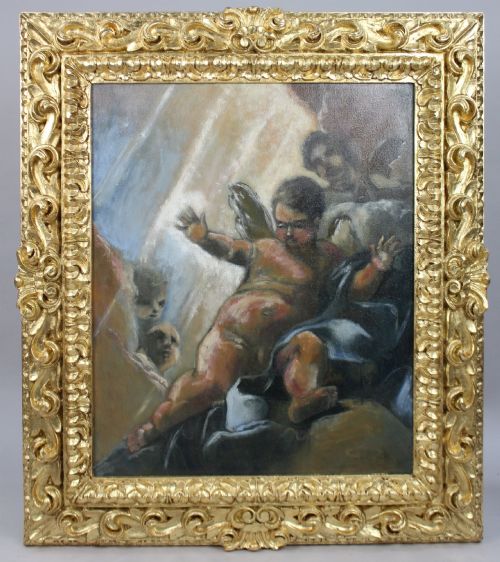
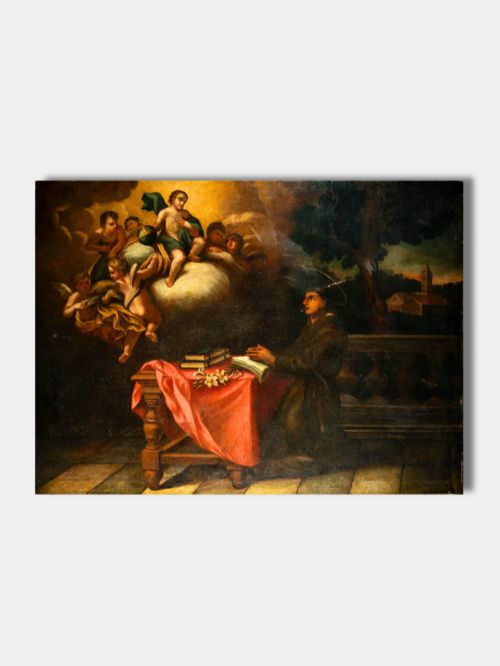
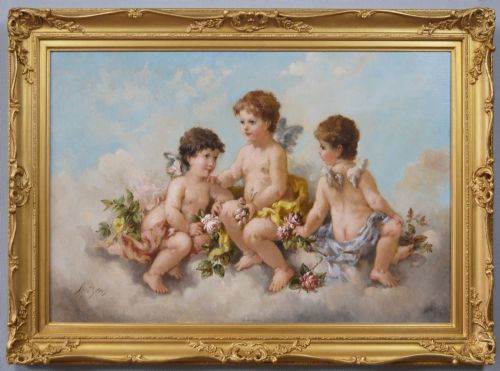
A cherub oil canvas presents painted depictions of putti, angels, or mythological youths, typically rendered in oil on canvas during the eighteenth and nineteenth centuries. These works range from monumental Spanish compositions to French camaieu bleu grisaille pieces and Italian school portraits.
Buyers encounter subjects spanning religious iconography, such as the Madonna and Child with angels, alongside decorative scenes of cherubs playing or holding roses. Many pieces adopt historical styles like French Rococo, Italian Baroque, and Renaissance style.
Framing often complements the artwork, with carved giltwood frames frequently housing these oil paintings. The selection available on this page bridges decorative wall art and fine art portraiture.
Materials and construction
These works rely upon oil paint applied to a stretched canvas support, allowing for subtle tonal gradations and rich colour blending. Artists utilised oil medium to build up depth in figures and drapery.
Frames are constructed from wood, frequently enriched with gold leaf or giltwood finishes to create ornate decorative borders. Carved wooden elements define the presentation of Italian and French period pieces.
Evaluating the work
Quality rests in the handling of the oil paint, where brushwork expresses anatomical proportion and facial expression in the figures. Finer examples display confident draughtsmanship and careful attention to light across the canvas.
The integration of the painting with its period frame also influences character, particularly when original carved giltwood surrounds remain intact. Preservation of the canvas surface without excessive intervention marks the better preserved works.
Jean Baptiste Isabey·Charles Augustus Henry Lutyens·Orsola Maddalena Caccia·Domenico Zampieri·Rosso Fiorentino
The Cherub Oil Canvas Glossary
- Oil on Canvas
- A painting medium where pigments bound in oil are applied to woven canvas fabric stretched over a wooden frame. This method became standard for European easel paintings from the Renaissance onward.
- Giltwood
- Wood that has been coated with a thin layer of gold leaf or powder. It provides a reflective, ornamental border for period frames.
- Putti
- Depictions of chubby male toddlers, often winged, appearing in classical and religious art. They derive from ancient mythology and populate Baroque and Rococo compositions.
- Grisaille
- A painting executed entirely in shades of grey or neutral monochrome. French camaieu bleu uses a similar monochromatic approach restricted to blue tones.
Cherub Oil Canvas: Frequently Asked Questions
How do I hang a large canvas safely?
Support heavy framed oil paintings using appropriate wall fixings secured directly into studs or masonry.
Ensure the hanging wire and D-rings on the wooden frame match the weight of the piece.
Where should I display these paintings?
Position oil paintings away from direct sunlight and sudden temperature changes to protect the canvas and paint.
Living rooms and hallways suit the scale of these decorative works.
How do I identify a period frame?
Examine the wood construction, gesso layers, and joinery at the corners of the giltwood surround.
Period frames show hand carving and appropriate wear consistent with age.
What is the difference between putti and cherubs?
Putti originate from classical mythology as secular winged infants, while cherubs possess specific biblical associations in religious art.
Artists through the centuries frequently used the terms interchangeably for infant angel figures.