

19th Century French Canvas
19th century french canvas brings together painted portraits, rural landscapes, and travel trunks made across the 1800s.
19th Century French Canvas
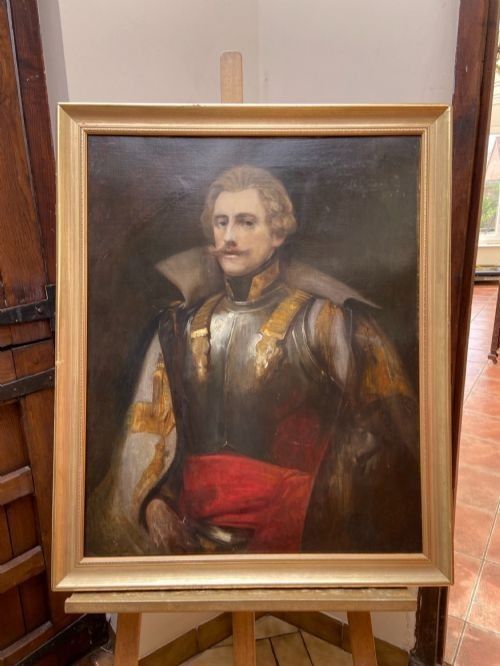
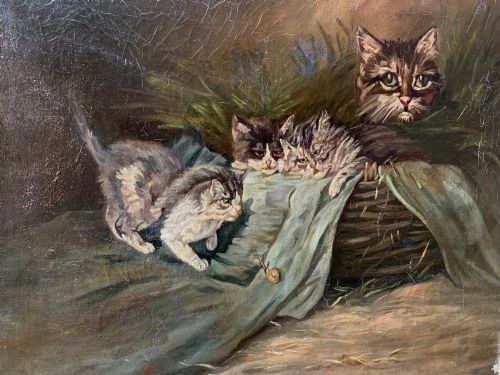
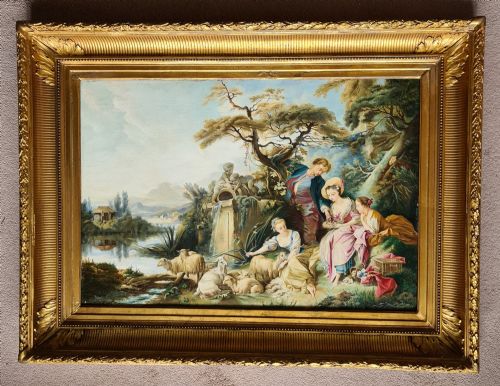
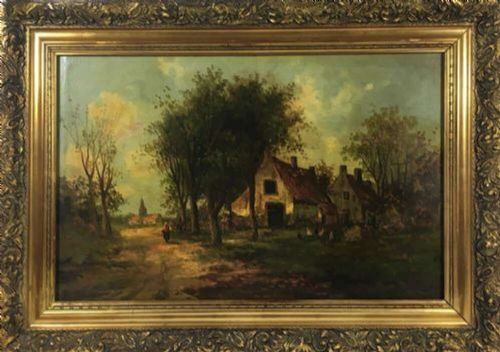
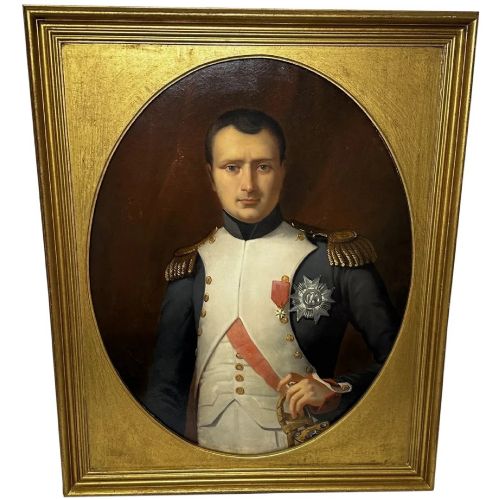
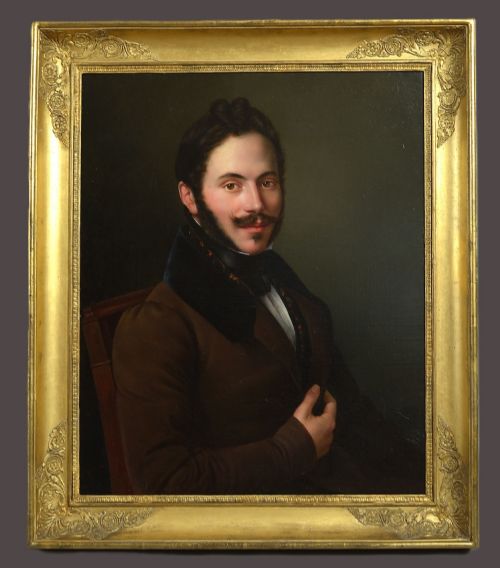
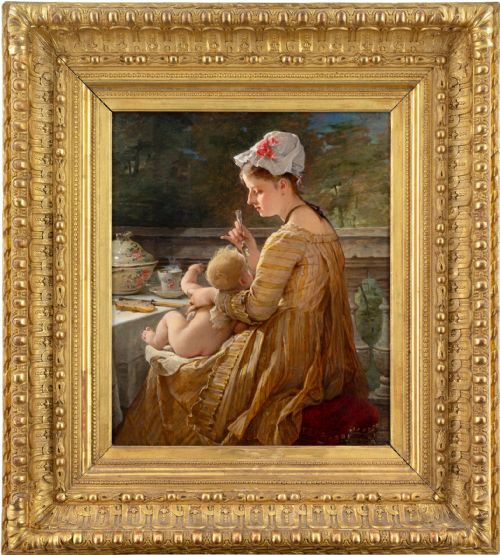
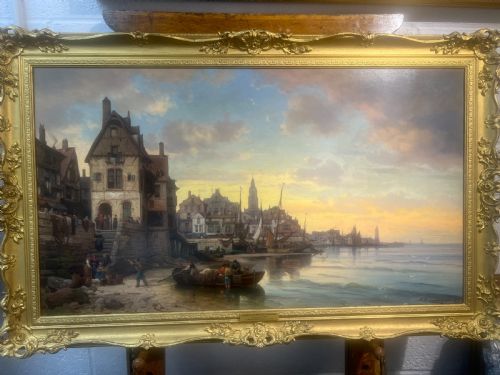
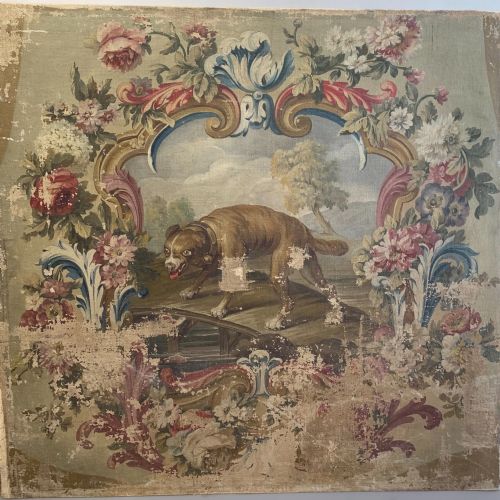
When browsing 19th century french canvas, buyers encounter a diverse selection of oil paintings, fine art, picture frames, and storage trunks. The painted works range from portraits of individuals and military officers to Barbizon School landscapes and floral still lifes.
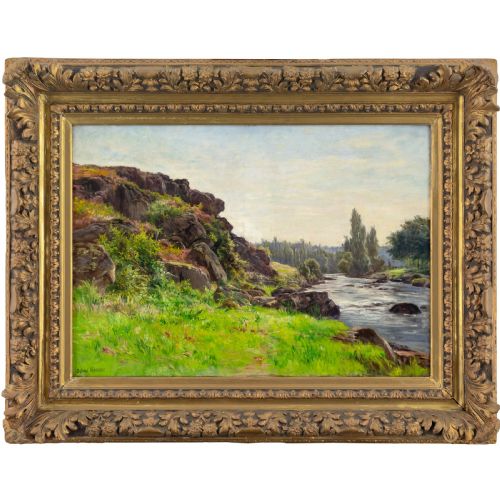
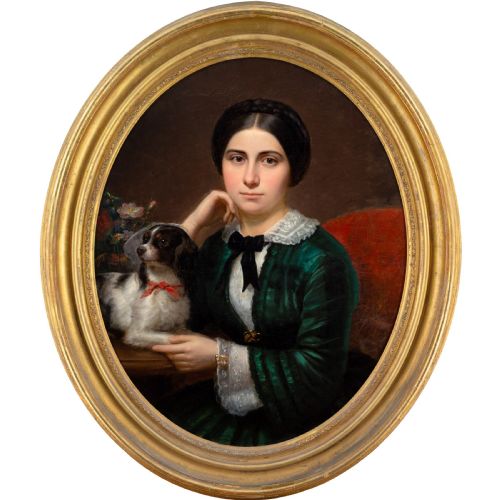
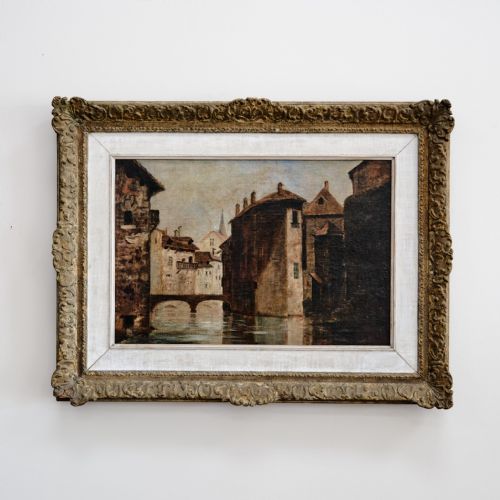
Portraits depict subjects from young women with dogs to historical figures like Napoleon I, executed by both named artists and the broader French School. Landscapes capture river scenes, farmyards, and coastal views from decades spanning the century.
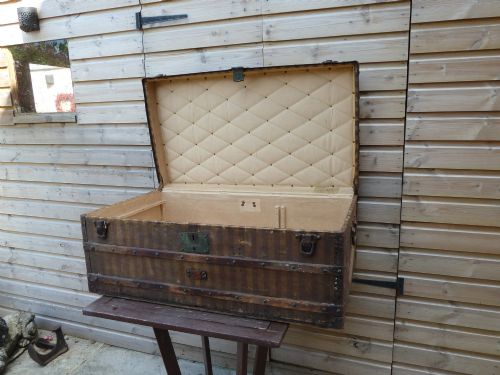
Beyond paintings on fabric support, the category encompasses canvas-covered trunks and dowry chests fitted with wood and brass studs. Antique picture frames constructed from gesso and giltwood also appear alongside the artworks.
How They Were Made
Paintings utilise oil paint applied to stretched woven canvas grounds, sometimes accompanied by preparatory gesso layers. Trunks combine a wood carcass covered in canvas and secured with brass studs or metal hardware.
Frames and decorative mouldings employ gesso moulded over wood substrates, finished with gold leaf or giltwood surfaces. Artists worked within academic, realist, and impressionist traditions using brushes and pigments on fabric.
Artworks include portraits, landscapes, still lifes, and trompe l'oeil scenes by French School painters.
What Varies in Quality
In frames and trunks, the intricacy of carved giltwood details, the preservation of original surfaces, and the integrity of the underlying wood structure define the tier of the piece.
Gabriel Mathieu·Edouard Pingret·Adelaïde Salles-Wagner·Charles Euphraisie Kuasseg·Paul Désiré Trouillebert·Alfred Arthur Brunel de Neuville·Honore Cavaroc·Charles Clair·Henri Jaques Delpy·Charles Zacharie Landelle·Alexandre Le Bihan·Ferdinand Victor Leon Roybet·André Prévot-Valéri·Léon Joseph Voirin·Alphonse Robert·Thomas Couture
The 19th Century French Canvas Glossary
- Barbizon School
- A nineteenth-century French art movement focused on realist landscape painting inspired by the forest of Fontainebleau and rural scenery.
- Gesso
- A plaster-like mixture applied to wood surfaces as a smooth base before gilding or painting.
- Giltwood
- Wood that has been coated with gold leaf or a gold-coloured finish.
- Trumeau
- An architectural mirror or panel, often incorporating an oil painting above the looking glass.
- Trompe l'oeil
- An artistic technique that uses realistic imagery to create the optical illusion that the depicted objects exist in three dimensions.
19th Century French Canvas: Frequently Asked Questions
What subjects appear in these paintings?
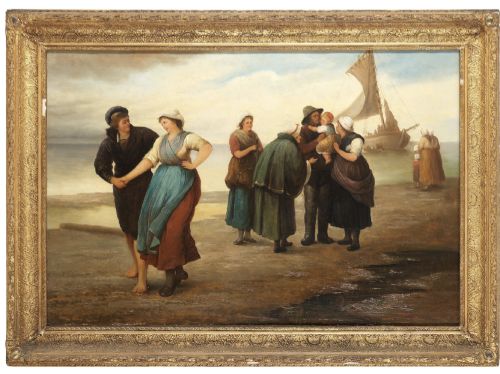
Portraits of officers, gentlemen, and women dominate the figurative works alongside genre scenes of daily life. Landscapes feature rural rivers, farmyards, and coastal harbours painted in the Barbizon and Impressionist traditions.
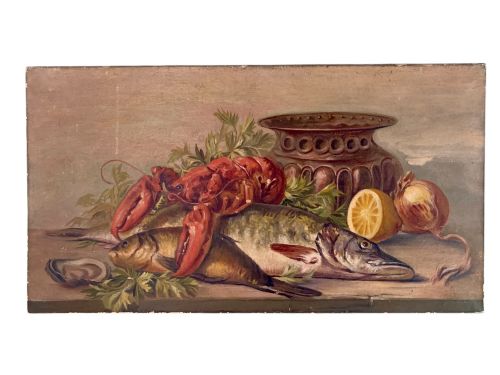
Still lifes display arrangements of flowers and domestic objects. Religious and mythological figures also occur in academic compositions.
How do I date a 19th century canvas?
Dating relies on recorded artist lifespans, stylistic shifts from academic realism to early impressionism, and framing materials. Signatures and exhibition records provide specific chronological anchors.
Construction methods in associated items like trunks and gesso frames offer additional contextual clues for the period of manufacture.
Where were these items used originally?
Paintings hung in chateaux, salons, and bourgeois homes across France as decorative wall art and portrait records. Trunks served as travel luggage for transport by rail and ship.
Picture frames displayed fine art within domestic interiors and official exhibition spaces like the Paris Salon.
How should I care for an oil painting on canvas?
Keep paintings away from direct sunlight, extreme temperature shifts, and high humidity to protect the oil paint and canvas ground. Dust gently with a soft, dry brush without applying pressure to the surface.
Avoid using liquid cleaners on the paint or the surrounding giltwood frames.