

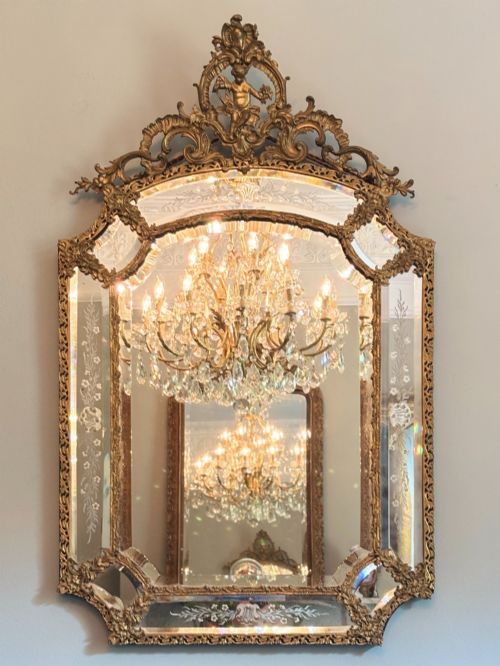
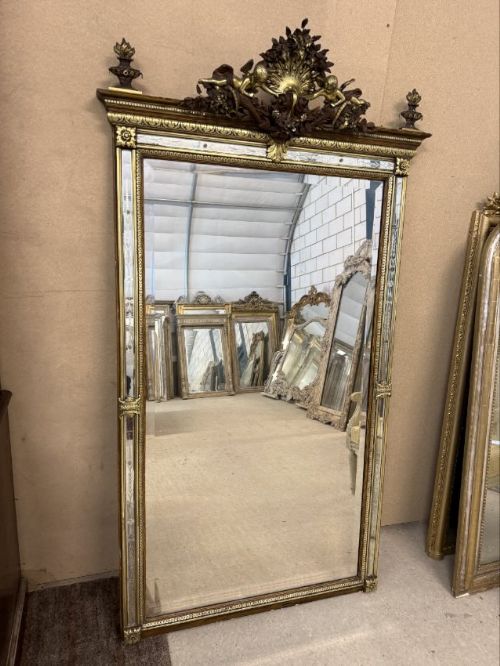


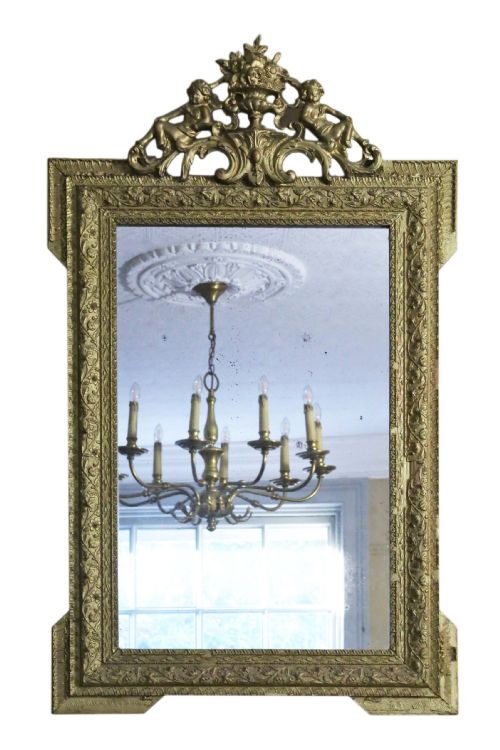
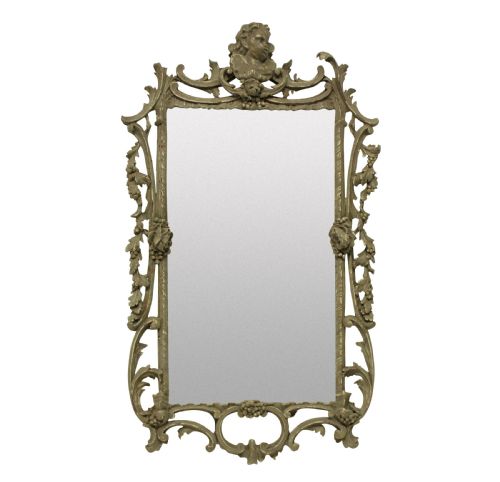


Cherub Cresting Wall Mirror
These pieces known as a cherub cresting wall mirror bring dramatic sculptural detail and light into a room, combining carved putti with grand reflective glass.
Cherub Cresting Wall Mirror
A cherub cresting wall mirror is defined by its decorative upper motif featuring putti or winged figures, often designed to hang above a mantelpiece or serve as a principal wall feature. You will most frequently encounter nineteenth-century examples on this page, reflecting periods such as the Victorian era and Louis XVI style.
The forms range from large arched top overmantel mirrors to smaller oval formats, drawing on French Rococo Revival, Baroque Revival, and Carolean influences. These mirrors function both as practical reflective surfaces and as substantial decorative statements shaped by historical revivalism.
Makers and craftsmen of the nineteenth century utilised diverse stylistic vocabularies, pairing classical George III undertones with exuberant French chateau ornamentation. The resulting pieces span simple carved oak frames to heavily gilded architectural designs dominated by sculptural cresting.
How they were made
Carved wood provides the structural foundation for many of these frames, often enhanced with layers of gesso and composition to build up elaborate relief ornamentation. Artisans then applied gilt, silver leaf, or paint to achieve the luminous metallic finishes characteristic of the period.
Plaster and composition mouldings were frequently combined with solid timber elements to form intricate crests and lion head decorations without adding unmanageable weight. The glass plates, secured within these heavy frames, reflect the manufacturing capabilities and bevelling techniques available during the nineteenth century and earlier revival periods.
Cherub Cresting Wall Mirror Retail Price Guide 2026
Typical asking prices for cherub cresting wall mirror among the pieces listed under this phrase on Sellingantiques today, from the lower quarter to the upper quarter. They describe what is for sale here now, not the wider market.
Materials recorded across the inventory include giltwood, gesso, plaster, composition, carved wood, silver leaf, oak, and glass.
What varies in quality
The finesse of the hand-carved details on the putti and surrounding foliage separates standard production from exceptional craftsmanship. Crisp relief work in the gesso and wood indicates a higher level of artisan skill during the initial creation of the frame.
The integrity of the original surface finish, whether gilt, silver leaf, or painted, influences the character of the piece. Surviving original distressing and untouched patination demonstrate how well the materials have aged over time.
The Cherub Cresting Wall Mirror Glossary
- Putto
- A plump, naked child figure often winged, commonly referred to as a cherub in decorative arts. These figures form the distinctive cresting on many traditional wall mirrors.
- Gesso
- A plaster-like mixture applied to wood frames to create a smooth surface for gilding or painting. It allows intricate low-relief ornamentation to be modelled before finishing.
- Giltwood
- Timber that has been coated with thin gold leaf or gold dust. This finish gives mirrors their characteristic reflective warmth and opulent appearance.
- Overmantel mirror
- A large mirror specifically proportioned to hang above a fireplace mantel. These pieces often feature extended widths and prominent architectural cresting.
- Composition
- A moulded mixture of whiting, linseed oil, resin, and glue used to create decorative frame details. It provides a durable alternative to hand-carved wood.
Cherub Cresting Wall Mirror: Frequently Asked Questions
Where should I hang a wall mirror?
These mirrors suit placement above a fireplace mantel or as a focal point on a principal living room wall. Their reflective surfaces help amplify natural light within the space.
Ensure the wall construction and fixings can adequately support the weight of heavy carved wood and gesso frames.
How do I clean a gilt frame?
Dust the carved surfaces gently with a soft, dry brush to avoid damaging the delicate metallic leaf. Moisture can harm traditional gesso and gilt finishes over time.
Keep glass cleaning liquids away from the wooden edges to prevent staining or lifting the historical surface layers.
What periods do these mirrors represent?
The selection primarily encompasses nineteenth-century manufacturing, incorporating revivals of Louis XVI, Baroque, and Carolean styles. Victorian and George III aesthetic influences also appear frequently across the available forms.
Each period brings distinct stylistic interpretations to the framing and the sculptural cherub cresting.
How do I identify original gilding?
Original gilt surfaces typically show subtle wear patterns, micro-craquelure, and an accumulation of age beneath the metallic sheen. These natural signs of ageing contrast with uniform modern metallic paints.
Examining the underlying gesso and wood layers through losses can also reveal the historical construction methods.