

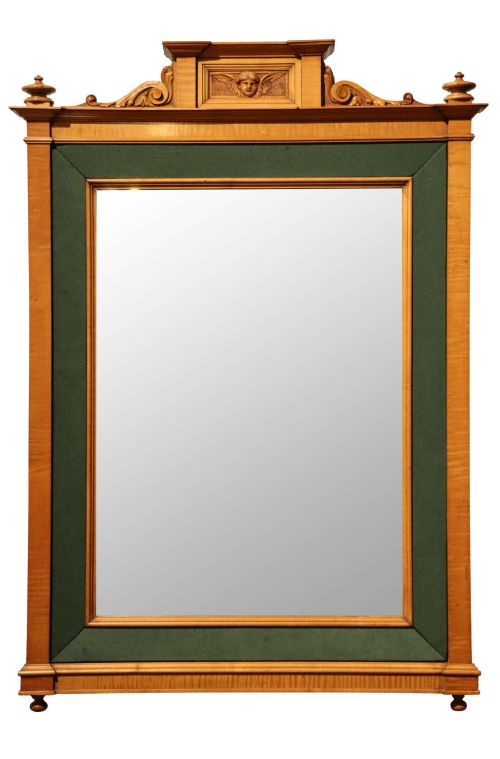
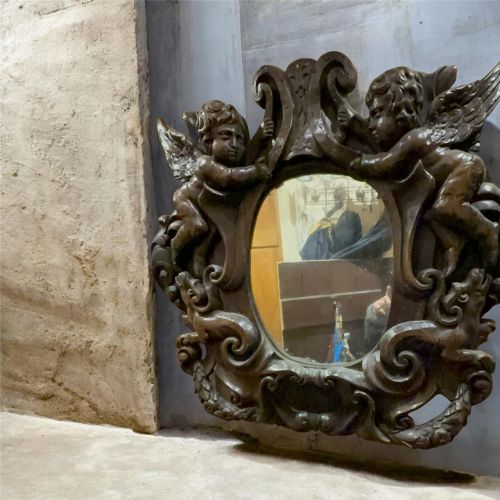


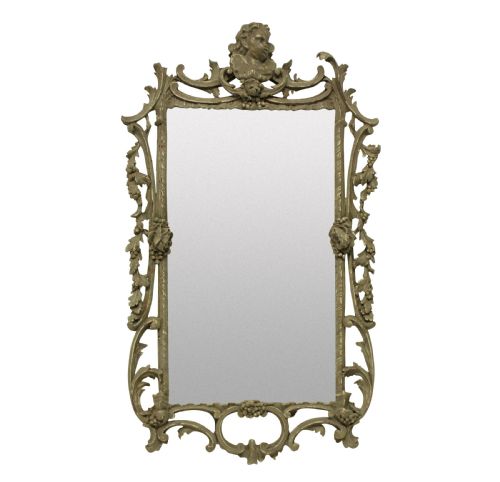


Cherub Carved Frame Mirror
A cherub carved frame mirror brings sculptural exuberance to a wall, blending mythological charm with the craftsmanship of past centuries.
Cherub Carved Frame Mirror
When searching for a cherub carved frame mirror, collectors encounter wall mirrors, overmantel mirrors, and bracket mirrors originating from the eighteenth, nineteenth, and early twentieth centuries. These pieces display ornate sculptural motifs, most notably winged putti alongside scrolls, foliage, and crests.
The examples most commonly met on this page span the Victorian era, the nineteenth century, and specific historical revivals such as Rococo, Baroque, and Louis XVI. They range from grand, gilt overmantel proportions down to smaller wall-hanging formats carved from fruitwood, oak, or walnut.
Regional styles vary from French chateau aesthetics and Italianate designs to British craftsmanship, demonstrating how diverse workshops interpreted classical ornamentation. A cherub carved frame mirror serves as both a functional looking glass and a dramatic architectural focal point.
How they were made
Carvers shaped timber substrates from oak, walnut, fruitwood, and general carved wood before applying layers of gesso to build up intricate sculptural relief. Cherubs, floral garlands, and scrolls were modelled into this plaster composition before gilding.
Giltwood surfaces received thin sheets of gold leaf applied over bole, while other pieces utilised painted finishes or left the natural timber exposed. Silvered glass plates, often bevelled by hand, were then fitted into the finished rebates.
Cherub Carved Frame Mirror Retail Price Guide 2026
Typical asking prices for cherub carved frame mirror among the pieces listed under this phrase on Sellingantiques today, from the lower quarter to the upper quarter. They describe what is for sale here now, not the wider market.
Some cherubs peer sideways from the corners as if keeping a watchful eye on everyone in the room.
What varies in quality
The depth and animation of the carving set exceptional pieces apart from simpler productions, particularly in the anatomy and expression of the carved cherubs. Crisp undercut details in the gesso and wood reveal the hand of a skilled artisan rather than a mechanical mould.
The richness of the original gilding and the preservation of the underlying timber contribute significantly to a piece's integrity. Integration between the mirror plate and the frame also indicates the original design cohesion.
Sir Willian Trotter
The Cherub Carved Frame Mirror Glossary
- Gesso
- A plaster-like mixture applied to wood frames to create a smooth surface for carving and gilding. It allows for crisp, intricate sculptural details.
- Giltwood
- Timber coated with gold leaf or gold paint. It provides a luminous surface that catches candlelight or natural daylight.
- Overmantel mirror
- A large mirror designed to hang specifically above a fireplace mantelpiece. These pieces often feature wide proportions to balance the hearth below.
- Putto
- A plump, winged child figure frequently seen in classical art and architectural decoration. Often referred to as a cherub on these frames.
- Rococo Revival
- A nineteenth-century design movement inspired by the asymmetrical, scroll-heavy ornamentation of the eighteenth century. It favours naturalistic motifs like foliage and shells.
Cherub Carved Frame Mirror: Frequently Asked Questions
Where should I hang a cherub mirror?
These mirrors suit prominent positions where their sculptural frames can be fully appreciated, such as above a mantelpiece, in a hallway, or facing a light source.
Because many examples are substantial overmantel or wall mirrors, ensure the wall fixings match the weight of the timber and gesso construction.
How do I identify the period?
Examine the timber species beneath the gilding, the style of the carving, and the characteristics of the glass plate. Eighteenth-century pieces often display hand-carved fruitwood or oak, while nineteenth-century revivals frequently utilise heavily gessoed softwood.
Design motifs also offer clues, as Louis XVI style mirrors feature neoclassical symmetry, whereas Rococo Revival frames embrace asymmetry and flowing scrolls.
Are the mirror plates original?
Many antique mirrors retain their original glass, which can exhibit light foxing, minor speckling, or gentle distortion from age. Replacement plates do occur and usually present a much clearer, uniform reflection without historical blemishes.
How do I clean the frame?
Dust the carved gesso and gilt surfaces gently with a soft, dry brush to prevent damaging the delicate raised details. Avoid using liquid cleaners or abrasive cloths, which can strip gold leaf or modern coatings from the timber.