

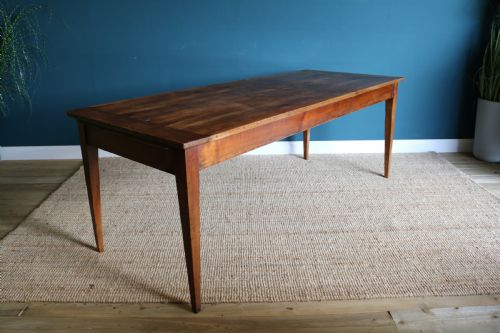
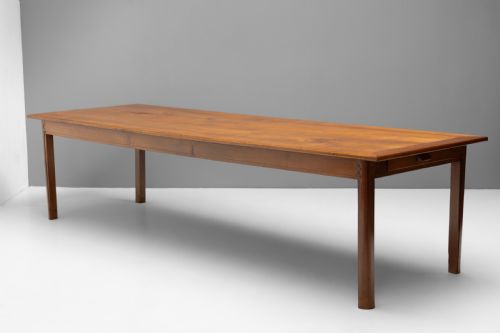

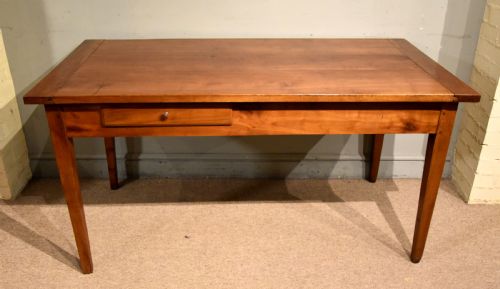


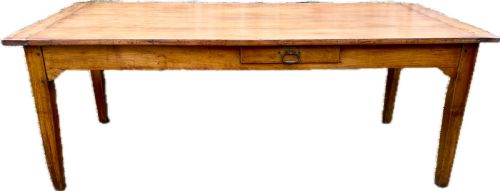
Cherry Refectory Table
A cherry refectory table brings sturdy provincial character to a dining room through warm fruitwood timber and honest farmhouse construction.
Cherry Refectory Table
A cherry refectory table is a long dining form rooted in French provincial and country traditions, built primarily for communal dining and daily kitchen use. You meet these pieces most often in formats spanning the eighteenth and nineteenth centuries, including the Edwardian era.
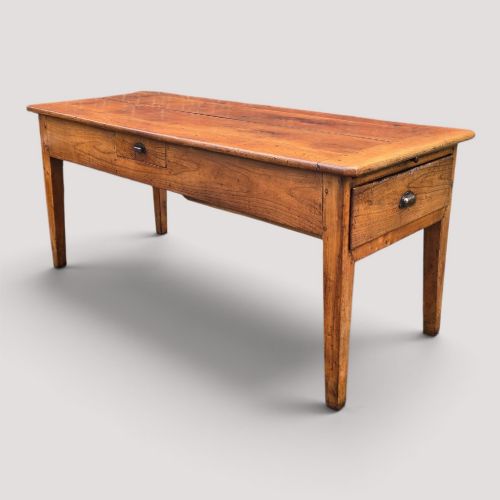
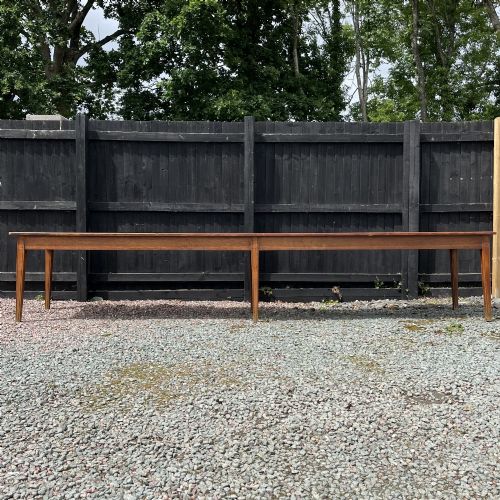
The surviving examples range from compact six-seat boards to grand thirteen-foot planks, frequently incorporating practical additions such as sliding breadboards, single drawers, or double extending leaves. They serve as robust dining or kitchen tables defined by local craftsmanship rather than courtly design.
How they were made
Cabinet makers built these pieces using solid cherry wood, fruitwood, and occasional secondary timbers like oak, chestnut, or elm for structural framing. Metal and brass fixings appear in mechanisms such as draw-leaf extensions and drawer pulls.
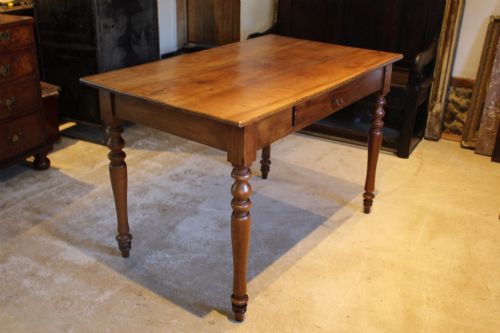
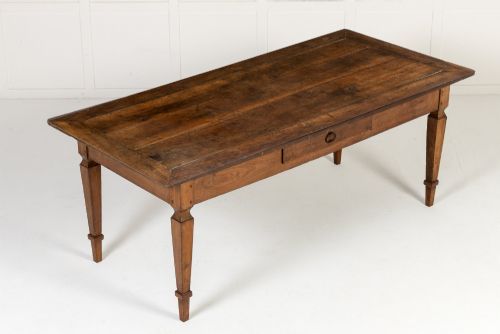
Plank construction dominates the tabletops, joined by sturdy stretchers and legs that sometimes feature cabriolet shaping on later nineteenth-century French provincial variants. Timbers were selected for grain warmth and durability, developing a faded or rich natural patina over decades of use.
Some tables stretch over thirteen feet, requiring six planks of solid cherry to feed an entire French village.
What varies in quality
Quality rests in the selection of the timber boards, the integrity of the plank joinery, and the retention of original mechanisms like sliding breadboards and extension leaves. Tables featuring wider single planks or dense fruitwood demonstrate superior material choice by the original provincial carpenter.
Proportion and stability separate standard kitchen boards from finer dining pieces, particularly where cabriolet legs or integrated drawers remain unaltered. The depth of the natural wood colour and the crispness of the original joins dictate the visual standing of each piece.
The Cherry Refectory Table Glossary
- Refectory table
- A long dining table traditionally used in communal halls and farmhouses. These pieces offer substantial length and sturdy stretcher bases designed for daily dining.
- Breadboard end
- A piece of timber fastened across the main ends of a tabletop to prevent warping. This technique accommodates wood movement while keeping the surface flat.
- Fruitwood
- A collective term for timber harvested from fruit-bearing trees such as cherry. This material yields a warm grain and ages with a distinctive mellow tone.
- French Provincial
- A style originating from regional French cabinet making. It combines rustic utility with subtle curves like cabriolet legs.
- Draw leaf
- An extension mechanism where auxiliary leaves slide out from beneath the main top. This system lengthens the table surface when needed.
Cherry Refectory Table: Frequently Asked Questions
Where were these tables made?
The evidence points directly to French workshops and provincial farmhouses, where local carpenters utilised regional fruitwoods for everyday dining.
These pieces reflect rural craftsmanship rather than urban workshop standards.
Do these tables extend for dining?
Many examples incorporate functional mechanisms including double extending leaves, draw leaves, and sliding breadboards to alter the table length.
These additions provided practical flexibility in nineteenth-century kitchens and dining halls.
What wood are they built from?
Makers constructed these pieces primarily from cherry wood, cherrywood, and general fruitwood, occasionally pairing them with oak, chestnut, or elm timber.
Metal and brass hardware appear on drawers and extension mechanisms.
How do I date an antique cherry table?
Dating relies on construction methods, timber plank widths, and stylistic indicators such as cabriolet legs or specific nineteenth-century and eighteenth-century markers.
Listings reference periods spanning from the seventeen-eighties through the Edwardian era.