



Cheese Dish and Cover
A cheese dish and cover keeps dairy fresh and makes a striking centrepiece, spanning utilitarian ironstone to ornate majolica.
Cheese Dish and Cover
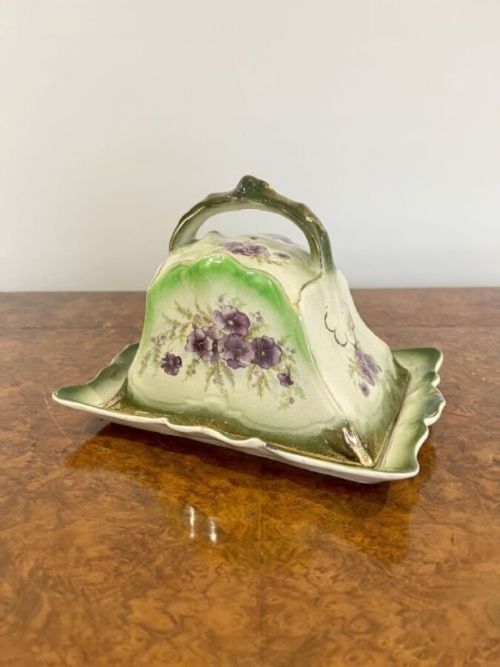
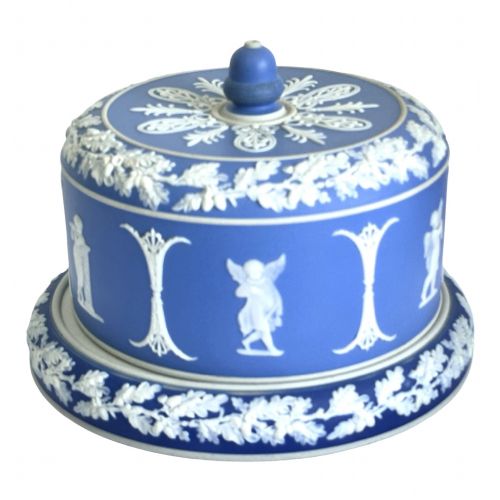
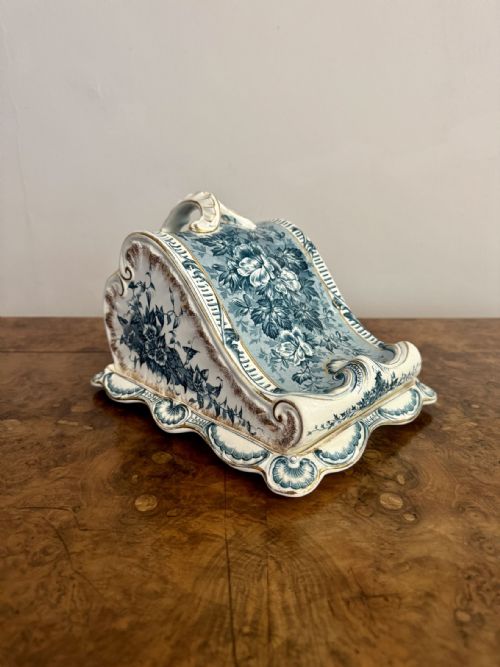
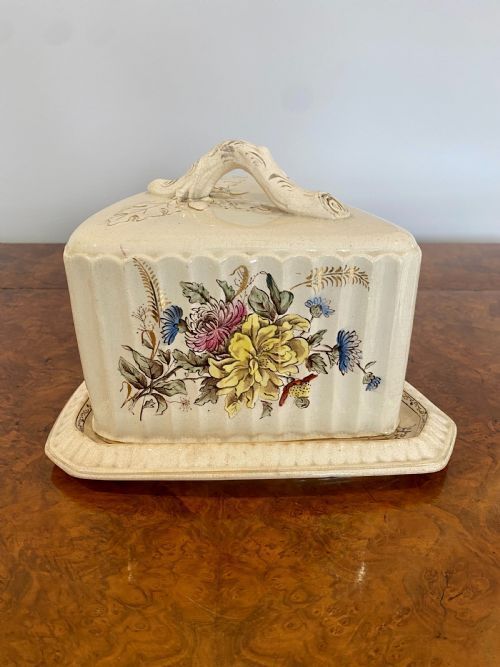
A cheese dish and cover consists of a fitted domed cover resting on a matching stand or base, designed specifically to protect and serve cheese at the dining table. Most examples encountered here belong to the Victorian and Edwardian periods, reflecting the heavy domestic hospitality of the nineteenth and early twentieth centuries.
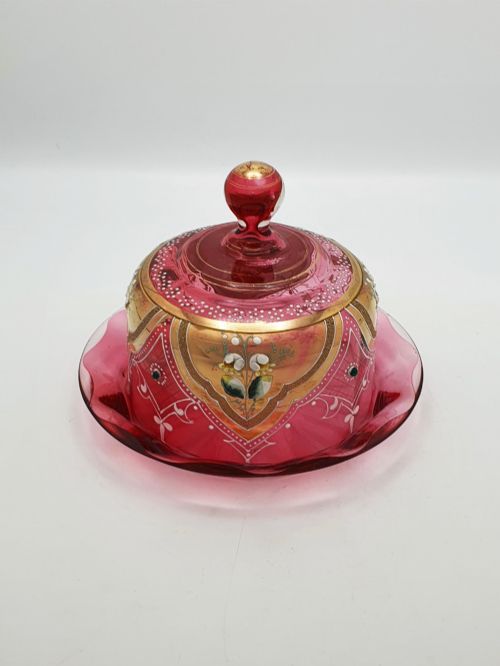
The domestic forms vary from large proportions intended for communal gatherings to smaller vessels suited for individual varieties like Stilton. They appear as earthenware, glazed ceramic, ironstone, and glass, often accompanied by a distinct matching tray or stand.
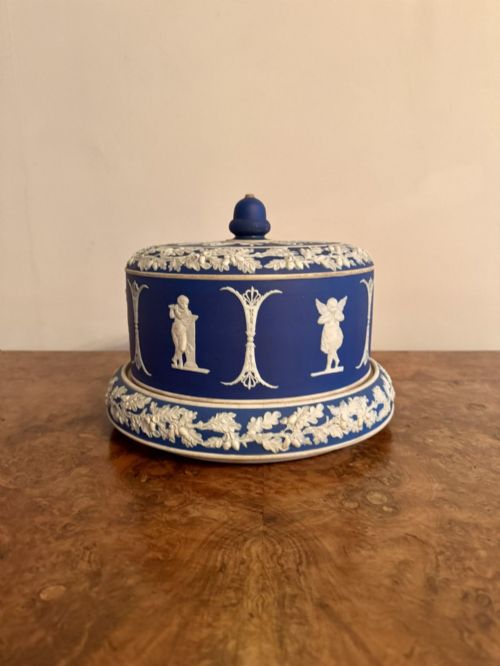
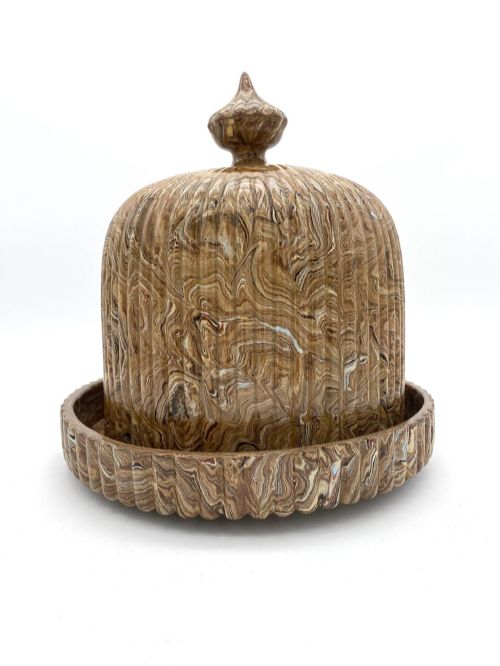
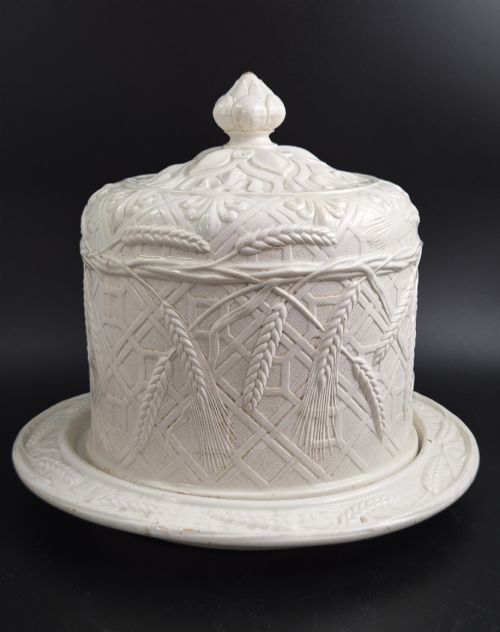
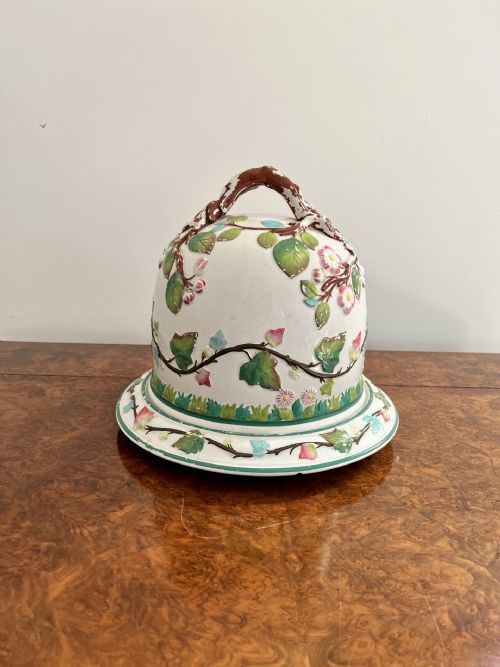
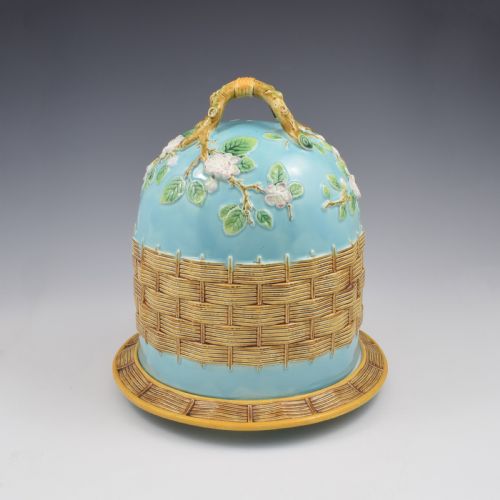
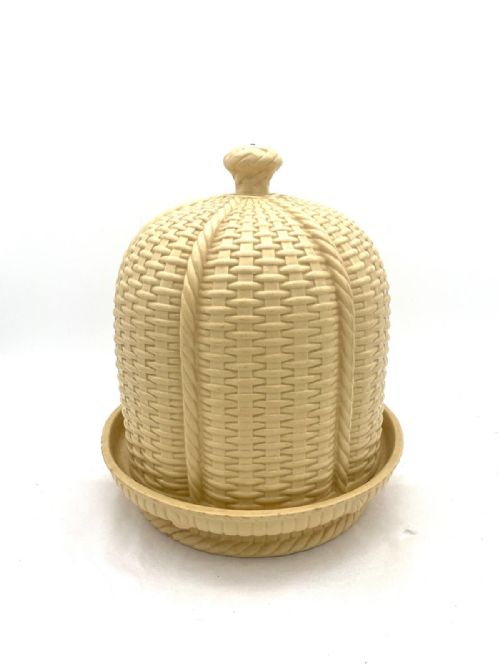
Moulded decoration defines much of the selection, ranging from simple basket weave drabware to naturalistic apple blossom motifs. Functional yet decorative, these items bridge the gap between kitchen utility and formal parlour display.
How they were made
Potters shaped these ceramics using traditional moulding and earthenware bodies, frequently employing white ironstone for durability and resilience. Stoneware and earthenware formed the structural foundation for heavy majolica domes, which required sturdy handling during the firing process.
Coloured glazes, slip, and occasionally gold leaf were applied to the ceramic surfaces to create the rich textures seen in Victorian majolica and jasperware pieces. Glass variants relied on hot moulding and silver-plated mounts to combine two contrasting mediums into a single serving vessel.
Cheese Dish and Cover Retail Price Guide 2026
Typical asking prices for cheese dish and cover among the pieces listed under this phrase on Sellingantiques today, from the lower quarter to the upper quarter. They describe what is for sale here now, not the wider market.
Victorian diners required immense domes just to house a sturdy wedge of Stilton after a heavy roast.
What varies in quality
The standard of modelling in relief work determines much of the visual success, where crisp details in basket weave or floral patterns distinguish superior pieces. Sharpness in the moulding process ensures that botanical and geometric motifs remain distinct beneath the glaze.
The depth and consistency of the glaze application affect the overall finish, particularly in majolica and jasperware where colour saturation creates depth. Complete matching sets of both the dome and the original base maintain greater integrity than mismatched or married components.
George Jones·Wedgwood·James Dudson·Copeland
The Cheese Dish and Cover Glossary
- Jasperware
- A type of fine stoneware developed with a matte surface, typically featuring white relief decorations applied against a coloured ground. It remains a hallmark of notable ceramic manufacturers.
- Majolica
- A colourful lead-glazed earthenware characterised by vibrant hues and moulded naturalistic designs, popular during the Victorian era. It frequently depicts plant and animal life.
- Ironstone
- A heavy, durable ceramic invented as a tough alternative to porcelain, widely utilised for practical domestic tableware. White ironstone surfaces often feature moulded wheat or lattice patterns.
- Drabware
- A style of unglazed or lightly glazed earthenware possessing a muted, brownish-grey tone. It offers a subtle, understated aesthetic common in mid-nineteenth-century domestic pieces.
Cheese Dish and Cover: Frequently Asked Questions
What is a cheese dish and cover?
A cheese dish and cover is a covered ceramic or glass vessel designed to keep cheese moist and contained on the dining table. The set typically pairs a large domed lid with a flat base or stand.
Historically utilised in nineteenth-century households, these vessels protected dairy from dust and insects while presenting the food attractively after a meal.
How were they used?
These pieces sat at the centre of the dining table during the dessert or cheese course, allowing diners to help themselves. The heavy cover trapped moisture to keep the cheese from drying out too quickly in unheated rooms.
Domestic servants brought the dome to the table intact, lifting the heavy ceramic cover only when the guests were ready to partake.
How do I distinguish majolica from ironstone?
Majolica is defined by its vibrant, glossy coloured glazes and heavy relief ornamentation, often depicting natural subjects like leaves and flowers. Ironstone generally presents a thick, durable white body with subtle moulded textures.
Examining the underside and the weight of the piece will usually reveal the distinct fabrication methods of each ceramic type.