

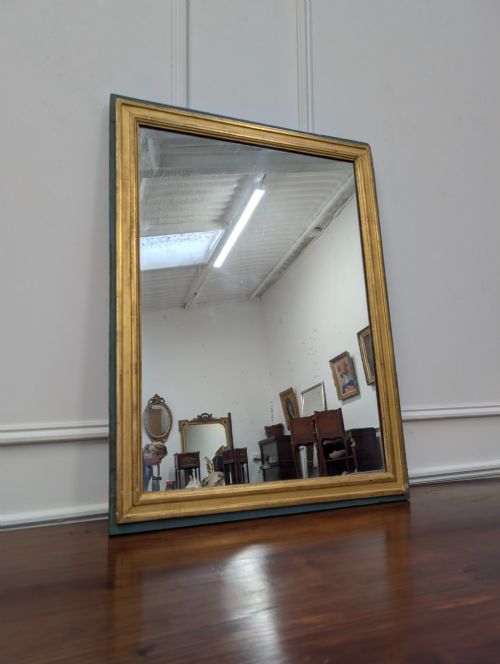
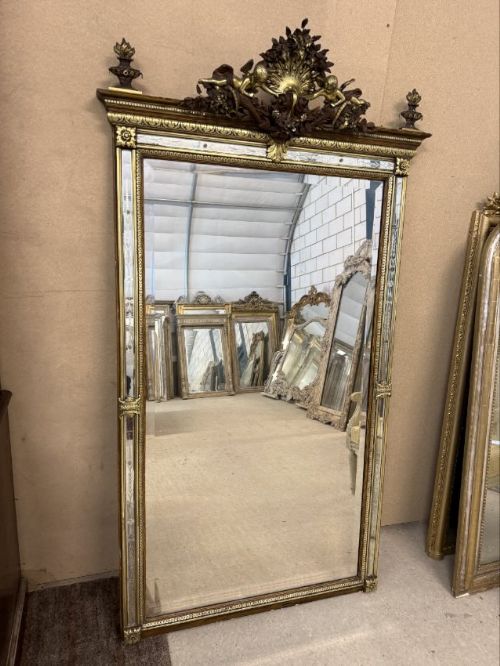
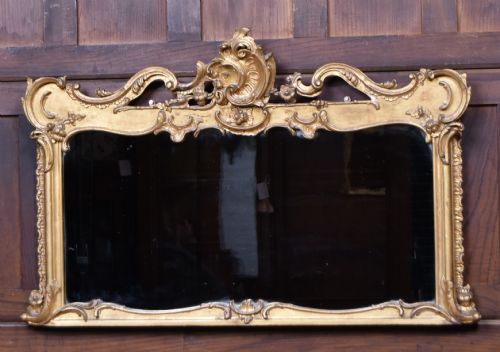
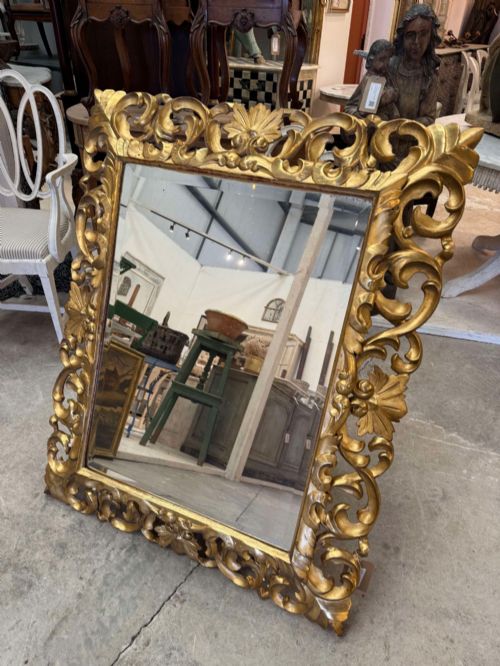
Chateau Style Overmantel Mirror
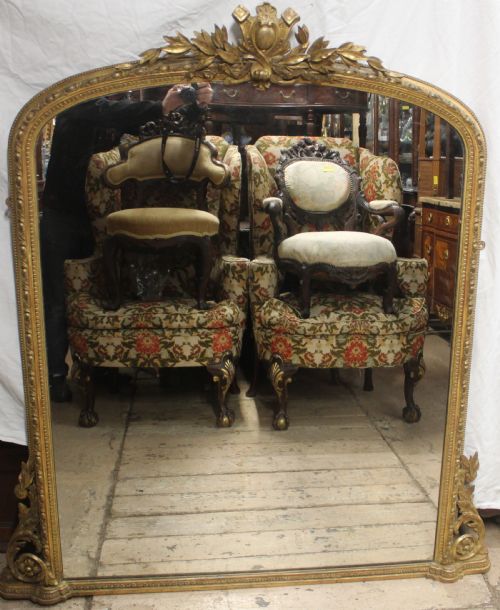
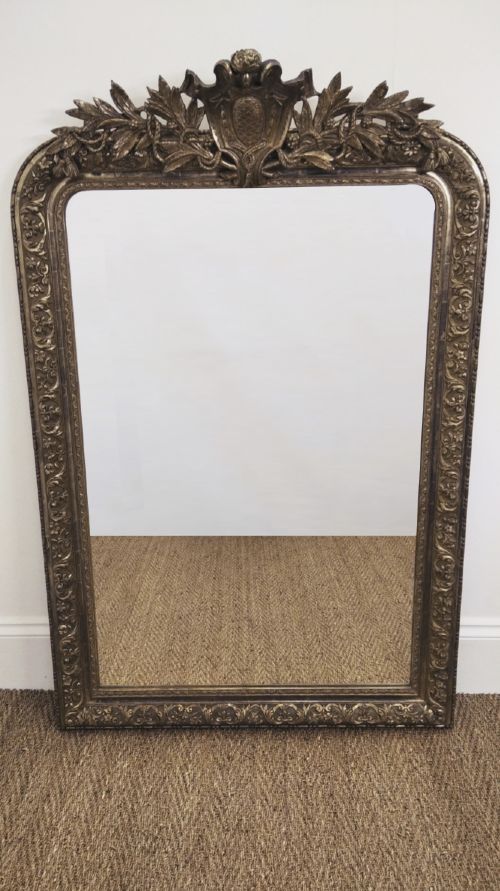
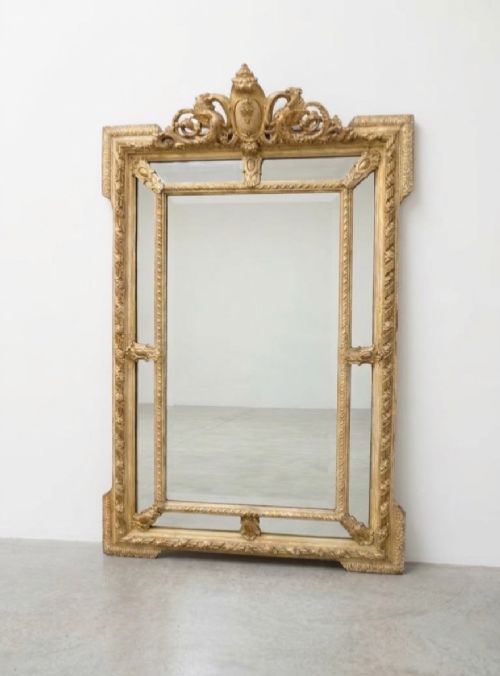
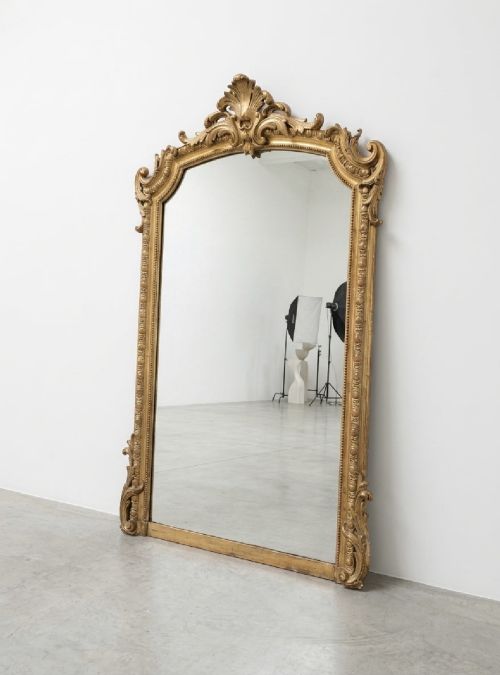
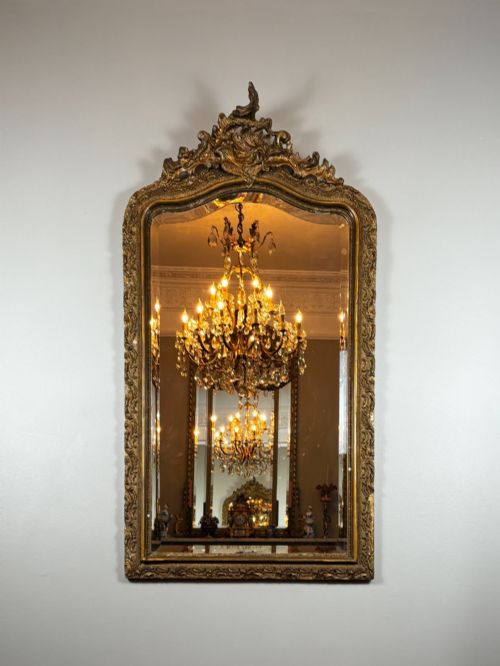
A chateau style overmantel mirror brings grand French architectural scale and elaborate carved detail directly into a room, framed for placement above a fireplace.
Chateau Style Overmantel Mirror
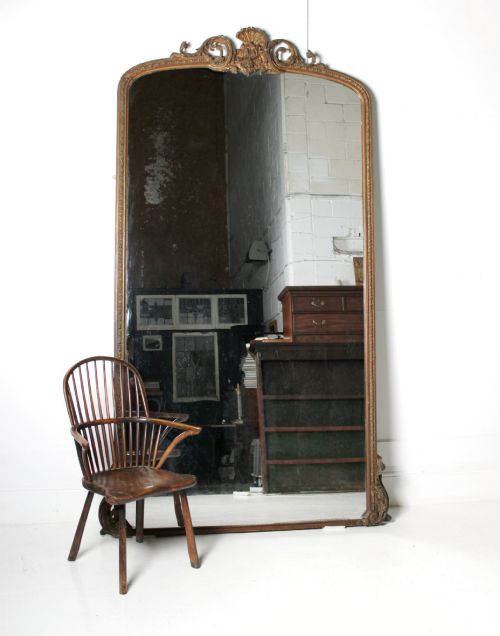
A chateau style overmantel mirror is a large wall-hanging looking glass designed to sit directly above a mantelpiece or serve as a substantial leaner mirror. These pieces emerge predominantly from the nineteenth century, including specific dates such as 1850, 1860, 1870, 1890, 1900, and 1920, alongside earlier eighteenth-century examples and Victorian interpretations.
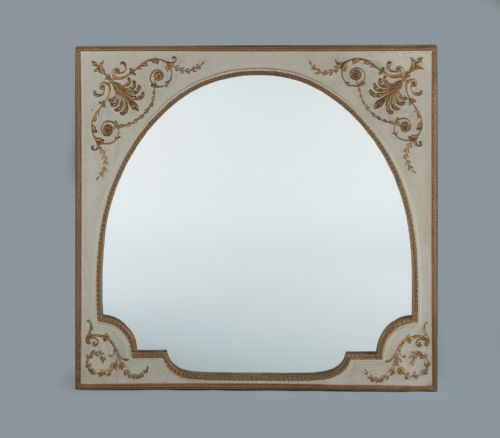
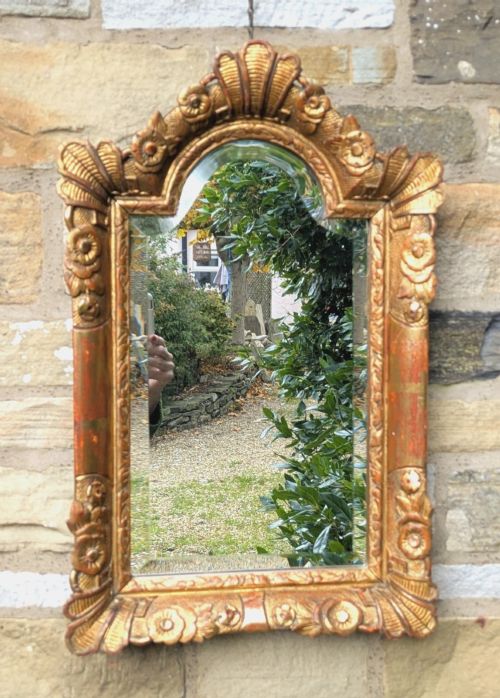
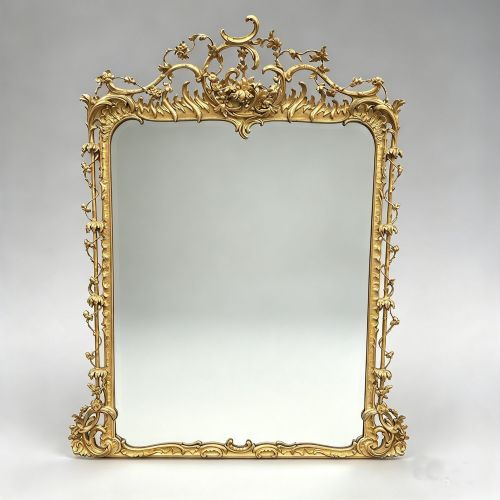
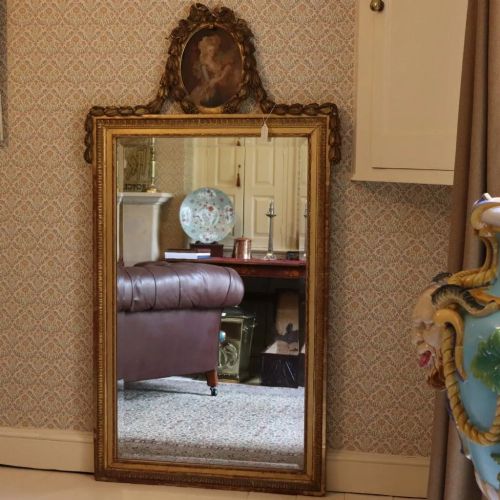
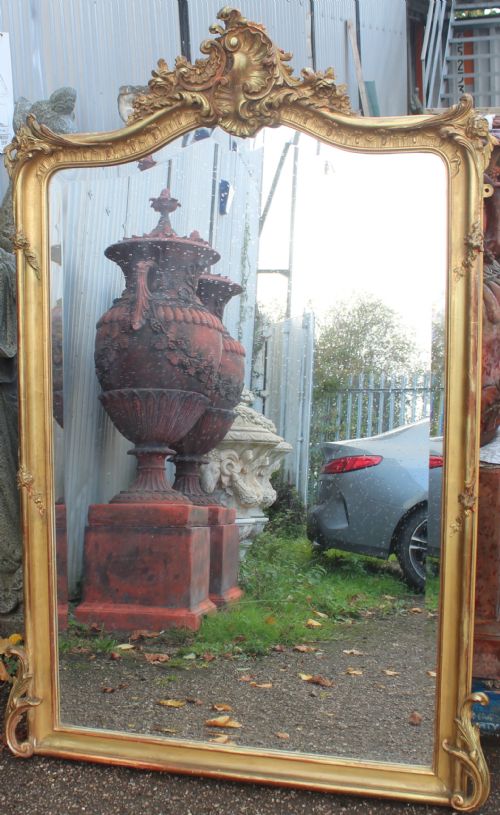
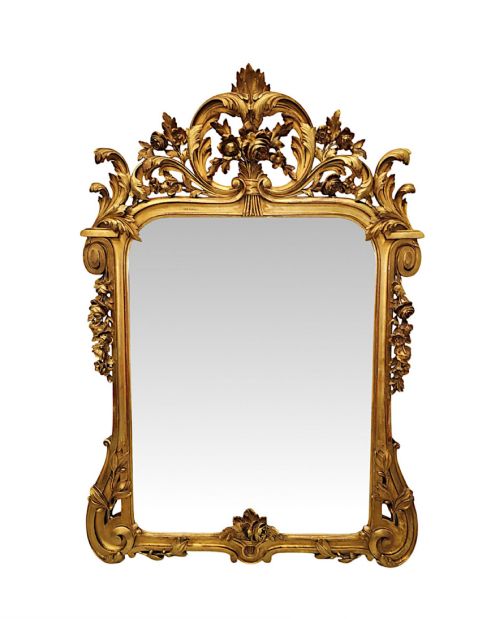
The dominant forms span French Rococo, Louis XV, and Rococo Revival styles, characterised by arched, shaped tops and ornate crests decorated with flowers and ribbons. Many survive as large giltwood and gesso frames, while others feature painted surfaces, bleached oak, or parcel gilt finishes.
How they were made
Makers constructed the substantial frames using carved wood as a primary base, applying layers of gesso to build up complex three-dimensional floral and scroll ornamentation. Guilders then applied gold leaf, silvering, or paint over the gesso base to achieve rich reflective surfaces.
Mirrors from this selection frequently incorporate traditional mirror glass, antique plate, or mercury glass, which often develops characteristic foxing over time. Frames were built with structural durability in mind to support heavy glass plates within tall, arched, or cushion-moulded surrounds.
Chateau Style Overmantel Mirror Retail Price Guide 2026
Typical asking prices for chateau style overmantel mirror among the pieces listed under this phrase on Sellingantiques today, from the lower quarter to the upper quarter. They describe what is for sale here now, not the wider market.
Mirrors decorated with carved ribbons and delicate flowers invite you to imagine the nineteenth-century drawing rooms they once illuminated.
What varies in quality
The distinction between standard decorative mirrors and top-tier examples lies in the depth and sharpness of the hand-carved wood and gesso ornamentation. Superior pieces display crisply modelled floral garlands, ribbons, and scrolls that retain their original spatial definition beneath the gilding or paint.
Quality also rests in the preservation of original materials, such as untouched gold leaf surfaces, original parcel gilt highlights, and authentic period mirror plates like foxed mercury glass. Later or heavily restored surfaces lack the nuanced patination found in well-preserved nineteenth-century examples.
The Chateau Style Overmantel Mirror Glossary
- Overmantel mirror
- A large looking glass specifically shaped and proportioned to hang above a fireplace mantelpiece. These pieces often feature wide horizontal formats or tall arched profiles.
- Gesso
- A plaster-based mixture applied to wood frames and carved before gilding or painting. This material allowed artisans to create intricate relief decorations and smooth curved mouldings.
- Mercury glass
- A type of silvered glass produced in the nineteenth century using a double-walled blown glass technique with a mercury amalgam. It frequently develops characteristic spots and foxing over decades.
- Giltwood
- Timber that has been coated with a thin layer of gold leaf or gold paint. It provides a bright, reflective finish typical of grand French interior furnishings.
- Rococo Revival
- A nineteenth-century design movement that reinterpreted the asymmetrical scrolls, naturalistic foliage, and curving forms of the eighteenth-century French Rococo style.
Chateau Style Overmantel Mirror: Frequently Asked Questions
How do I hang a heavy overmantel mirror safely?
These large mirrors require secure wall fixings distributed evenly to support substantial wood and glass weight. Professional installation into masonry or heavy studwork is standard practice.
Leaner versions can rest on a sturdy surface while anchored safely to the wall at the upper corners to prevent tipping.
What is mercury glass in an antique mirror?
Mercury glass refers to double-walled blown glass silvered internally with a mercury compound during the nineteenth century. This historic manufacturing method creates a distinct depth within the reflection.
Over time, chemical reactions produce characteristic dark spots and foxing across the plate, which collectors value as a sign of authenticity.
Where should I place a chateau style mirror?
Traditionally positioned directly above a fireplace mantelpiece, these large mirrors also function effectively as floor-standing leaner mirrors in reception rooms. Their scale allows them to reflect natural light and visually expand smaller or darker spaces.
Pairing them with a matching console table creates a classic nineteenth-century interior arrangement.
How do I distinguish between an original nineteenth-century mirror and a later reproduction?
Examine the construction of the wooden frame, the application of the gesso, and the backboards for signs of genuine age and hand-tooling. Original pieces often display historic fixings, wear to the gilding, and period glass plates.
Stylistic markers such as Napoleon III or Louis XV revival details closely match documented manufacturing periods from the mid-nineteenth to early twentieth century.