


Chateau Style Commode
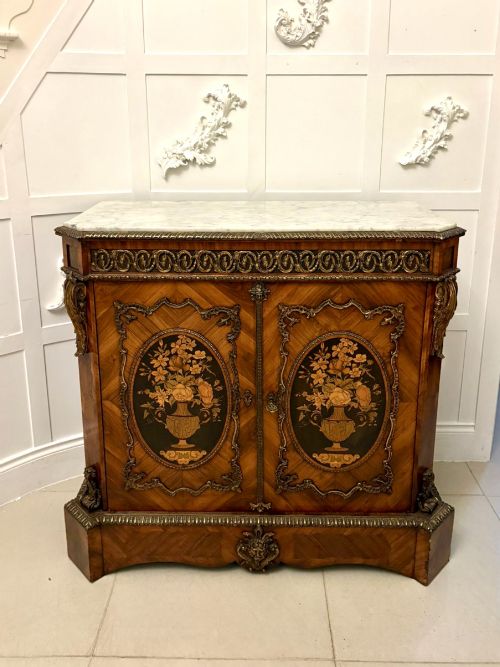
A chateau style commode brings grand continental presence to a room, offering generous storage topped with fine marble and detailed with ormolu mounts.
Chateau Style Commode
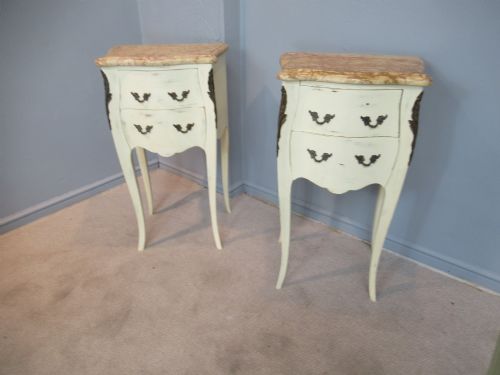
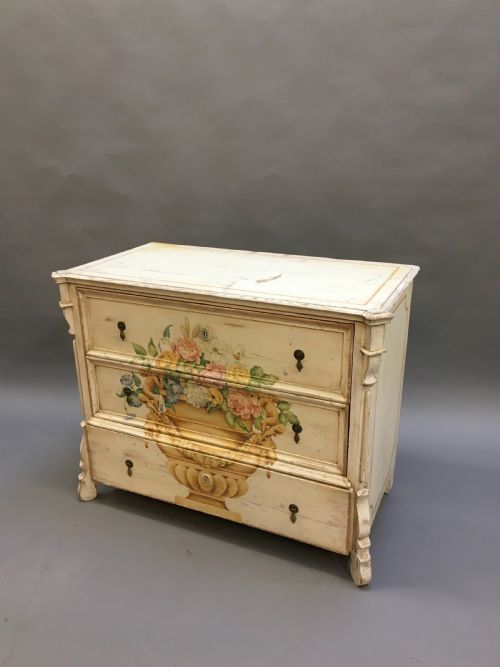
The pieces on this page lean heavily toward nineteenth and early twentieth century revivals alongside genuine eighteenth century examples. You will frequently find painted wooden finishes, serpentine fronts, and characteristic marble tops across the inventory.
Originating largely from continental workshops, these items serve as both practical storage and focal points for drawing rooms or bedrooms. Their forms range from classic bow fronted profiles to dramatic bombe shapes.
How they were made
Cabinet makers utilised durable timbers including walnut and kingwood as foundational structures for these pieces. Skilled hands applied intricate parquetry and soft painted finishes directly to the wooden surfaces.
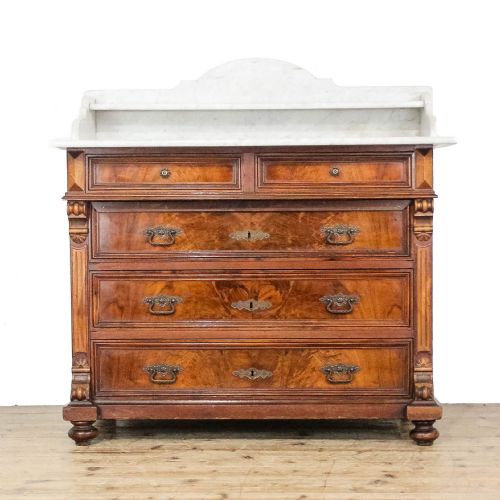
Craftsmen fitted heavy marble slabs to the upper surfaces to provide a durable and decorative top. Metal elements such as brass and ormolu were cast and applied to accentuate the curves and corners of the woodwork.
Listings feature pieces spanning from the 18th century through to 1930, utilising walnut, kingwood, painted wood, marble, and brass.
What varies in quality
Quality rests in the precision of the timber joints and the weight of the applied metal mounts. Superior pieces display crisp carving in the wood and tightly fitted marble slabs that sit flush with the frame.
The finesse of the hand painting and the complexity of the parquetry patterns distinguish finer examples from standard production. Older eighteenth century pieces show hand worked construction details that differ from later revival interpretations.
The Chateau Style Commode Glossary
- Commode
- A decorative chest of drawers or cabinet designed for domestic storage. These pieces often feature prominent hardware and shaped fronts.
- Bombe
- A swelling, outward curved profile on the sides and front of a cabinet. This curved shape requires advanced woodworking skill to execute properly.
- Ormolu
- Gilded bronze mounts applied to furniture for decorative effect. The metal is cast and finished to highlight architectural details.
- Parquetry
- Geometric wood patterns created by fitting small veneer tiles together. This technique decorates the exterior surfaces of finer cabinets.
- Serpentine
- A gently undulating front edge that curves inward in the centre and outward at the ends. It provides a fluid visual rhythm to the furniture piece.
Chateau Style Commode: Frequently Asked Questions
Where should I place a commode?
These pieces suit living rooms, large hallways, or bedrooms where surface space and storage are both valued. Their decorative fronts allow them to stand freely against a prominent wall.
Ensure the room has sufficient floor space to accommodate the curved profiles and protruding handles without obstructing walkways.
How do I care for the marble top?
Wipe the marble surface regularly with a soft, damp cloth to remove dust and prevent staining from spills. Avoid acidic cleaners that can etch the polished stone finish.
Use coasters under glasses and pads beneath heavy objects to protect the natural material from scratches and rings.
Are these pieces suitable for daily use?
Most of these cabinets are structurally sound for everyday storage of clothing or household items. Drawers and doors function as intended by the original cabinet makers.
Take care not to overload deep drawers and ensure the furniture sits level on the floor to maintain proper alignment.
How do I distinguish revival pieces from older ones?
Examine the interior construction, drawer linings, and back panels for tool marks and timber ageing. Eighteenth century examples show hand cut joinery characteristic of that era.
Revival pieces from the nineteenth and twentieth centuries often employ more standardised manufacturing methods while imitating earlier styles.