




Chandelier Ceiling Plate
These chandelier ceiling plate fixtures secure hanging lighting to the ceiling while concealing wiring or fixings, offering period character for domestic spaces.
Chandelier Ceiling Plate
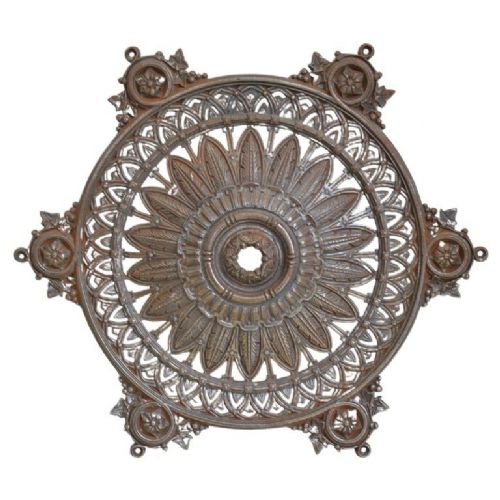
A buyer searching for a chandelier ceiling plate examines hardware components that support overhead lighting fixtures while finishing the junction between room and ceiling. The selection centres on architectural salvage, ceiling roses, and metal hardware fittings designed for hanging lights.
The objects span the Victorian, Edwardian, and 1930 periods, encompassing designs from the mid-nineteenth century onward. Cast brass and silver plated metals dominate the available forms, alongside cut glass and cast iron.
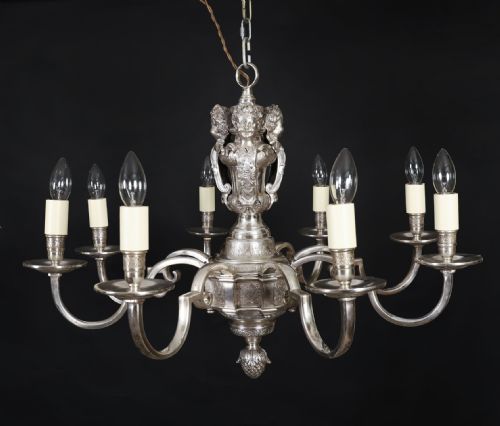
Stylistic influences range from Neo-Classical and Grand Regency to French Rococo Revival and Victorian Gothic. Buyers encounter ceiling roses featuring feather and ivy decoration alongside multi-armed chandeliers and pendant lights.
Materials and construction methods
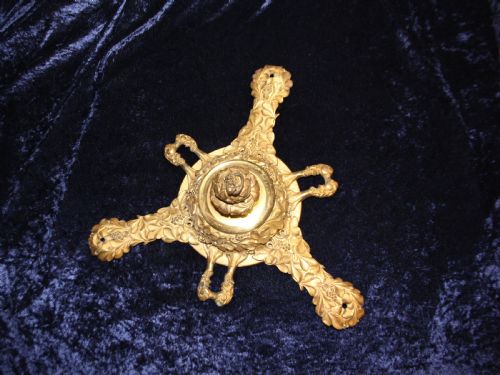
Metalworking techniques dictate the structure of these pieces, utilising cast brass, cast iron, and nickel plated brass alongside silver plate on base metals. Foundries poured molten metal into moulds to achieve decorative relief work such as foliage and classical motifs.
Glass elements incorporate cut glass and lead crystal, shaped by hand-cutting and polishing facets to refract light from pendant and dish configurations. Metal components receive silver plating or polishing to finish the surface texture.
Materials recorded across the inventory include silver plate, brass, cut glass, cast brass, cast iron, nickel plated brass, and lead crystal.
Assessing quality and craftsmanship
Quality separates simple utility hardware from pieces featuring intricate hand-finished detail. Castings display varying degrees of crispness in decorative motifs like feathers and ivy.
The integrity of silver plating and the clarity of cut glass or lead crystal differentiate standard production from finer examples. Heavier gauge metals and deeply carved glass facets indicate superior manufacturing standards.
The Chandelier Ceiling Plate Glossary
- Cast Brass
- An alloy of copper and zinc poured into a mould to form rigid decorative hardware. It provides a durable base for ornate ceiling fittings.
- Ceiling Rose
- A circular decorative moulding fixed to the ceiling around the point where a pendant light emerges. These elements protect the plaster and enhance the visual transition to the light fitting.
- Silver Plate
- A thin layer of silver applied to a base metal such as brass or copper. This technique offers the appearance of solid silver at a different scale of production.
- Lead Crystal
- Glass containing lead oxide to increase weight, brilliance, and clarity. It allows for deep, sharp cutting in decorative lighting components.
- Architectural Salvage
- Building components rescued from older structures for reuse. Items range from hardware to decorative roses removed during demolition or renovation.
Chandelier Ceiling Plate: Frequently Asked Questions
What is a chandelier ceiling plate?
A chandelier ceiling plate is a hardware fixture designed to anchor hanging lighting equipment to the ceiling structure. It covers electrical boxes and mounting points while providing an ornamental transition.
These pieces encompass cast roses, polished bronze fittings, and metal hardware from various historical periods. They function as both structural supports and decorative elements in interior schemes.
How do I install an antique ceiling rose?
Installation requires securing the metal or cast plate directly to ceiling joists or adequate mounting blocks capable of supporting the weight of the fixture. Wiring or suspension rods pass through the centre opening.
Care must be taken with brittle materials such as cast iron or glass to prevent damage during the fixing process. Professional installation ensures compliance with modern electrical standards.
Which periods do these fittings represent?
The available pieces originate from the Victorian and Edwardian eras, extending through the nineteenth century into the 1920s and 1930s. Mid-nineteenth-century examples frequently feature silver plating and hand-cut glass.
Later Edwardian and 1930s items introduce refined nickel plating and diverse arm configurations. Each era utilises distinct casting patterns and decorative styles ranging from Gothic revival to Dutch Baroque.
What materials are commonly found?
Construction materials primarily consist of metals including cast brass, cast iron, nickel plated brass, and silver plate over base metal. Bronze and polished metal finishes also appear frequently across the hardware.
Glass components include cut glass and lead crystal, particularly in pendant and dish light configurations. These materials combine to provide structural strength and reflective decorative qualities.
How do I clean silver plated hardware?
Cleaning requires mild, non-abrasive solutions formulated for plated metals to avoid wearing through the thin silver layer. Soft cloths help remove tarnishing without scratching the underlying brass or copper.
Harsh chemical dips should be avoided, especially on pieces with detailed cast ornamentation like ivy or feathers. Regular dusting preserves the historic patina of the metal.