



Ceramic Wash Bowl and Pitcher
A ceramic wash bowl and pitcher brings the practical washstand sets of the nineteenth and early twentieth centuries back into view for modern rooms.
Ceramic Wash Bowl and Pitcher
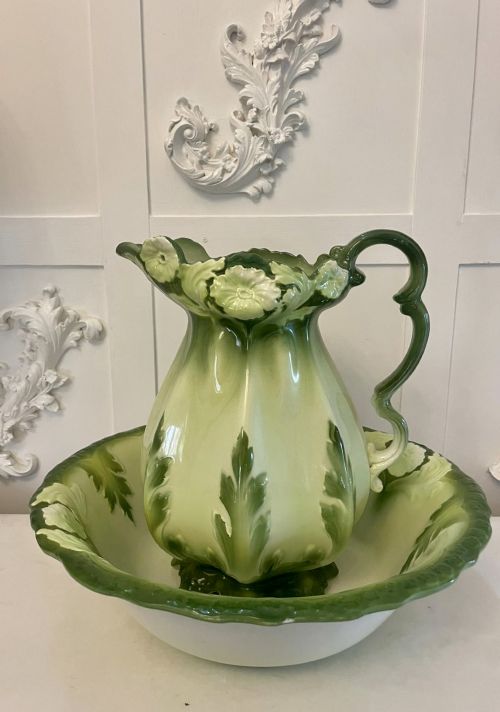
A ceramic wash bowl and pitcher comprises matched sets designed for nineteenth and early twentieth-century personal hygiene before plumbed bathrooms became common. Buyers searching for a ceramic wash bowl and pitcher encounter diverse nomenclature including jug and basin sets, washstand sets, and bathroom sets spanning the Victorian and Edwardian periods.
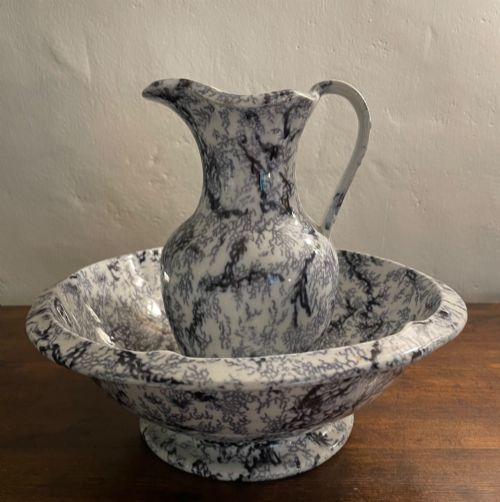
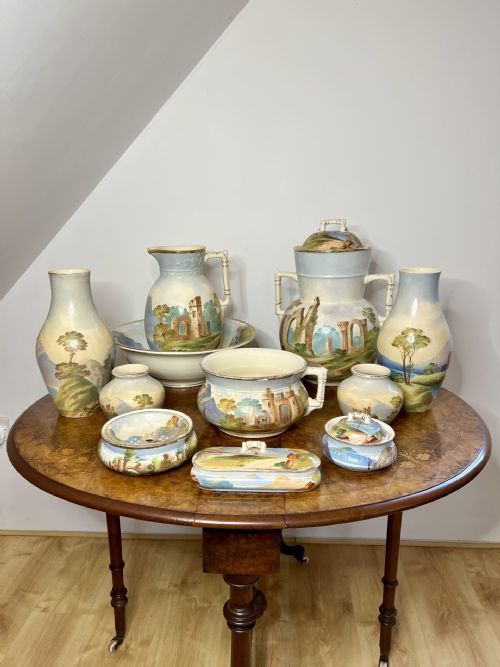
The pieces on this page range from early nineteenth-century earthenware items like flow blue and ironstone pieces to Edwardian bathroom sets and later porcelain examples from the nineteen-thirties. Forms vary from full-sized washstand suites to miniature sets and specialised vessels such as footbaths.
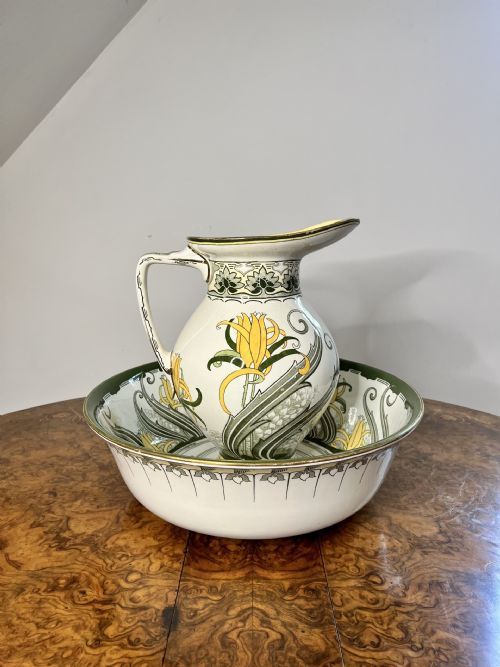
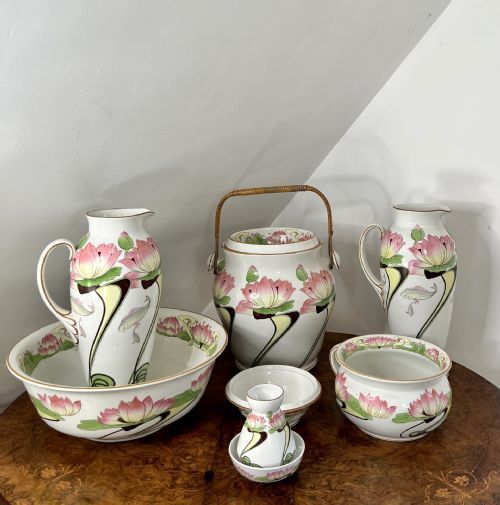
Makers and potteries represented in the evidence include Minton, Doulton Burslem, Masons Ironstone, and Mark Jones and Sons. Styles stretch across Victorian Chinoiserie, Aesthetic Movement, Art Nouveau, and Regency designs, showing how domestic utility intersected with changing artistic tastes.
Materials and production methods
Potters utilised earthenware, ironstone, and porcelain as the primary ceramic bodies for these utilitarian sets. These materials provided the necessary durability for daily ablutions while offering smooth surfaces suitable for decorative glazes.
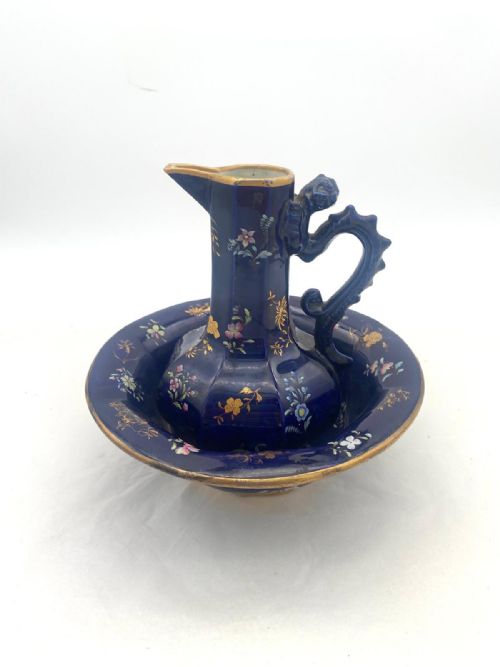
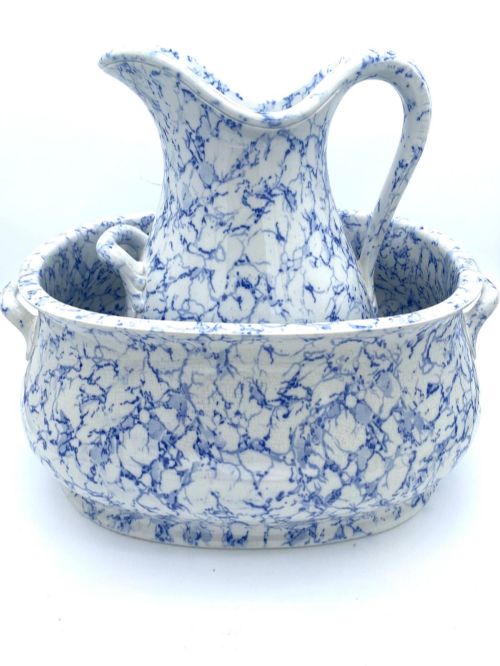
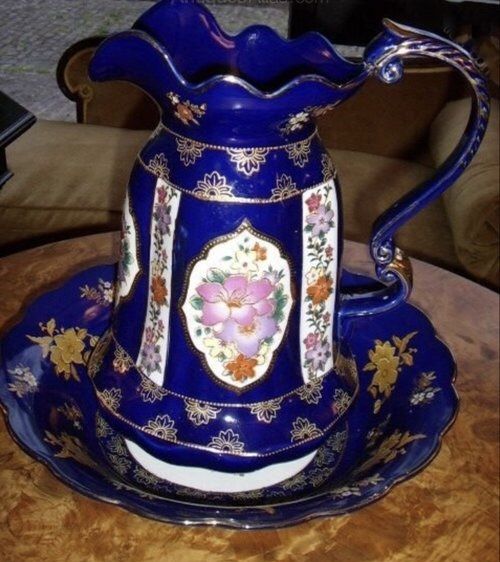
Decoration relied on specialised glazing and transfer printing techniques, including flow blue methods where cobalt pigment blurred during firing to create soft outlines. Artisans further enhanced select vessels with gold leaf, gilt highlights, and hand-painted enamel floral designs.
Ceramic Wash Bowl and Pitcher Retail Price Guide 2026
Typical asking prices for ceramic wash bowl and pitcher among the pieces listed under this phrase on Sellingantiques today, from the lower quarter to the upper quarter. They describe what is for sale here now, not the wider market.
Listings span the period from eighteen hundred through nineteen thirty, incorporating Victorian, Edwardian, Art Nouveau, and Regency styles.
Distinctions in quality and execution
Quality in a ceramic wash bowl and pitcher rests upon the crispness of the transfer print, the evenness of the glaze, and the sophistication of the ceramic body. Ironstone and porcelain examples generally exhibit greater weight and refinement compared to standard earthenware.
The presence of recognised factory marks, such as those from Doulton Burslem or Masons, alongside complex decorative schemes like Aesthetic Movement patterns or multi-piece configurations, elevates the standing of an individual set.
Minton·Doulton Burslem·Masons Ironstone·Shelley·Mark Jones and Sons
The Ceramic Wash Bowl and Pitcher Glossary
- Ironstone
- A dense, durable type of earthenware patented in the early nineteenth century that resists chipping and mimics porcelain. It served as a sturdy medium for heavy wash jugs and basins.
- Flow blue
- A transfer-printing technique where lime or chloride vapour was introduced into the kiln during firing, causing the cobalt blue design to bleed into the white glaze. This resulted in a soft, hazy aesthetic.
- Footbath
- A large, deep basin designed for soaking feet, often produced in the same decorative patterns as standard wash pitchers and basins. They represent a specialised form within nineteenth-century bathroom ceramics.
- Chinoiserie
- A decorative style reflecting European interpretations of Chinese artistic motifs, appearing on Victorian wash sets. It incorporates whimsical landscapes, figures, and architectural elements.
- Aesthetic Movement
- A late nineteenth-century design style emphasising art for art's sake, moving away from heavy Victorian ornamentation toward simpler, nature-inspired motifs.
Ceramic Wash Bowl and Pitcher: Frequently Asked Questions
How were wash bowls and pitchers used?
These sets served as the primary washing apparatus in bedrooms before running water became standard in homes. Water was poured from the pitcher into the bowl for morning or evening ablutions.
They sat upon wooden washstands alongside soap dishes and chamber pots. Today, they function primarily as decorative display pieces or floral containers.
How do I identify Victorian sets?
Victorian sets often feature heavier earthenware bodies, floral transfer prints, and styles ranging from Chinoiserie to Aesthetic Movement. Makers' marks stamped into the underside can help narrow down the production decade.
Examining the weight, glaze characteristics, and handle shapes also assists in distinguishing Victorian pieces from later Edwardian or twentieth-century examples.
What is ironstone?
Ironstone is a heavy, durable ceramic body patented in the nineteenth century to provide a strong alternative to porcelain. It formed an ideal substrate for the large jugs and basins required on washstands.
Pieces made from ironstone typically display a substantial heft and a bright white or slightly greyish glaze beneath transfer-printed decoration.
How should I display a wash set?
Wash sets look best when displayed together on a sturdy surface like a sideboard, table, or traditional washstand. Keeping the pitcher resting inside or beside the bowl preserves the intended silhouette of the set.
Ensure the display location supports the considerable weight of these ceramic pieces, particularly when dealing with ironstone components.