
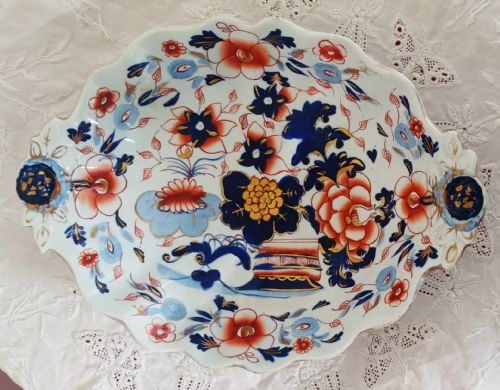
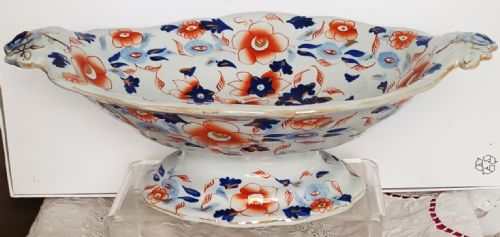


Ceramic Pedestal Fruit Dish
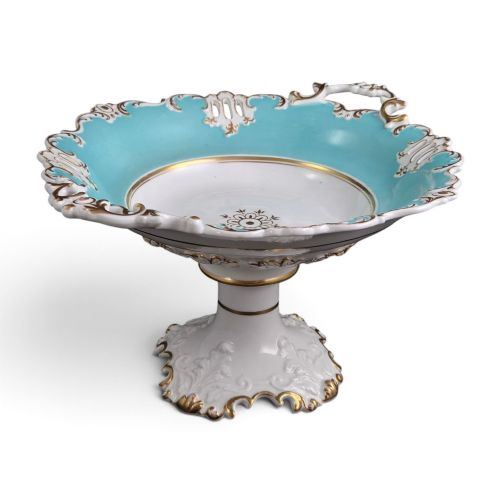
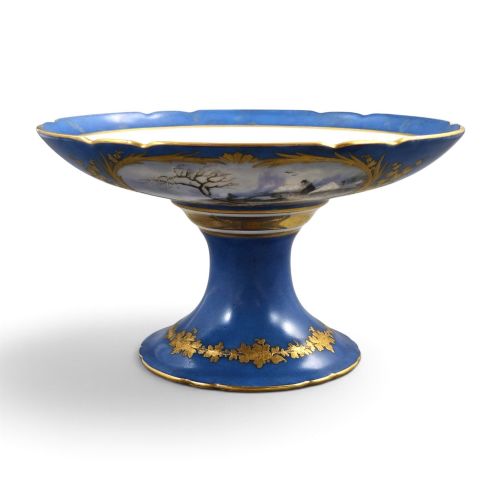
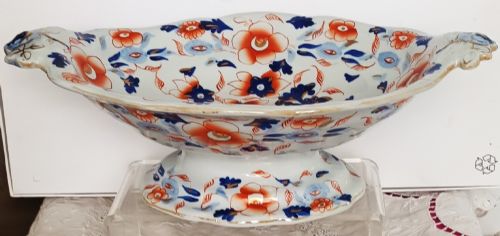
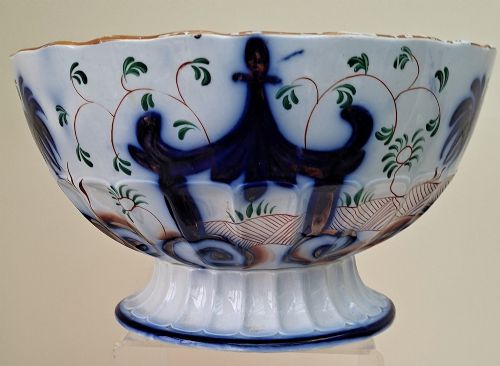
These ceramic pedestal fruit dish examples range from Georgian ironstone to Victorian porcelain, offering a raised presentation for fruit and sweets.
Ceramic Pedestal Fruit Dish
A ceramic pedestal fruit dish sits upon a raised foot or column, elevating the bowl above the surface of a dining table or sideboard. These pieces serve as comports, tazzas, and centrepieces designed to display fruit or hold desserts.
The selections span the Georgian, Victorian, and Edwardian eras, alongside later twentieth-century styles including Art Nouveau and Art Deco. Buyers meet forms such as footed bowls and large display compotes originating from English potteries and continental factories.
How they were made
Makers utilised porcelain, earthenware, and ironstone as the primary ceramic bodies for these pedestal vessels. Potters shaped the clay using moulds or throwing techniques before applying detailed glazes and enamel colours.
Decoration often involved hand-painted motifs, transfer printing, and applied three-dimensional figures or floral elements. Gilding and gold leaf highlights were frequently added to borders and handles before final kiln firing.
What varies in quality
The refinement of the ceramic body and the precision of the moulding set different tiers of quality apart. Finer examples display crisp relief work and delicate proportions in the pedestal and bowl.
Surface decoration dictates much of the distinction, separating standard transfer-printed wares from pieces featuring hand-painted artistry, intricate enamel work, and complex applied figures.
Coalport·Sèvres·Schierholz Plaue·Maling·Mason·Minton·Royal Worcester·Eichwald·Moorcroft
The Ceramic Pedestal Fruit Dish Glossary
- Comport
- A raised dish or bowl used for serving fruit, nuts, or sweetmeats at the end of a meal. These forms sit on a central pedestal foot.
- Tazza
- A shallow bowl or saucer mounted on a stem and foot, often used for display or serving. The term derives from the Italian word for cup.
- Ironstone
- A type of heavy, durable earthenware developed in the nineteenth century to imitate porcelain. It resists chipping and provides a sturdy base for colourful patterns.
- Majolica
- A type of earthenware coated in an opaque tin glaze and painted with bright metallic oxide colours. Victorian versions often incorporate naturalistic leaf and plant motifs.
- Pearlware
- A fine-grained earthenware with a pale bluish-white glaze, developed in the late eighteenth century. It bridges the transition between salt-glazed stoneware and later creamware.
Ceramic Pedestal Fruit Dish: Frequently Asked Questions
What is a ceramic pedestal fruit dish used for?
These elevated vessels held fruit or sweetmeats as part of desert courses in formal dining settings.
They also functioned as decorative centrepieces on sideboards and tables when not in active use.
How can I tell the period of a pedestal bowl?
Examine the characteristics of the ceramic body, glaze colour, and maker's marks underneath the base.
Stylistic clues such as Rococo revival scrolls or Art Deco geometries also help narrow down the decade of production.
Are these compotes safe for serving food?
Most antique ceramic dishes remain structurally sound for presenting dry foods like whole fruit or wrapped sweets.
Items with extensive enamel wear or old hairline cracks are best reserved for display rather than active dining use.