



Ceramic Hound Ornament
These ceramic hound ornament examples bring sculptural dog figures from the eighteenth, nineteenth, and early twentieth centuries directly into domestic spaces.
Ceramic Hound Ornament
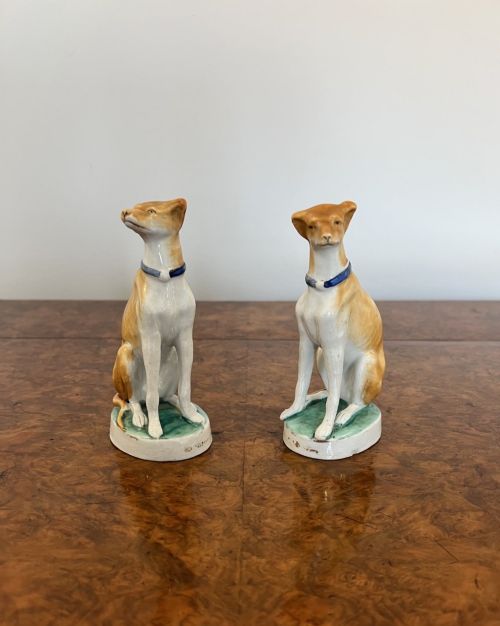
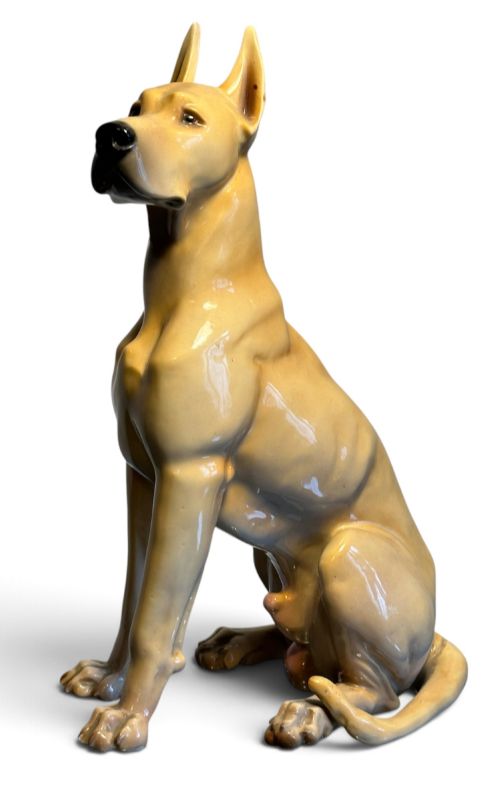
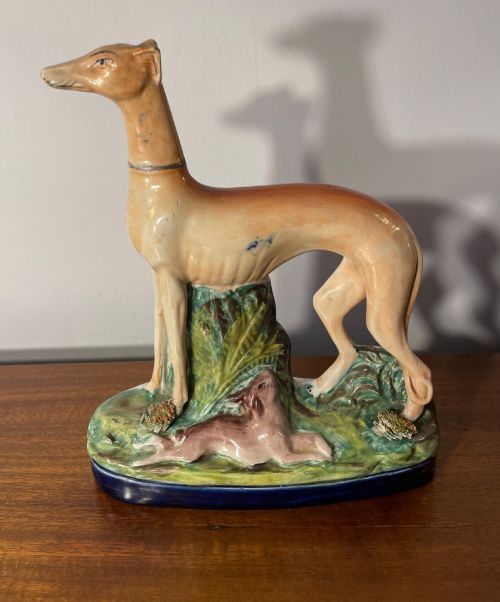
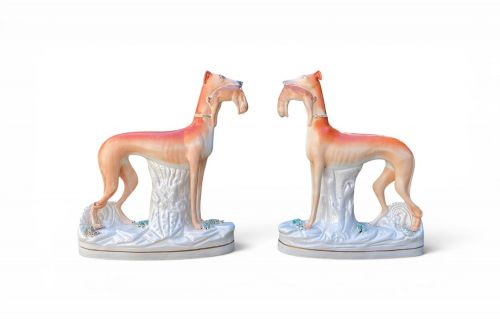
When you search for a ceramic hound ornament, you encounter figural pottery and porcelain shaped as pointers, greyhounds, setters, and hunting dogs. The selection spans utilitarian Staffordshire figures from the Victorian era to Continental porcelain works and Chinese export statues.
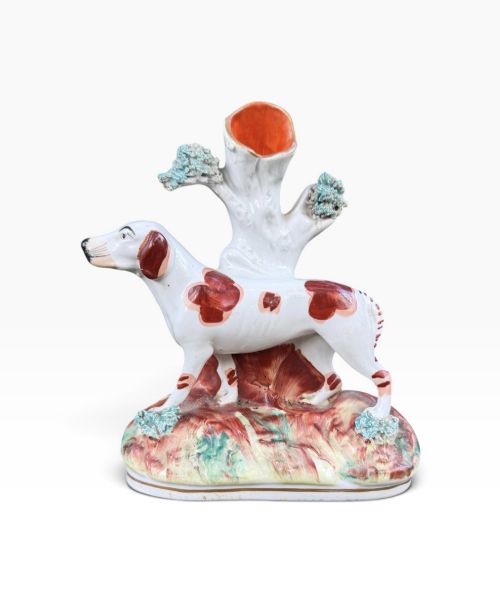
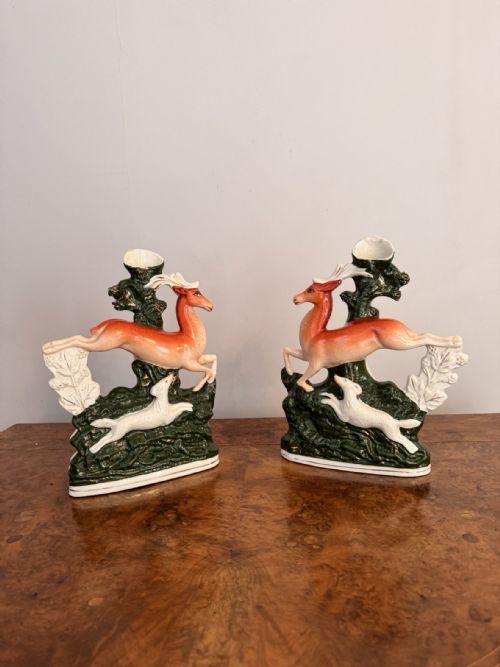
Most entries belong to the nineteenth century, particularly Staffordshire production featuring pairs of greyhounds or hunting dogs with hare. You also find spill vases designed to hold matches alongside the canine figure.
The assortment extends from eighteenth-century Chinese porcelain dog statues up to Edwardian Royal Dux models and German porcelain dogs. These decorative objects function as mantel ornaments or large terracotta sculptures.
How they were made
The makers formed these pieces using earthenware, porcelain, and terracotta, applying lead glaze, enamel, and enamel paint for colour and surface finish. Staffordshire potteries shaped local clays into figures before firing and painting by hand.
Porcelain works such as Meissen and Chinese export pieces utilised finer ceramic bodies fired at higher temperatures with controlled glaze applications. Larger terracotta pieces required sturdy modelling to support the substantial weight of lifesize animal sculptures.
Ceramic Hound Ornament Retail Price Guide 2026
Typical asking prices for ceramic hound ornament among the pieces listed under this phrase on Sellingantiques today, from the lower quarter to the upper quarter. They describe what is for sale here now, not the wider market.
Listings feature earthenware, porcelain, and terracotta, spanning the eighteenth, nineteenth, and early twentieth centuries.
What varies in quality
Quality depends upon the precision of the modelling and the sensitivity of the hand-painted enamel details across the face and coat. Finer Staffordshire and factory pieces display sharper anatomical definition and careful feathering of fur rather than heavy, indistinct brushwork.
The crispness of the mould and the uniformity of the lead glaze or enamel finish separate standard production items from superior factory examples. Pairs matching in size and execution generally command greater interest than mismatched survivors.
Thomas Parr factory·Enoch Wood factory·Royal Dux
The Ceramic Hound Ornament Glossary
- Staffordshire pottery
- Earthenware figures produced in the Staffordshire potteries during the nineteenth century. These include portrait figures, animals, and spill vases.
- Spill vase
- A hollow ceramic tube attached to a figurine, designed to hold wooden spills for lighting candles or fires. They often accompany hunting dog figures.
- Lead glaze
- A glossy coating containing lead oxide applied to earthenware before firing. It produces a shiny, glass-like surface that protects the painted body beneath.
- Terracotta
- Unglazed or glazed fired clay of a brownish-red colour. It is typically utilised for larger sculptures and garden or interior ornaments.
Ceramic Hound Ornament: Frequently Asked Questions
What is a ceramic hound ornament?
It is a decorative figurine or spill vase modelled in the shape of a dog, such as a greyhound, pointer, or setter. These pieces were produced by various factories from the eighteenth century onwards.
Potters created them to sit on mantelpieces, sideboards, and tables as domestic decoration. Some examples also served the practical purpose of holding spills for lighting fires.
How do I date a Staffordshire hound?
Dating relies on stylistic clues, the type of clay body, and the characteristics of the glaze and enamel painting. Mid-nineteenth-century pieces often feature distinct colour palettes and moulded bases.
Comparing the modelling to documented factory pieces helps narrow the decade of production. Examining the wear on the base also offers evidence of age.
Where were these figures made?
Many examples originated in the Staffordshire potteries of England, which specialised in affordable earthenware animals. Other pieces hail from German porcelain works, Chinese export kilns, and Bohemian factories like Royal Dux.
Each region employed distinct materials and firing techniques that distinguish local production. Continental works typically utilised finer porcelain bodies compared to English earthenware.
How do I care for antique pottery dogs?
Keep them away from direct sunlight and areas subject to sudden temperature fluctuations to protect the glaze and enamel. Dust them gently with a soft dry brush rather than using liquid cleaners.
Avoid displaying them near edge surfaces where they might be easily knocked over. Stable placement ensures these fragile ceramic pieces survive safely.