

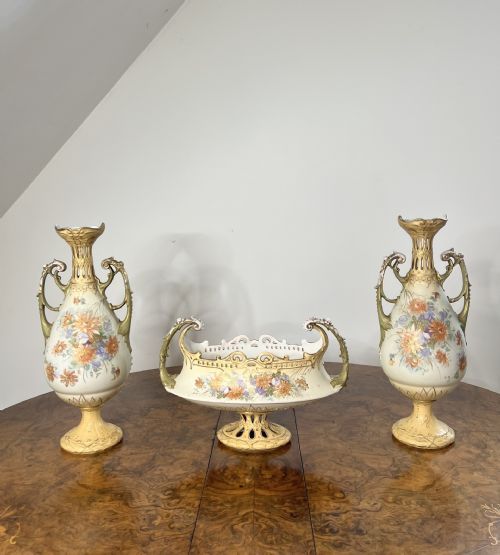
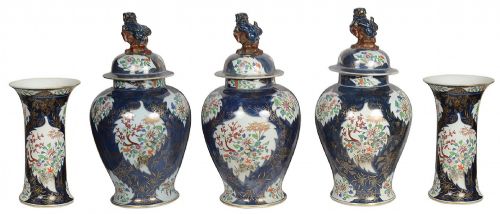


Ceramic Garniture Set
These ceramic garniture set pieces bring symmetry and architectural presence to a mantelpiece, offering coordinated display vessels crafted across European and Japanese traditions.
Ceramic Garniture Set
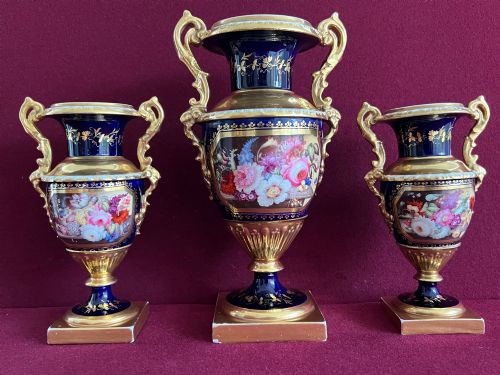
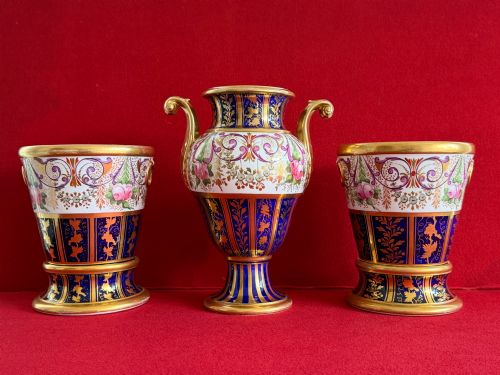
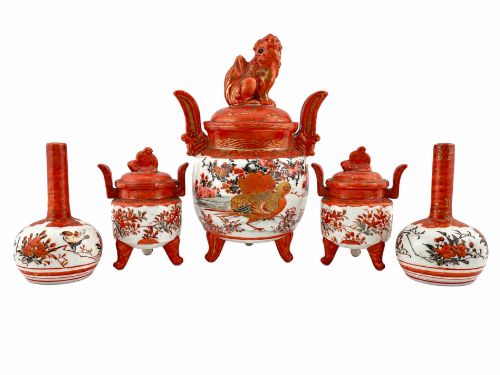
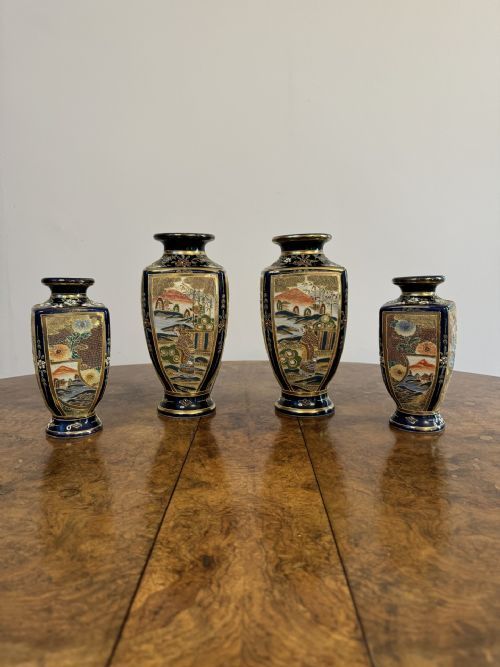
A ceramic garniture set comprises matched groupings of three, four, or five vases, urns, or clock sets designed for symmetrical mantel or sideboard display. When you search for a ceramic garniture set, you meet matching vessels originating from English factories, continental European makers, and Japanese kilns. The configurations span from three-piece vase sets to five-piece arrangements featuring central covered vessels flanked by matching beakers or tripod koro.
The traditions represented here cross the Georgian, Regency, and Victorian eras alongside the Meiji and Edo periods of Japan. English porcelain factories like Spode, Worcester, and Minton sit alongside French porcelain works, Royal Vienna styles, and Japanese Satsuma, Imari, and Kutani wares. These matched groupings functioned historically as the focal point of formal domestic interiors, providing balanced decoration across a chimney breast.
How they were made
Potters shaped these vessels using fine porcelain or earthenware bodies, often applying intricate glazes and hand-painted enamel decoration. Many pieces incorporate gold leaf or gilding to highlight moulded relief work and borders, requiring multiple firings in the kiln to set the colours.
Mounts play a structural and decorative role in certain continental examples, incorporating brass or ormolu to frame the porcelain bodies. Japanese works utilise traditional ceramic pigments in the Kutani and Imari palettes, frequently depicting figures, birds, and shishi with fine brushwork.
Ceramic Garniture Set Retail Price Guide 2026
Typical asking prices for ceramic garniture set among the pieces listed under this phrase on Sellingantiques today, from the lower quarter to the upper quarter. They describe what is for sale here now, not the wider market.
Listings feature porcelain bodies alongside brass and ormolu mounts, spanning Regency, Victorian, and Japanese Meiji periods.
What varies in quality
Quality in these matched sets rests upon the crispness of the porcelain moulding and the precision of the hand-painted enamel work. Superior examples display consistent glaze application and harmonious hand-painting across every individual vessel in the grouping.
The sophistication of the gilding and the integrity of any associated metal mounts, such as ormolu, distinguish finer artistic production. Completeness remains central, as keeping a multi-piece set intact through centuries dictates the survival of the original visual harmony.
Spode·Minton·Flight Barr and Barr·Royal Vienna·Sevres
The Ceramic Garniture Set Glossary
- Garniture set
- A matched group of three or more vases, urns, or clocks designed to be displayed together as a decorative scheme. These arrangements typically feature a central larger vessel balanced by smaller matching pieces.
- Imari palette
- A traditional Japanese style of ceramic decoration employing deep cobalt blue, iron red, and gold over a white porcelain body. This aesthetic influenced European factories during the eighteenth and nineteenth centuries.
- Ormolu
- Gilded bronze mounts and decorative hardware applied to ceramic bodies, frequently seen on nineteenth-century French garnitures. The technique involves applying a gold amalgam to a bronze base.
- Koro
- A traditional Japanese incense burner, often featured as part of multi-piece ceramic garniture sets alongside matching vases. These tripod vessels usually include a pierced cover.
- Spode
- A prominent English pottery and porcelain manufacturer founded in Stoke-on-Trent, known for pioneering bone china and fine enamel decoration. Their early nineteenth-century garniture pieces remain highly collectible.
Ceramic Garniture Set: Frequently Asked Questions
How were garniture sets displayed?
Garniture sets were traditionally arranged along a mantelpiece, sideboard, or large cabinet top in a symmetrical layout. The tallest vessel occupied the centre position, flanked by the matching smaller vases or urns.
This arrangement created visual balance and architectural symmetry within formal nineteenth-century drawing rooms and reception spaces.
What is the difference between an Imari and a Satsuma garniture?
Imari garnitures originate from Japanese traditions employing a distinct palette of cobalt blue, iron red, and gold, usually on a crisp porcelain body. They feature bold geometric and floral patterns.
Satsuma wares utilise earthenware bodies with a characteristic crackled ivory glaze, heavily decorated with polychrome enamels and gilding, frequently depicting figures and natural scenes.
Can clock sets be considered garniture sets?
Clock sets function as a specific category of garniture, pairing a central mantel clock with matching side vases or urns. They share the same decorative purpose of creating a balanced focal point on a mantelpiece.
These sets combine horological function with coordinated ceramic and ormolu design, reflecting the tastes of the nineteenth century.
How do I care for antique porcelain garnitures?
Antique porcelain and enamel decoration require gentle dusting with a soft, dry brush rather than chemical cleaning solutions. Water and moisture can damage exposed earthenware bodies and vulnerable gilding.
Display these vessels away from direct sunlight and dramatic temperature fluctuations to protect the hand-painted glazes and gold leaf over time.