



Ceramic Figurine Group
These ceramic figurine group pieces range from eighteenth-century porcelain pairs to Victorian Staffordshire portrait groups, offering timeless sculptural presence for collectors.
Ceramic Figurine Group
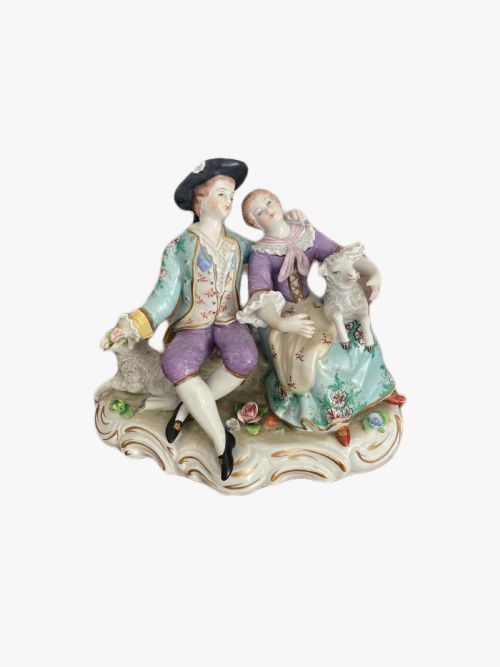
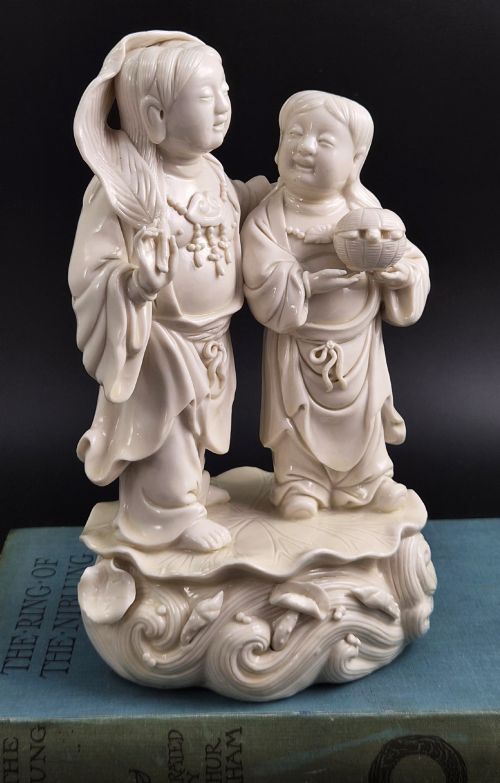
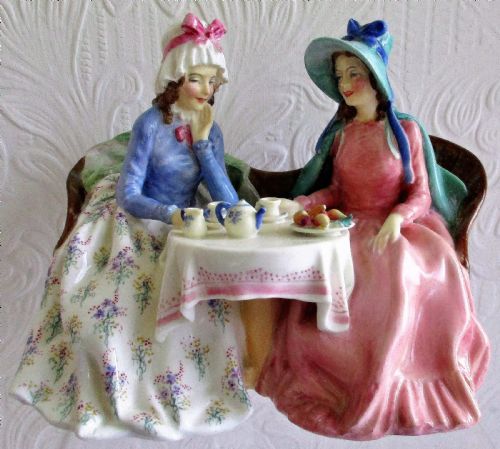
When you search for a ceramic figurine group, you are looking at multi-figure sculptural compositions rendered in porcelain, earthenware, or biscuit. These pieces depict mythological scenes, literary characters, and domestic pairings across various historical periods.
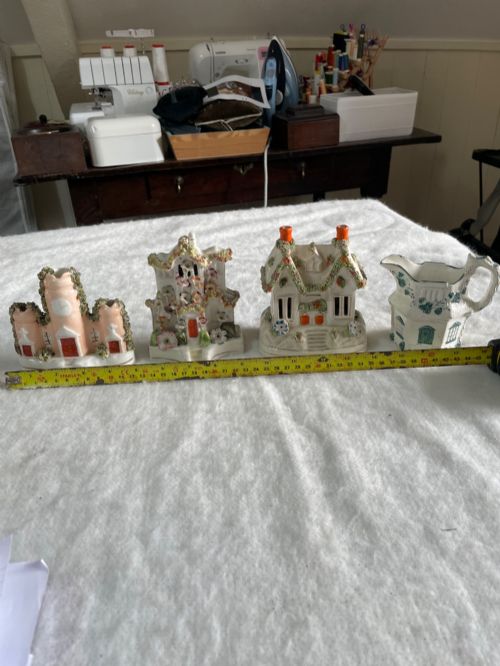
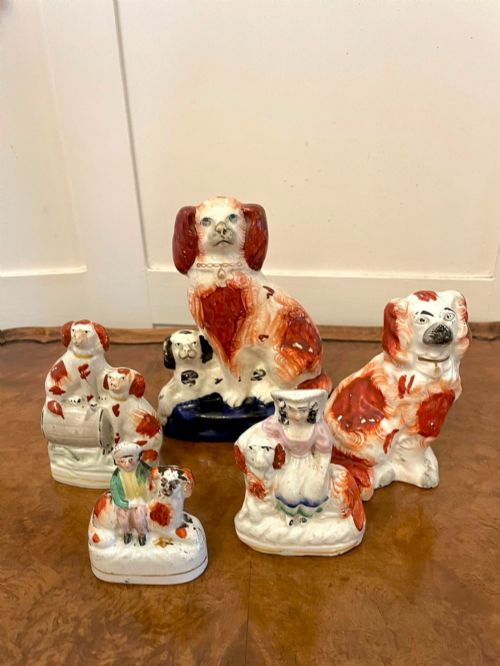
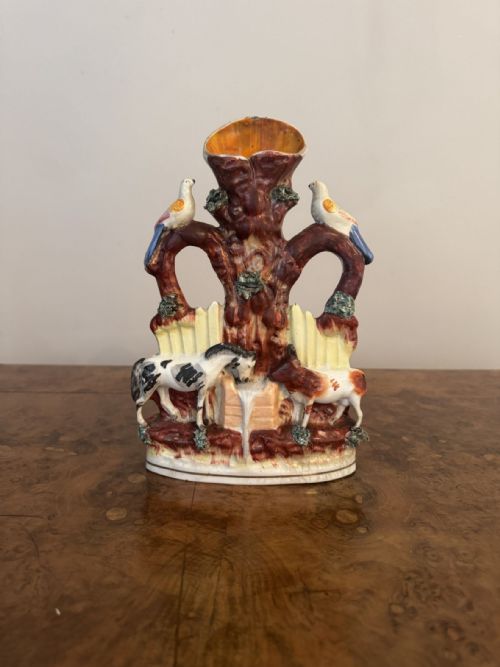
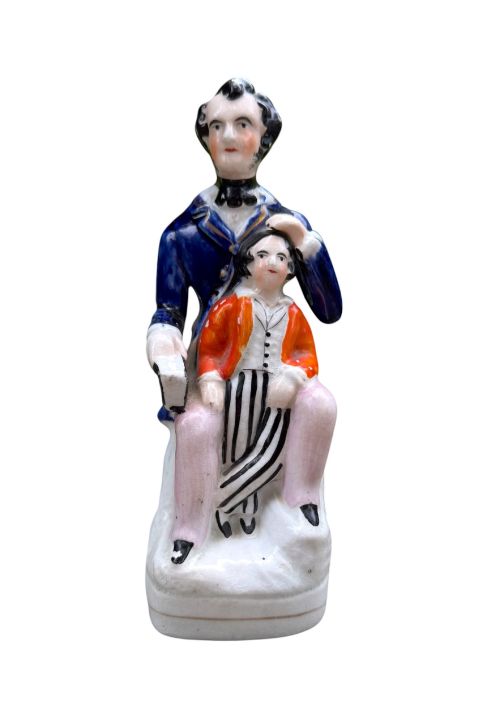
The most common examples on this page are Victorian Staffordshire earthenware flatbacks and nineteenth-century European porcelain groups. These span diverse forms, including spill vases, allegorical pairs, and detailed literary or historical tableaus.
How They Were Made
Makers utilised hard-paste and soft-paste porcelain, earthenware, and terracotta, shaping figures by hand or pressing them into moulds. Delicate details like porcelain lace or floral garlands were often applied by hand before firing.
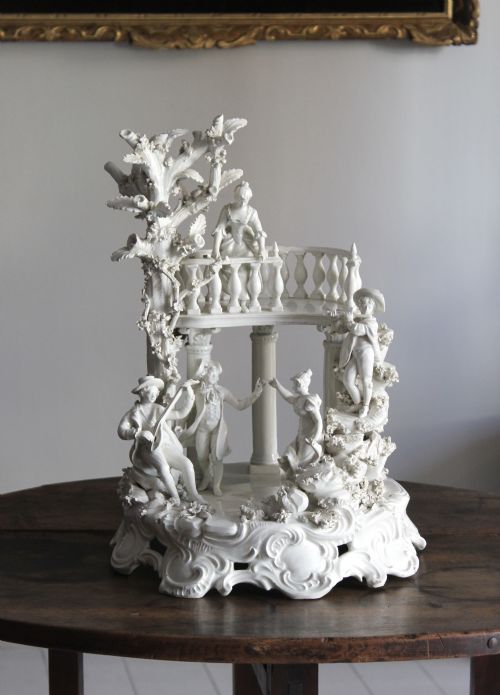
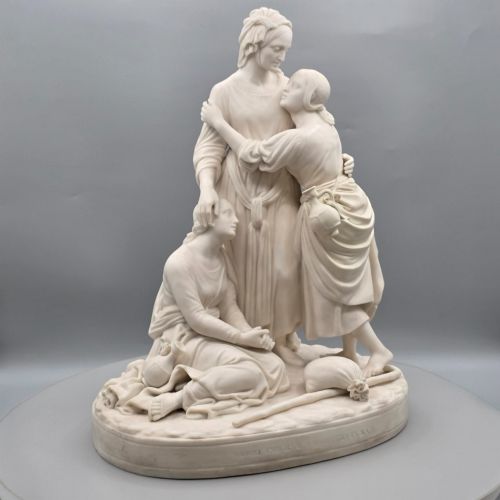
Glazes, enamel colours, and gold leaf were applied to the fired body, sometimes requiring multiple kiln firings to set the pigments and glossy finishes. Parian ware was also cast to achieve a smooth, unglazed marble-like surface.
Ceramic Figurine Group Retail Price Guide 2026
Typical asking prices for ceramic figurine group among the pieces listed under this phrase on Sellingantiques today, from the lower quarter to the upper quarter. They describe what is for sale here now, not the wider market.
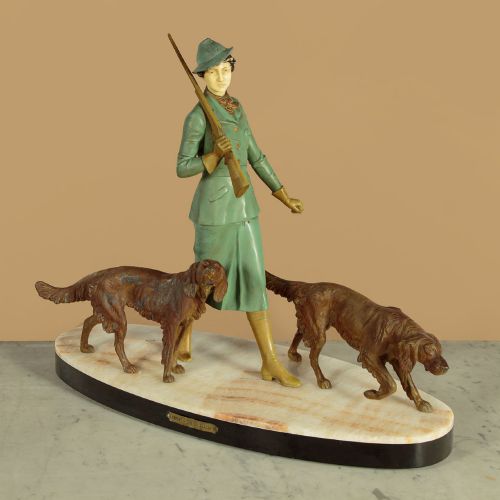
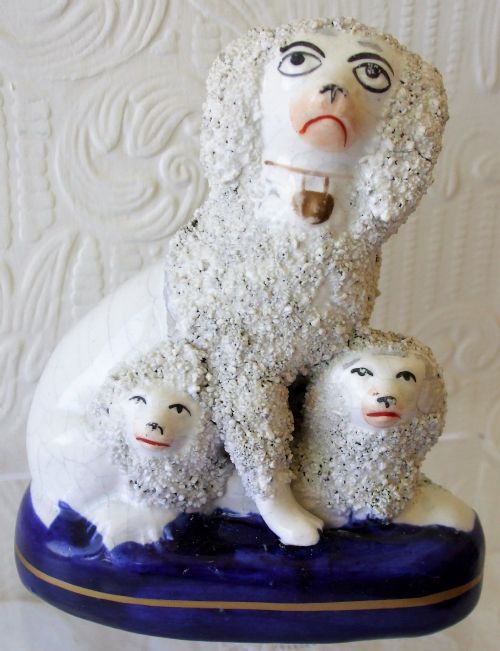
Several groups capture domestic scenes featuring poodles, spaniels, and dogs participating in daily life.
What Varies in Quality
The preservation of fragile applied elements, such as bocage foliage or porcelain lace, influences the integrity of the piece. Subtle polychrome enamel work and careful gilding indicate higher craftsmanship.
Meissen·Goldscheider·Derby·Royal Doulton·Carl Thieme Dresden·Ernst Bohne Sohne·Volkstedt
The Ceramic Figurine Group Glossary
- Biscuit
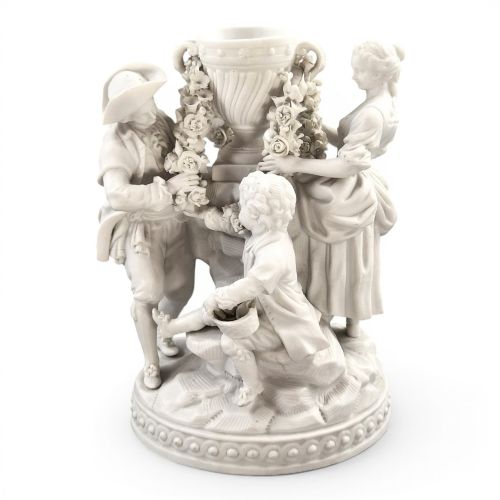
- Unglazed porcelain fired once to create a matte, porous finish resembling marble. This technique highlights fine sculptural details.
- Bocage
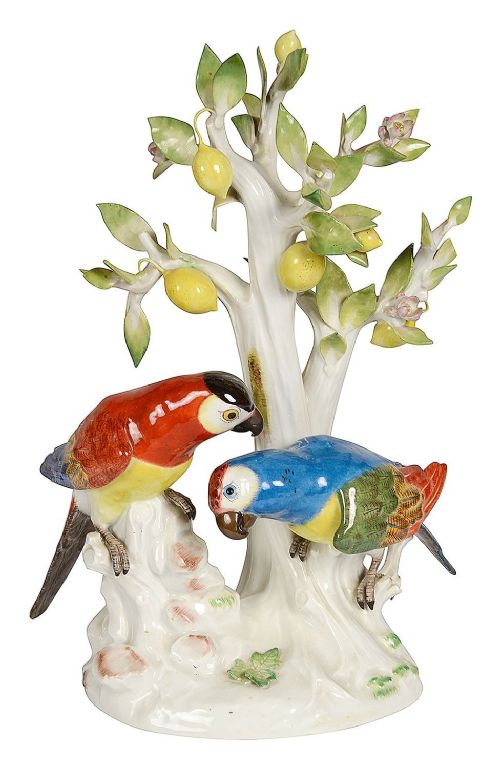
- Applied ceramic foliage or tree branches forming a decorative background behind figures. It is frequently seen on eighteenth-century English and continental porcelain.
- Flatback
- An earthenware figure with a finished front and a flat, unpainted reverse side designed for placement against a mantelpiece. These are characteristic of nineteenth-century Staffordshire potteries.
- Parian ware
- A fine-grained, unglazed white porcelain developed in the nineteenth century to imitate carved marble. It is typically utilised for classical and literary sculptural groups.
- Spill vase
- A hollow cylindrical holder integrated into a figure group, designed to hold wooden matches for lighting candles or fires. These combine decorative sculpture with domestic utility.
Ceramic Figurine Group: Frequently Asked Questions
How were Staffordshire figures used?
Staffordshire pottery figures and flatbacks were primarily decorative ornaments displayed on mantelpieces and shelves in nineteenth-century homes. Their flat backs allowed them to sit flush against a wall.
Some variants, such as spill vases, also served the practical household function of holding wooden matches.
How do I tell eighteenth-century porcelain apart?
Eighteenth-century porcelain groups often exhibit detailed hand-painted polychrome enamel, delicate rococo or neoclassical styling, and fine porcelain bodies. Factory marks, when present, help confirm provenance.
Many pieces from this era feature mythological subjects or pastoral scenes modelled by prominent European factories.
How do I care for antique porcelain?
Antique porcelain and earthenware require gentle handling and placement away from direct sunlight and areas prone to extreme temperature changes. Dusting with a soft, dry brush preserves delicate applied elements like lace and foliage.
Avoid using liquid cleaners on unglazed surfaces like biscuit porcelain or Parian ware.