



Ceramic Dog Vases
These ceramic dog vases bring together Staffordshire pottery figures and traditional spill vessels from the nineteenth century for collectors of antique fauna.
Ceramic Dog Vases
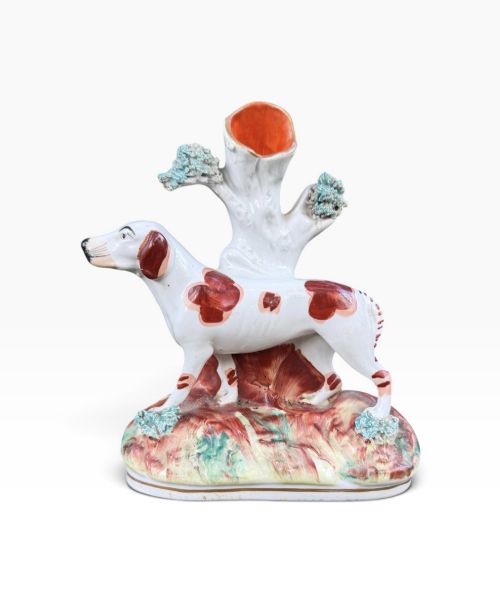
When you search for ceramic dog vases, you are looking at nineteenth-century figures combined with utilitarian spill vessels, often originating from Staffordshire potteries. These pieces combine sculptural canine representations with functional cylindrical holders designed to contain tapers for lighting pipes or candles.
The pieces you are most likely to meet on this page date from the Victorian era around eighteen sixty, alongside broader nineteenth-century ceramic items. They bridge the gap between ornamental mantelpiece figures and practical household accessories of the period.
How they were made
The firing process required careful temperature control to set the vitreous glazes and fixed enamels onto the hard-paste porcelain or earthenware surfaces. Artisans then hand-painted secondary details over the glaze, adding character to the dogs and surrounding foliage.
Ceramic Dog Vases Retail Price Guide 2026
Typical asking prices for ceramic dog vases among the pieces listed under this phrase on Sellingantiques today, from the lower quarter to the upper quarter. They describe what is for sale here now, not the wider market.
What varies in quality
The distinction between ordinary and superior pieces rests upon the crispness of the moulding and the skill of the hand-painted enamels. Finer examples display lively expressions on the dogs and clean, precise brushwork rather than flat, heavy application of colour.
Thomas Parr factory
The Ceramic Dog Vases Glossary
- Spill vase
- A hollow vertical vessel designed to hold taper spills for lighting fires, candles, or pipes. These holders are frequently incorporated directly behind sculpted animal figures.
- Staffordshire figure
- An ornamental ceramic piece produced by potteries in the English county of Staffordshire during the nineteenth century. These figures commonly depict animals, people, and domestic scenes.
- Earthenware
- A porous pottery body fired at lower temperatures and coated with a glaze to ensure it holds liquids. This material forms the base of many nineteenth-century domestic ornaments.
- Hard-paste porcelain
- A durable ceramic composition made from petuntse and kaolin, fired at high temperatures to create a dense, vitrified body. It resists scratching and takes glossy enamels effectively.
- Enamel
- A glass-like substance fused to the surface of ceramics through firing to add colour and decoration. Enamels provide the bright surface hues seen on many nineteenth-century pieces.
Ceramic Dog Vases: Frequently Asked Questions
How were these vases used?
Victorian households utilised these vessels to hold thin spills of wood or paper used to transfer a flame from the fireplace to lamps, candles, or pipes. They kept these tapers close at hand while adding decorative charm to a room.
The combination of sculpture and utility meant they sat neatly on mantelpieces or side tables where hearth equipment was needed. Over time, their practical function faded, leaving them purely as decorative collectibles.
How can I tell the period?
Dating relies on observing the ceramic body, glaze characteristics, and moulding styles typical of nineteenth-century production. Pieces from around eighteen sixty often show specific Staffordshire modelling traits and hand-painted enamel palettes.
Examining the underside and any crazing within the glaze provides further clues regarding age and manufacture methods. Comparing the piece to recorded factory styles helps narrow down the decade of creation.
How do I care for antique ceramics?
Keep these pieces away from direct sunlight and areas subject to sudden temperature fluctuations to protect the enamel and glaze. Dust them gently with a soft, dry brush rather than using liquid cleaning solutions.
Avoid displaying them near damp walls or heat sources that might stress the underlying earthenware or porcelain body. Careful handling ensures the delicate hand-painted details remain intact for years to come.