


Ceramic Dinner Service
A ceramic dinner service gathers people around the table with the weight of centuries in every plate and bowl.
Ceramic Dinner Service
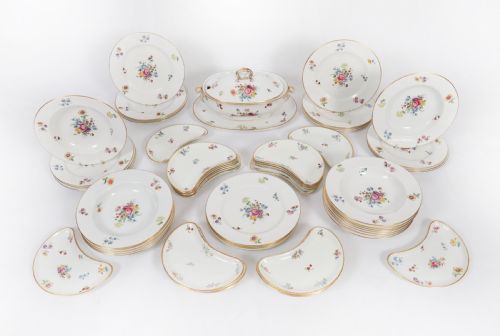
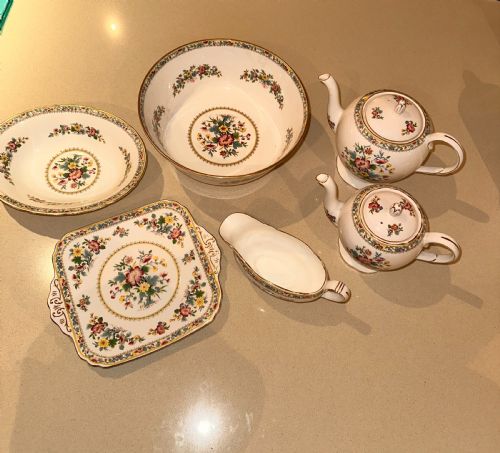
A ceramic dinner service comprises matching sets of plates, dishes, and serving pieces designed for formal dining across the 19th century and into the Edwardian period. Buyers searching for a ceramic dinner service encounter extensive sets alongside part services, child's miniature sets, and individual plates originating from English and European potteries.
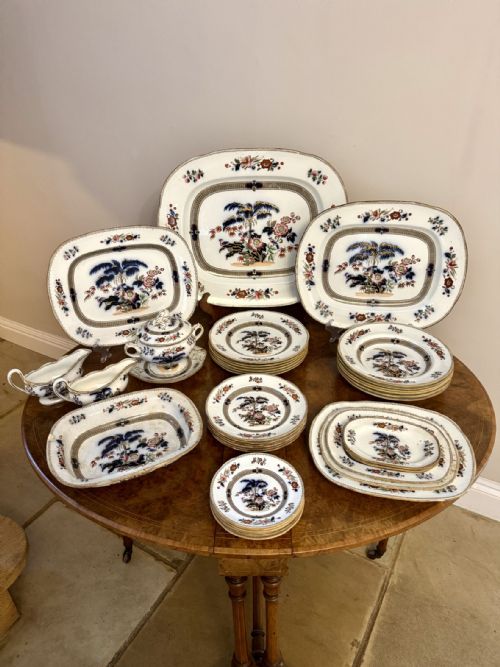
The forms range from large eighty or one hundred piece Victorian services down to miniature toy services and cabinet plates. Traditional English and Regency Chinoiserie styles dominate the selection, often carrying named patterns like Italian, Battersea, or Hibiscus.
Materials and production
Potters shaped these services from earthenware, ironstone, creamware, and porcelain, applying glazes and enamel colours to the fired clay. Many pieces feature blue and white transfer printing or careful hand-painted details.
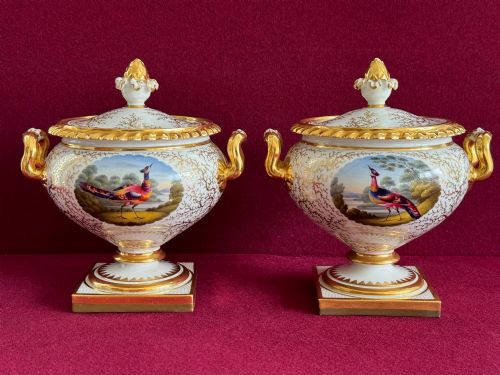
Makers finished select services with gilt and gold leaf highlights around the borders and rims, contrasting against the white ceramic bodies.
Listings feature 19th-century earthenware, porcelain, and ironstone across Victorian, Edwardian, and Regency periods.
Distinctions in quality
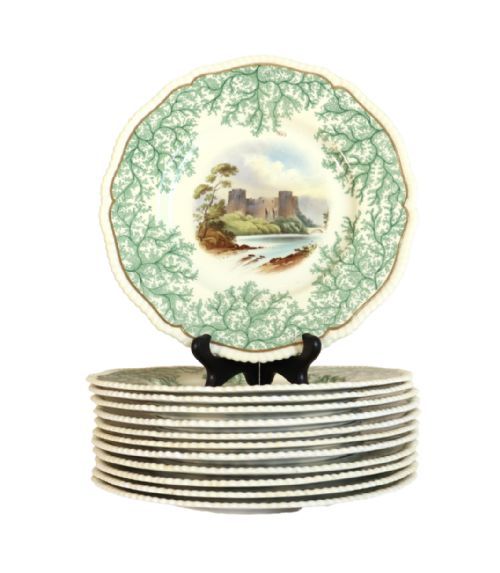
Quality rests in the crispness of the transfer print, the delicacy of the ceramic body, and the precision of the hand-painted enamels. Finer services maintain uniformity across large numbers of pieces, with clean glazing and sharp botanical or scenic details.
Provenance and completeness separate standard table settings from exhibition pieces, particularly where sets retain their original family history or bear marks from renowned manufactories.
Spode·Minton·Wedgwood·Copeland·Booths·Müller Volkstedt·Doulton·Limoges·Masons Ironstone·Coalport
The Ceramic Dinner Service Glossary
- Ironstone
- A dense, durable type of earthenware patented in the early 19th century that resists chipping and wear. It provided a sturdy body for large family services.
- Creamware
- A refined earthenware with a pale yellowish-cream glaze developed during the 18th century and continued into the Victorian era. It offered a smooth canvas for botanical and scenic painting.
- Transfer printing
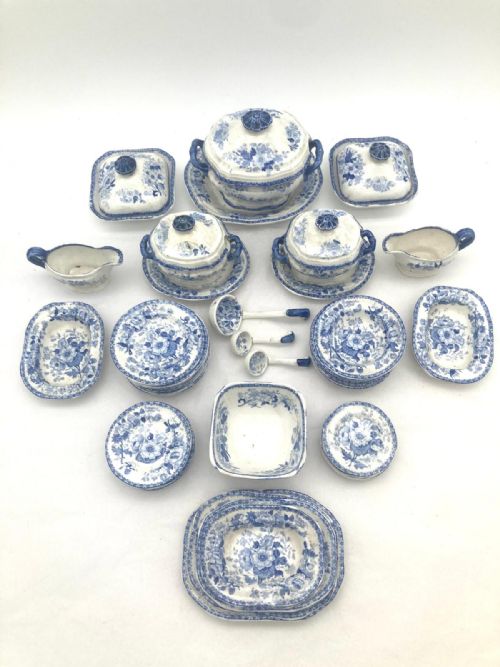
- A technique for applying complex decorative designs to ceramics from a copperplate engraving via tissue paper. This method allowed consistent patterns like blue and white landscapes to be reproduced across entire services.
- Flow blue
- A style of cobalt blue transfer printing where the colour intentionally bled into the surrounding white glaze during firing. The technique created a soft, hazy effect popular on mid-19th-century wares.
- Part service
- An incomplete set that retains a usable number of plates or serving dishes from an original larger production. These surviving groups allow buyers to acquire historic tableware without needing a full hundred-piece assembly.
Ceramic Dinner Service: Frequently Asked Questions
How were ceramic dinner services used?
These sets served multi-course meals in large dining rooms, with specific plates and vessels allocated for soup, meat, fish, and dessert.
Larger services included dozens of matching pieces to accommodate extended families and guests at formal Victorian dinners.
Can I use antique dinner services daily?
Many buyers prefer to keep historic earthenware and porcelain for special occasions rather than daily wear.
Hand-painted details and gold leaf highlights require gentle hand washing to preserve the glaze over time.
What is a child's dinner service?
Potters scaled down full-sized tableware to create miniature dinner services for children to use during lessons or play.
These smaller sets replicate the patterns and materials of adult services, from transfer-printed earthenware to porcelain.
How do I identify Victorian sets?
Victorian sets often display registry marks stamped into the ceramic base alongside maker initials and pattern names.
The styles lean towards transfer-printed florals, scenic views, and heavier ironstone or earthenware bodies.