


Earthenware Dinner Set
These earthenware dinner set pieces bring historic transfer-printed patterns and armorial creamware straight to the table.
Earthenware Dinner Set
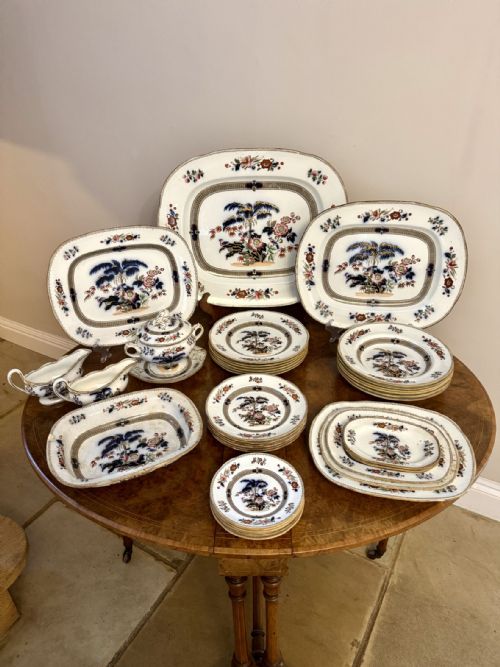
An earthenware dinner set comprises matching tableware created across the eighteenth, nineteenth, and early twentieth centuries. Buyers searching for an earthenware dinner set encounter comprehensive fifty-nine piece services alongside smaller part services, child's services, and sets of plates and platters.
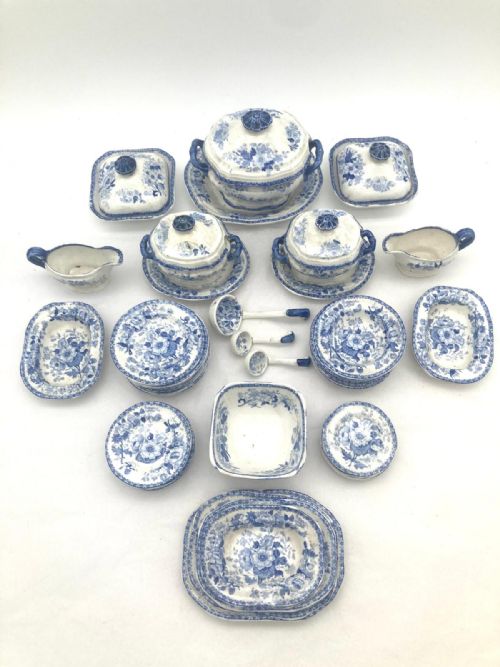
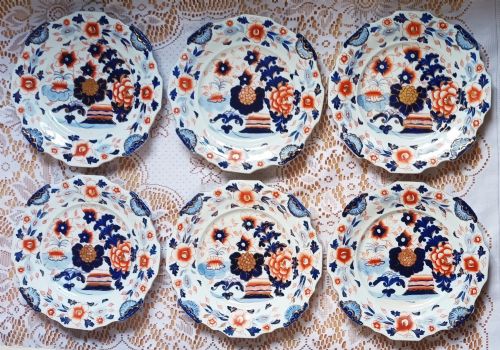
The selections span distinct periods including Georgian, Regency, Victorian, and Edwardian eras. Forms range from full dinner services to miniature dinnerware and individual dinner plates decorated in floral sheet patterns, blue and white transfer, and Japanned motifs.
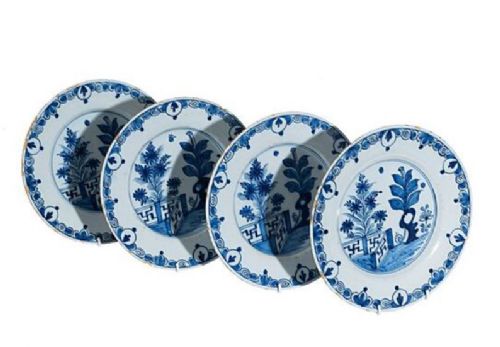
Makers represented on this page include established potteries producing creamware, ironstone china, and Delft earthenware. These historic sets offer both decorative presence and usable service for traditional dining settings.
How they were made
Potters shaped ceramic clay into plates, platters, and service pieces before applying fluid glazes and enamel colours. Many examples utilise blue and white transfer printing to transfer intricate botanical, London Bridge, or pictorial designs onto the earthenware surface.
Firms also employed hand-painted enamel details, flow blue techniques where colour blurred deliberately into the glaze, and occasional gold leaf accents. Creamware and ironstone bodies provided durable, pale foundations suited to both crisp neoclassical armorials and bold Chinoiserie patterns.
Tiny grasshoppers scuttle across early nineteenth-century plates, bringing unexpected insects to formal dining tables.
What varies in quality
The standard of a service rests on the crispness of the transfer printing and the preservation of hand-applied enamel colours and gold leaf. Complete services retaining dozens of matching components command attention compared to partial groupings or individual plates.
The refinement of the underlying ceramic body also distinguishes the pieces, from porous early creamware to dense, heavy ironstone china. Early Wedgwood creamware and named Regency patterns represent sophisticated potting standards of their respective decades.
Wedgwood·Minton·Booths·Masons Ironstone·Copeland Spode
The Earthenware Dinner Set Glossary
- Creamware
- A refined pale earthenware developed in the eighteenth century, noted for its warm ivory tone and smooth lead glaze. Wedgwood became particularly celebrated for perfecting this versatile body.
- Ironstone China
- A durable, heavy ceramic patented in the nineteenth century that bridged earthenware and porcelain. It resisted chipping and provided an ideal dense surface for transfer-printed patterns.
- Flow Blue
- A nineteenth-century transfer printing technique where lime or ammonia chloride was introduced into the kiln to deliberately blur the cobalt blue design into the surrounding glaze.
- Transfer Printing
- A method of decorating ceramics by engraving a design on a copper plate, pulling it on tissue paper, and pressing it onto the biscuity clay before glazing and firing.
- Armorial
- A ceramic design featuring painted or transferred coats of arms, crests, or family badges. These custom commissions were popular among elite eighteenth-century households.
Earthenware Dinner Set: Frequently Asked Questions
Can I use antique earthenware daily?
These historic sets suit gentle domestic use, though hand washing preserves the delicate glazes and nineteenth-century transfer patterns.
Modern dishwashers and harsh detergents can damage older ceramic bodies and fade hand-applied enamels over time.
How do I date a service?
Dating relies on maker marks, ceramic body composition, and stylistic clues within the transfer patterns such as Regency borders or Victorian floral motifs.
Comparing the blue and white tones and glaze characteristics against documented manufacturer timelines helps narrow down the production decade.
What is ironstone china?
Ironstone is a sturdy type of earthenware patented to withstand heavy dining use while mimicking the appearance of expensive porcelain.
Its dense composition made it the material of choice for large nineteenth-century dinner services meant for everyday hospitality.
Why do child services exist?
Potters created miniature dinner services and child's services as educational toys or display pieces for affluent Victorian and Georgian nurseries.
These smaller versions scaled down full dinnerware patterns into proportions suited for children or cabinet display.