



Vintage Soup Bowls
These vintage soup bowls bring distinct 18th-century, 19th-century and early 20th-century character to table service through diverse ceramic, porcelain, silver and pewter forms.
Vintage Soup Bowls
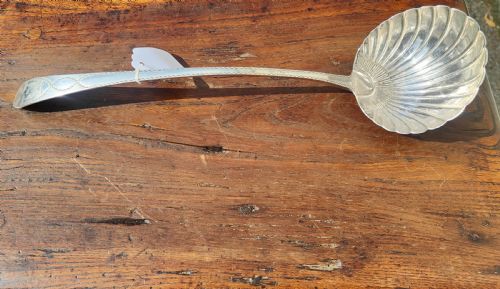
Vintage soup bowls encompass a wide range of forms designed for serving and consuming broth, soup and chowder across multiple centuries. Buyers searching this phrase encounter everything from grand lidded tureens with matching ladles to individual porcelain soup dishes and silver porringers.
The selection on this page draws from diverse stylistic traditions, including Georgian armorial creamware, Victorian transfer-printed earthenware, Edwardian silver-plated vessels and Art Deco porcelain. Pieces span origins from English potteries to Chinese export workshops and Italian porcelain manufactories.
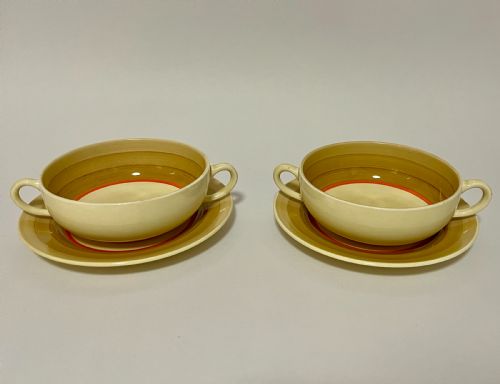
Individual bowls, broth cups and deep dishes appear alongside larger serveware sets, offering options for both formal dining display and practical table use. Each era contributes distinct shapes, ranging from neoclassical profiles to heavy pewter porringers.
Materials and Manufacture
Ceramic and porcelain vessels dominate the material record, utilising fired earthenware, ironstone and translucent porcelain bodies. Potters applied underglaze blue and white transfer printing, hand-painted fruit motifs and armorial crests directly onto the clay bodies before glazing.
Metal items incorporate sterling silver, silver plate, pewter and Old Sheffield Plate, shaped through hammering, casting and soldering. Fine details include cast handles, applied gilding, gold leaf accents and cut glass manipulation in punch bowl formations.
Listings span multiple centuries, incorporating 17th-century forms, 18th-century creamware, 19th-century transfer-printed ironstone, and early 20th-century porcelain.
Assessing Quality and Execution
Quality reveals itself in the crispness of transfer-printed details, the precision of hand-painted armorial crests and the integrity of applied gilding. Finer ceramic pieces display thin, even walls and smooth, consistent glaze applications without firing flaws.
Metalwork quality rests on the weight of the silver or pewter, the sturdiness of soldered handles and the retention of original plating or polish. Maker attestation through clear factory marks, retailer stamps or silversmith hallmarks further elevates the standing of individual items.
Wedgwood·Booths·Clarice Cliff·Mappin and Webb·Tiffany and Co·Grainger and Co·Royal Worcester·Mason·Richard Ginori·Copeland and Garrett
The Vintage Soup Bowls Glossary
- Armorial
- A ceramic design featuring a painted or printed family crest or coat of arms. These bespoke commissions denote high-status original ownership.
- Tureen
- A large, deep serving bowl with a lid utilised for holding and presenting soup at the table. They frequently sit upon a matching stand and pair with a ladle.
- Porringer
- A small, shallow bowl equipped with one or two flat horizontal handles, historically used for broth or porridge. Early examples appear in pewter, silver and ceramic.
- Transfer Print
- A decoration technique where an engraved copper plate transfers a design onto paper, which is then stamped onto unglazed pottery. Blue and white patterns represent the most common application.
- Creamware
- A refined, cream-coloured earthenware developed in the 18th century by English potters like Wedgwood. It superseded heavier salt-glazed stonewares for dining ware.
Vintage Soup Bowls: Frequently Asked Questions
What is the difference between a tureen and a soup bowl?
A tureen is a large, lidded vessel designed to hold multiple servings of soup at the centre of a table. Individual soup bowls or dishes are smaller vessels meant for single portions.
Tureens frequently include matching ladles and stands for serving, whereas soup bowls pair with dinner service settings for individual diners.
How do I care for antique ceramic soup bowls?
Antique ceramics require gentle hand washing in lukewarm water with mild soap to protect fragile glazes and hand-painted or gilt details. Dishwashers and harsh abrasives risk permanently damaging the historic surfaces.
Storing pieces with padded dividers prevents chipping along the rims of stacked bowls and tureens.
Can I use silver soup bowls for dining?
Sterling silver and silver-plated soup bowls remain entirely functional for dining, provided they do not possess active silver tarnish or degraded plating. Regular use develops a soft patina appropriate for historic metalware.
Avoid using harsh chemical dips on pieces with delicate soldered joints or engraved crests.
How do I identify 18th-century creamware?
Eighteenth-century creamware displays a warm, pale yellow or ivory hue characteristic of refined English earthenware bodies. Pieces often feature lightweight construction and subtle glaze pooling around the foot rims.
Markings on the base, when present, frequently consist of impressed letters rather than printed factory stamps.