

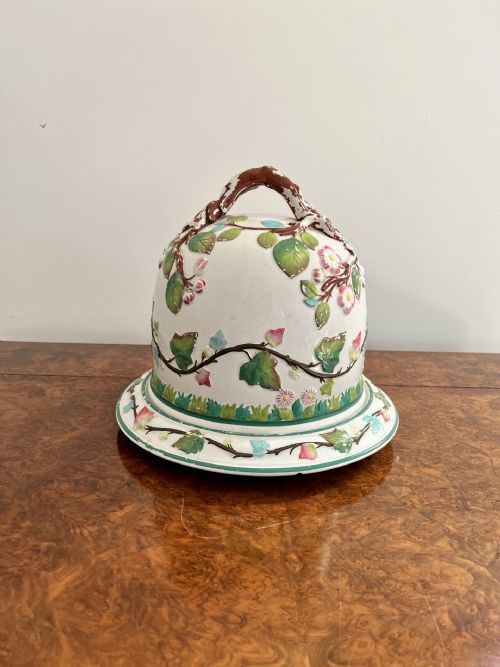


Ceramic Cheese Stand
A ceramic cheese stand brings Victorian presence to the table, offering a stately cover for your favourite cheese.
Ceramic Cheese Stand
A ceramic cheese stand serves as a decorative and practical centrepiece for storing and presenting cheese on the dining table. The form typically consists of a large fitted dome, bell, or cover sitting atop a matching flat plate or saucer. These substantial serving pieces originated primarily in the nineteenth century during the Victorian era when elaborate dining customs required dedicated vessels for service. Buyers searching for a ceramic cheese stand will find grand covered dishes designed to keep cheese fresh before the advent of household refrigeration.
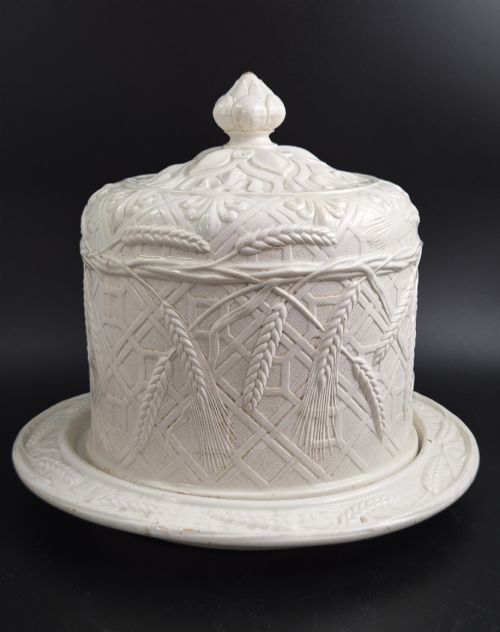
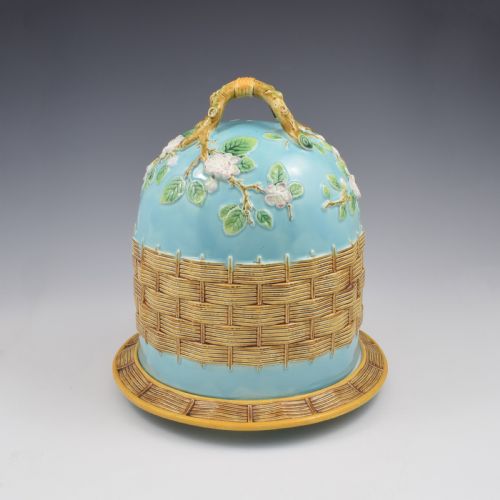
The examples gathered here span the nineteenth century, drawing heavily from the Victorian period alongside earlier Regency influences. Forms range from simple white ironstone breakfast ware to heavily modelled majolica bells adorned with naturalistic blossom motifs. You will encounter tall cylindrical Stilton covers as well as lower, footed dishes intended for everyday table use. Makers utilised diverse earthenware bodies to create everything from crisp white surfaces to richly coloured relief decoration.
How they were made
Potters constructed these heavy vessels using durable earthenware, ironstone, and stoneware bodies fired at high temperatures to withstand daily pantry and dining room use. Ironstone provided a dense, utilitarian white foundation favoured for large domestic domes, while softer earthenware formed the base for intricate moulded details. These clay bodies were then coated with clear or coloured glaze to seal the porous material and provide a smooth, washable finish.
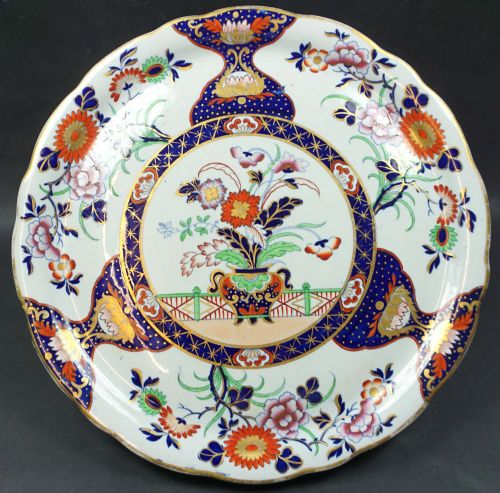
Decoration relied on hand colouring, enamel application, and elaborate moulding techniques to achieve distinct textures like basketweave, lattice, and botanical relief. Potters pressed soft clay into complex moulds to create raised patterns such as wheat ears, apple blossoms, or oriental pagoda scenes. Specialist painters then applied enamel colours by hand beneath or over the glaze before a final kiln firing fixed the palette permanently.
Ceramic Cheese Stand Retail Price Guide 2026
Typical asking prices for ceramic cheese stand among the pieces listed under this phrase on Sellingantiques today, from the lower quarter to the upper quarter. They describe what is for sale here now, not the wider market.
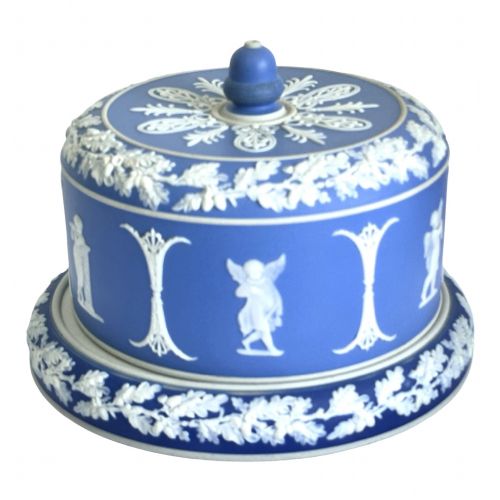
Listings feature nineteenth century earthenware and ironstone bodies, encompassing Victorian majolica and jasperware.
What varies in quality
The standard of modelling defines the finer examples, separating crisp, deeply undercut relief work from softer, worn impressions. Superior pieces display sharply defined botanical elements or architectural pagoda details where every leaf and tile remains distinct. Lesser vessels suffer from blurred moulding where the plaster forms have worn down through repeated commercial use.
Colour application and glaze purity further separate the ordinary from the exceptional. Master potteries achieved rich, vibrant majolica enamel tones that pool evenly across the moulded surfaces without clouding the underlying detail. In simpler ironstone wares, quality rests on the clarity of the white body and the precise execution of any hand painted accents.
Hicks & Meigh·George Jones·Wedgwood·James Dudson·Copeland·Mason's
The Ceramic Cheese Stand Glossary
- Ironstone
- A dense, hard wearing type of earthenware patented in the nineteenth century as a durable alternative to porcelain. It forms the heavy white body characteristic of many large nineteenth century kitchen and dining vessels.
- Majolica
- A type of earthenware coated in an opaque tin glaze and painted with metallic oxide colours that fuse during firing. This technique produces the vibrant, glossy green, brown, and pink tones seen on Victorian leaf and blossom stands.
- Jasperware
- A fine grained, unglazed stoneware developed to create a matte finish with contrasting raised white figures or motifs. It is famously associated with neoclassical and Victorian decorative table wares.
- Cheese bell
- An alternative term for the domed cover that sits over the plate to protect the cheese. The bell shape allows air to circulate while keeping the contents covered.
Ceramic Cheese Stand: Frequently Asked Questions
How were cheese stands used?
Victorian households utilised these covered dishes to store cheese on the dining table or sideboard between meals. The heavy ceramic dome trapped moisture and protected the dairy from dust and insects.
Servants brought the entire stand to the table during the dessert course, lifting the bell to reveal the cheese to guests. After the meal, the dish returned to the pantry or larder until the next service.
Are these pieces safe for food?
Most antique earthenware and ironstone remains suitable for serving dry foods like hard cheeses today. The glazed interior surfaces provide a stable barrier against the underlying clay body.
However, you should avoid storing moist foods for extended periods in older majolica wares due to the nature of nineteenth century glazes. Hand washing is essential to preserve the antique surfaces and prevent thermal shock.
How do I date a ceramic cheese stand?
Dating relies heavily on maker's marks, registry stamps, and the specific ceramic body used by the pottery. Ironstone and heavy majolica styles point predominantly to the Victorian era between eighteen sixty and eighteen eighty.
Earlier Regency examples often feature hand coloured enamel decoration on lighter earthenware bodies. Stylistic clues like wheat borders or pagoda motifs also help place pieces within the nineteenth century.