


Central Asian Pouch
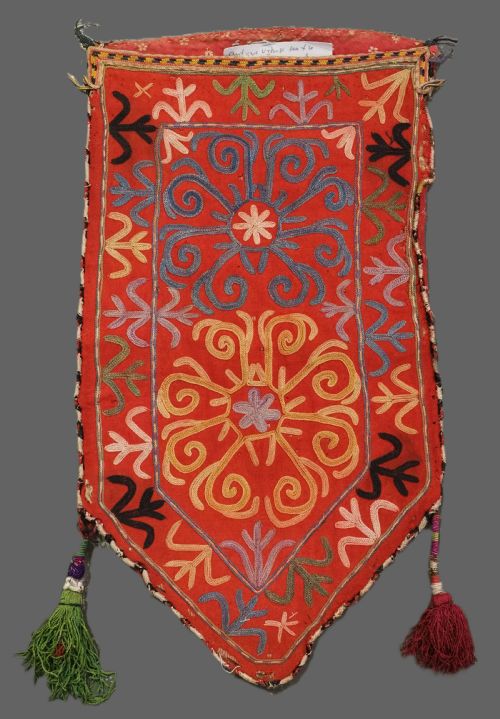
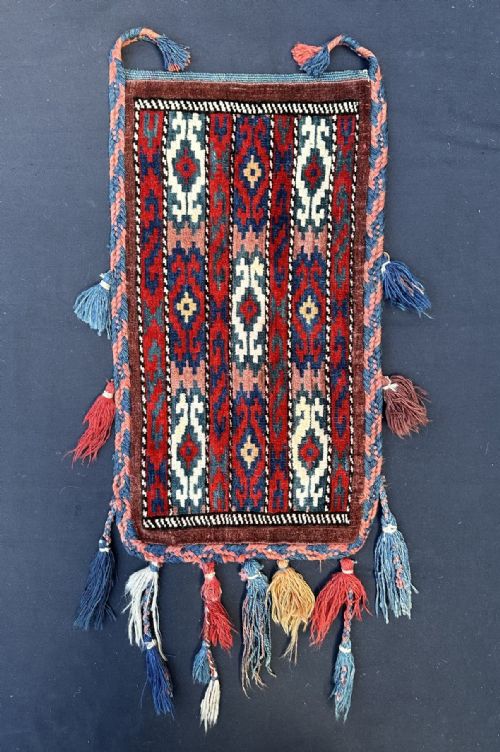
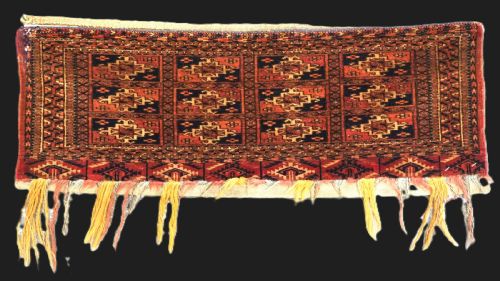
A central asian pouch is a practical textile woven or stitched by nomadic and tribal groups, prized for rich colour and geometric patterns.
Central Asian Pouch
A central asian pouch encompasses functional storage pieces such as spindle bags, torbas, mafrashes, chuvals, and small purses created across Turkmenistan and Uzbekistan. These items served nomadic and tribal households for storing personal belongings, thread, or household items while moving across the steppes and oases.
The pieces on this page are dominated by Yomut and Tekke Turkmen tribal weavings, alongside Uzbek Lakai items and silk ikat purses. They date primarily from the late nineteenth century, specifically spanning the decades around eighteen eighty up to nineteen hundred.
Buyers will encounter both larger wall-hanging bag faces and complete smaller bags retaining their plain weave backs. Some examples utilise silk ikat textiles fashioned into small double-sided purses rather than traditional pile or flat-woven wool.
Materials and construction
Makers constructed these textiles using hand-spun wool, cotton, and silk, employing natural dyes to colour the yarn. Artisans also integrated glass beads into specific tribal pieces for added ornamentation.
Construction techniques include traditional pile weaving, flat-weaving, and fine silk ikat stitching. Many surviving examples retain their original plain weave backs or feature double-faced structures.
The listings span from eighteen fifty to nineteen hundred, covering Turkmen and Uzbek tribal regions including the Akhal Oasis and Shakrisabz.
Assessing quality
Quality rests upon the fineness of the weave, the clarity and depth of the natural dyes, and the integrity of the structure. Complete examples retaining their original plain weave backs hold distinct interest.
The precision of the tribal guls and motifs, alongside the preservation of materials like hand-spun wool and silk, determines the distinction between standard utilitarian items and finer tribal works.
The Central Asian Pouch Glossary
- Torba
- A small Turkmen wall hanging or bag used for storage within a yurt. These pieces typically feature primary guls along the face.
- Mafrash
- A larger storage bag or box-shaped container used by nomadic tribes for bedding and household goods. They often match the decorative style of torbas.
- Chuval
- A large tent bag produced by Turkmen tribes for domestic storage. They display prominent repeating primary motifs.
- Ikat
- A dyeing technique where yarn is tied and dyed before weaving to create intricate patterns. Uzbek examples frequently utilise this method for small purses.
- Gul
- A repeating medallion or floral motif used extensively in Turkmen carpet and bag design. Each tribe utilised distinct forms to signify identity.
Central Asian Pouch: Frequently Asked Questions
What was a central asian pouch used for?
These textiles served daily nomadic life for storing household items, wool, spindles, or personal possessions inside a yurt.
Larger bags hung against walls for organisation, while smaller purses held personal items during travel.
How do I date these textiles?
Dating relies on material analysis, natural dye identification, and stylistic attribution to specific tribal groups active during the nineteenth century.
Most items on this page originate from the period between eighteen fifty and nineteen hundred based on structural evidence.
Are these pieces complete with backs?
Many listings specify whether the bag remains complete with its original plain weave back or survives as a fragment or face.
Complete examples retain both sides and any original hanging loops utilised inside the tent.
How should I display a textile bag?
These flat-woven or pile pieces suit wall display using appropriate non-damaging textile mounts or sleeves.
Keeping them away from direct sunlight protects the natural dyes used in the wool and silk.