


Ceiling Pendant Lantern
A ceiling pendant lantern brings focused illumination and architectural presence to an entrance hall or high-ceilinged room.
Ceiling Pendant Lantern
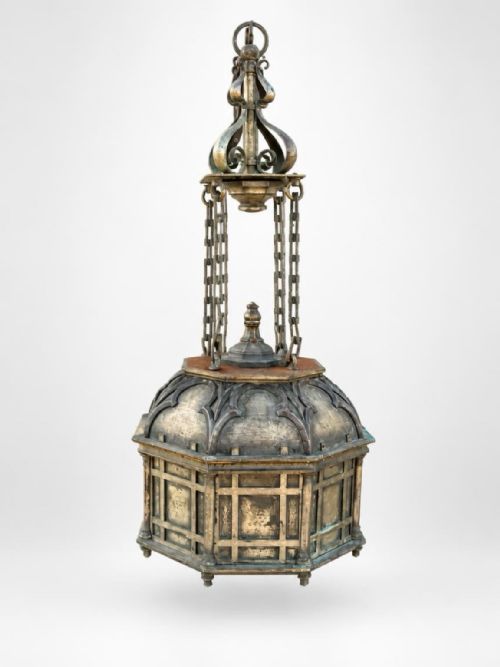
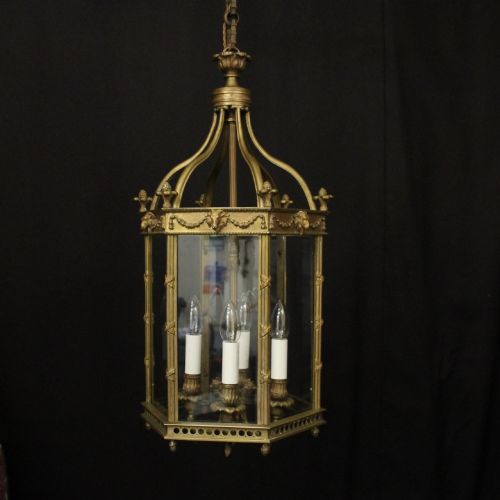
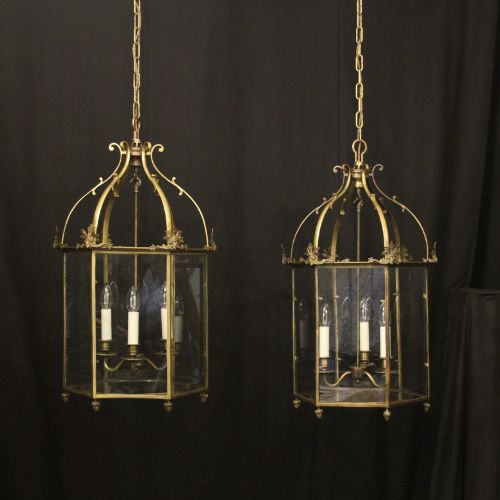
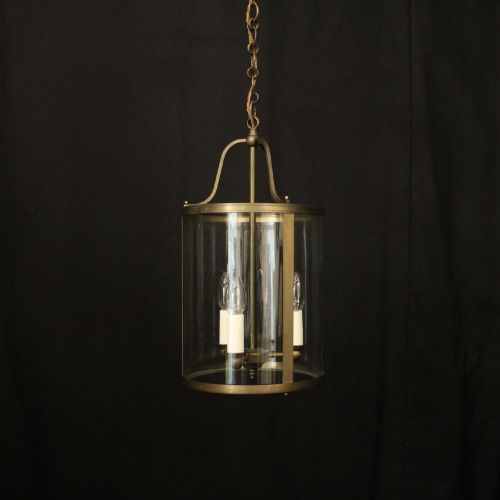
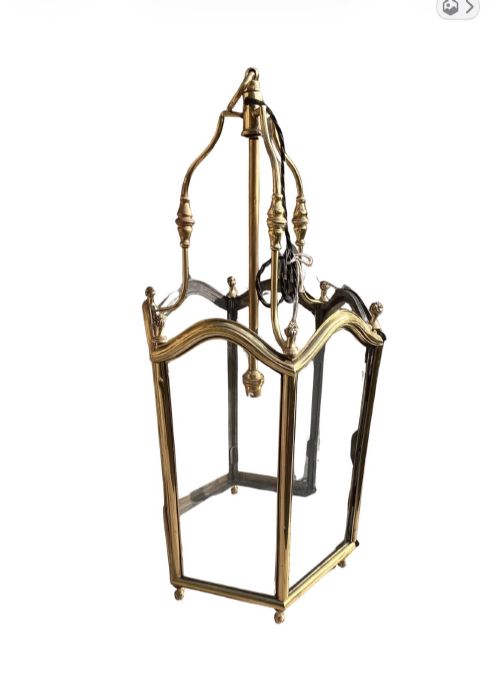
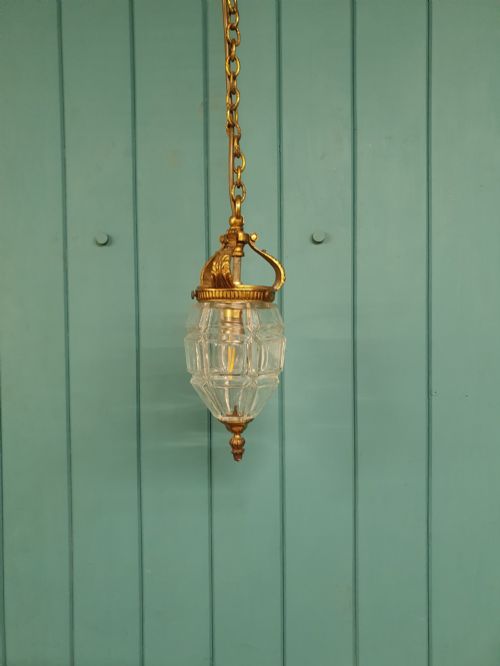
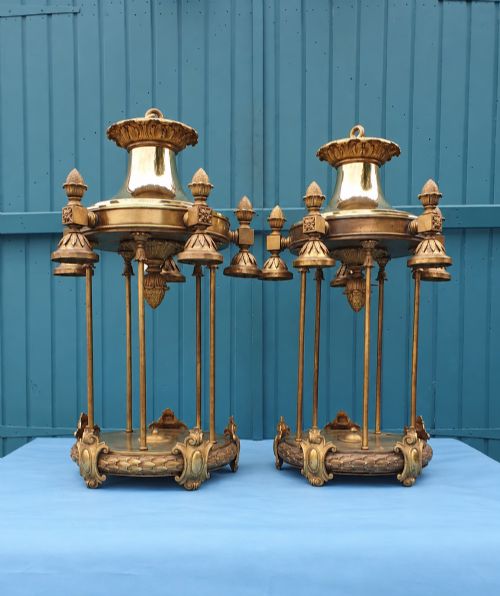
A ceiling pendant lantern suspends overhead to light entryways, stairwells and hallways, taking forms from simple geometric frames to ornate multi-light fixtures. Buyers seeking a ceiling pendant lantern encounter a heavy representation of twentieth-century French gilded designs alongside robust Victorian brass and copper examples.
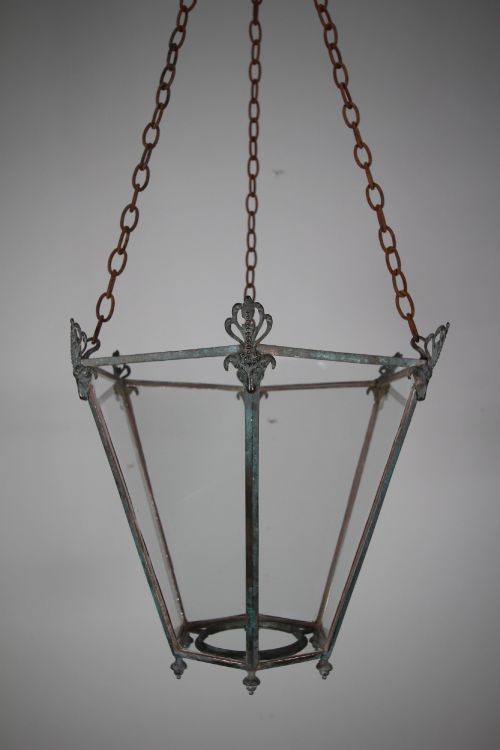
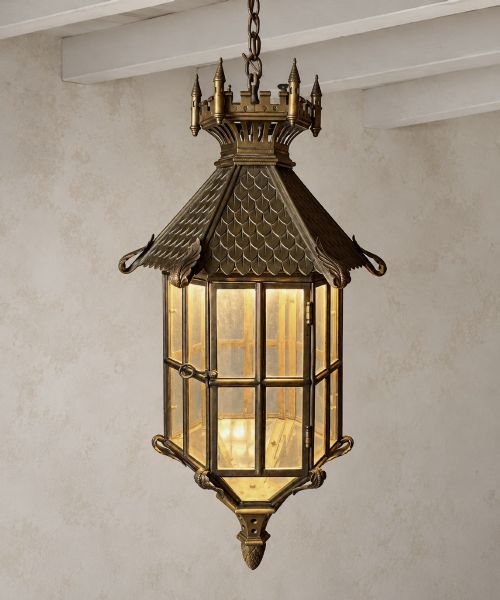
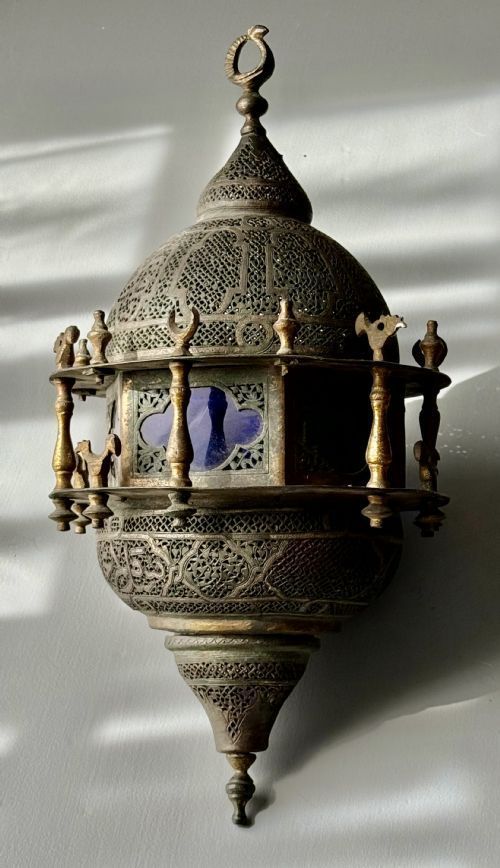
The selection ranges from compact hexagonal halls lights to monumental pairs designed for substantial spaces. Makers drew upon diverse historical idioms, incorporating Gothic revival details, Moorish piercing, and Arts and Crafts integrity into hanging illumination.
Examples span the nineteenth century through the interwar decades, showing how domestic lighting evolved from utilitarian necessity to decorative centrepiece. Hexagonal and convex glass variants dominate, diffusing light through leaded, bevelled or hand-blown panes.
Construction and Materials
Frames rely predominantly on brass, copper, and bronze, often given a gilt finish to catch and reflect internal illumination. Metalworkers joined structural members using rivets, solder, and screws, creating rigid cages capable of supporting heavy glass panels.
Panes of glass required specialist glazing techniques, from leaded stained glass and bevelled plate to convex mouldings and hand-blown bullseyes. Artisans also utilised leather, vellum, and etched finishes to temper the brilliance of early electric bulbs or gas burners.
Ceiling Pendant Lantern Retail Price Guide 2026
Typical asking prices for ceiling pendant lantern among the pieces listed under this phrase on Sellingantiques today, from the lower quarter to the upper quarter. They describe what is for sale here now, not the wider market.
Railway guards once carried specialised hanging lanterns through fog and soot, proving that even utilitarian brass and copper could endure a journey.
Gradations in Quality
Execution of metalwork sets apart superior examples, evident in crisp casting, hand-planished surfaces, and substantial gauge brass or bronze rather than thin pressed sheet metal. Quality rests in the articulation of decorative motifs, such as pierced brass work or finely chased mounts on French hall lanterns.
The Ceiling Pendant Lantern Glossary
- Convex glass
- Curved glass panes that project outward from the metal frame, softening and diffusing the light output. This technique appears frequently on French hall lanterns from the early twentieth century.
- Hexagonal form
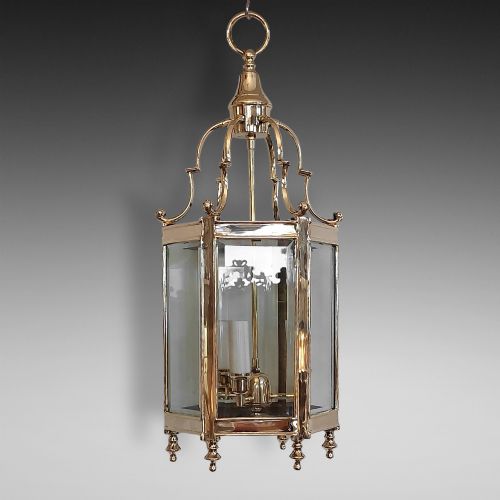
- A six-sided geometric frame construction often utilised for hallway and porch lanterns. This shape provides balanced visual weight and even light distribution.
- Planished
- A metalworking surface texture created by systematic hammering with a round-faced tool, leaving small, controlled indentations. This technique is characteristic of Arts and Crafts copperwork.
- Leaded glass
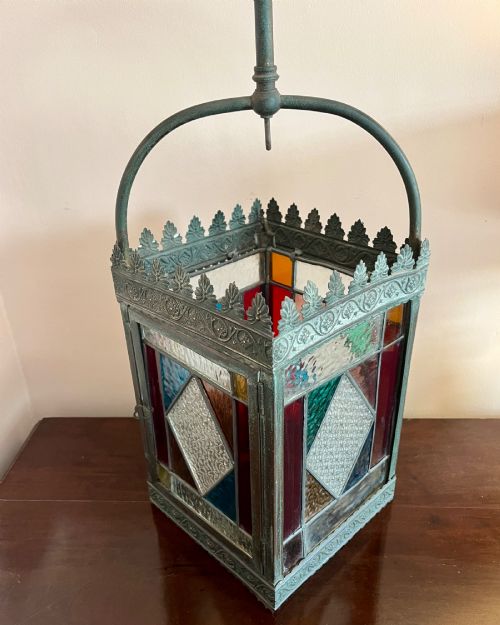
- Individual pieces of glass joined together by H-shaped lead cames, forming intricate geometric or pictorial patterns. Victorian and Arts and Crafts lanterns employ this method extensively.
- Gilt bronze
- Bronze metal treated with a thin layer of gold or gold-coloured alloy to impart a rich, reflective surface. It provides both corrosion resistance and decorative splendour.
Ceiling Pendant Lantern: Frequently Asked Questions
Where should I hang a ceiling pendant lantern?
These fixtures suit high-ceilinged entrance halls, stairwells, and vestibules where a downward point of illumination is required. Their enclosed forms project light outward while defining the vertical space of a room.
Ensure adequate clearance beneath the lowest point of the lantern for foot traffic and door swings. Scale the size of the fixture to the dimensions of the hallway to maintain architectural proportion.
How do I identify a French hall lantern?
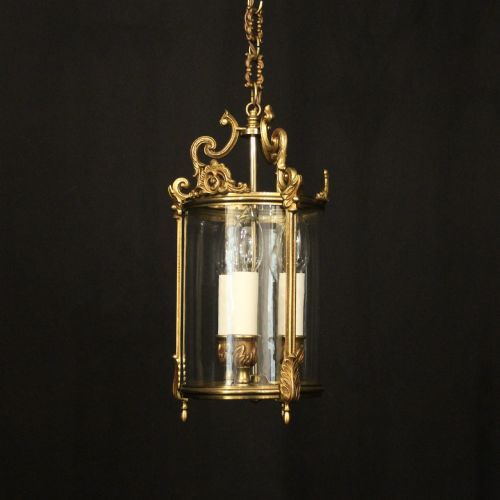
French hall lanterns typically display gilt bronze or brass frames featuring convex glass panels and multiple internal lights. Their aesthetic leans toward neoclassical or chateau styling with refined chased mounts.
They often present a more ornate silhouette than their English Arts and Crafts or Victorian counterparts, prioritising decorative elegance alongside practical illumination.
Are these lanterns wired for modern electricity?
Many surviving examples have been adapted over time to accept contemporary electrical fittings while retaining their historic metal and glass frames. Rewiring allows these antique fixtures to function safely within modern domestic settings.
Inspect the internal wiring capacity of any hanging light to ensure it meets current safety standards prior to permanent installation in the home.
What distinguishes Arts and Crafts lanterns?
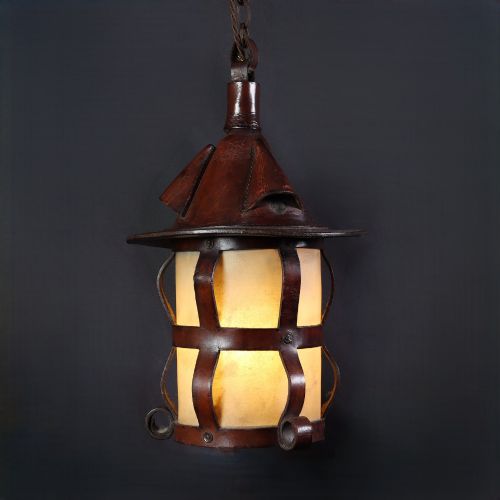
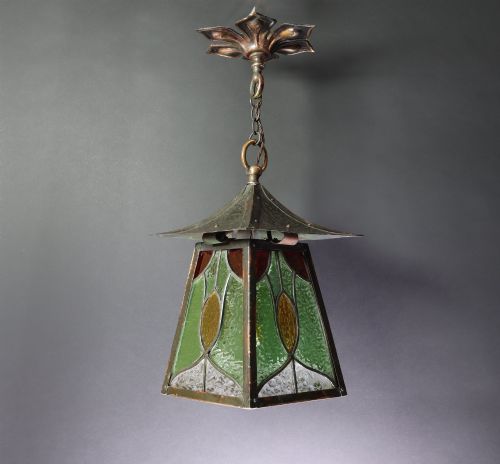
Arts and Crafts lanterns emphasise visible construction methods, honest materials like copper and brass, and handmade details such as planished surfaces. They often incorporate leaded stained glass or vellum panels rather than machine-made elements.
This aesthetic values utility and traditional craftsmanship over surface ornament, resulting in robust designs influenced by makers working around nineteen hundred.