




Caucasian Rug Textile
A caucasian rug textile brings bold tribal geometry and rich wool into a room through authentic nomadic weaving traditions.
Caucasian Rug Textile
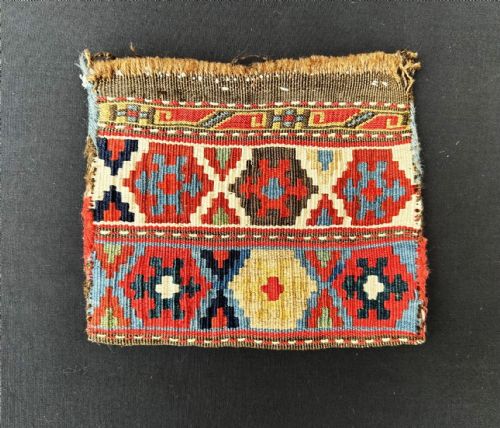
The most common examples on this page are Shahsavan and Kurdish bag faces, alongside Kazak rugs, Shirvan pieces, and Yomud Turkmen work. Many items survive as fragments, panels adapted into kilims, or complete paired saddle bags used originally for transport on animals.
How they were made
Weavers constructed these textiles primarily from hand-spun wool and cotton foundations, occasionally incorporating silk and natural wood elements. Artisans utilised vegetable and natural dyes to colour the yarns, achieving deep tones that developed patinas over time.
Techniques range from standard pile weaving to flat-weave soumak, sumac, and jajim constructions. Textile structures often feature intricate supplementary weft-wrapping methods used by nomadic groups to create durable storage containers and decorative floor coverings.
Caucasian Rug Textile Retail Price Guide 2026
Typical asking prices for caucasian rug textile among the pieces listed under this phrase on Sellingantiques today, from the lower quarter to the upper quarter. They describe what is for sale here now, not the wider market.
Current listings span periods from the mid-nineteenth century to the early twentieth century, featuring materials such as hand-spun wool, cotton, and silk.
What varies in quality
Quality rests upon the crispness of the tribal design, the complexity of motifs such as birds and dragons, and the brilliance of the natural dye palette. Superior examples display dense knotting or tight soumak work with well-balanced proportions and clear iconography.
Condition and completeness also dictate distinction, separating intact pairs of saddle bags or complete rug formats from remnant panels and heavily worn fragments. The handling of wool and the persistence of original plain-weave backs or borders further elevate specific pieces.
The Caucasian Rug Textile Glossary
- Soumak
- A flat-weave technique where coloured weft threads wrap around the warp threads to create a textured, durable surface. This method appears frequently on Shahsavan bag faces.
- Mafrash
- A large rectangular storage chest panel used by nomads for bedding and household goods. Panels from these containers often survive as individual wall hangings or small kilims.
- Khorjin
- A traditional pair of saddle bags designed for transport on horses or camels. Complete pairs feature two matching pouches linked by a central web.
- Jajim
- A flat-woven textile produced in narrow strips and stitched together to form blankets or covers. Silk and wool variants appear in regional nomadic output.
- Bag face
- The decorative front panel of a storage or saddle bag preserved after the plain-weave back wore away. Collectors prize these for their concentrated geometric designs.
Caucasian Rug Textile: Frequently Asked Questions
What is a caucasian rug textile?
A caucasian rug textile is a hand-woven item produced by tribal groups in the Caucasus region, featuring distinctive geometric and pictorial motifs.
These pieces include functional objects like saddle bags, storage panels, and small floor rugs created during the nineteenth and early twentieth centuries.
How were these bags used?
Nomadic tribes utilised these woven bags for storing personal possessions, clothing, and bedding inside tents or for transporting goods on pack animals.
Pairs of bags hung across the flanks of horses or camels, serving both practical transport functions and decorative roles within daily camp life.
How do I live with antique textiles?
Living with these textiles involves displaying them on walls as art, placing them on low-traffic floors, or resting them on furniture as cushions.
Keep them away from direct sunlight to protect the natural dyes and rotate them periodically to ensure even wear across the surface.
How are different tribal types told apart?
Distinctions rely on specific structural techniques, colour palettes, and characteristic border motifs associated with particular groups like the Shahsavan or Yomud.
Structure types such as soumak work or specific wool textures help identify the regional origins and nomadic workshops behind each piece.