



Castle Landscape Watercolour Art
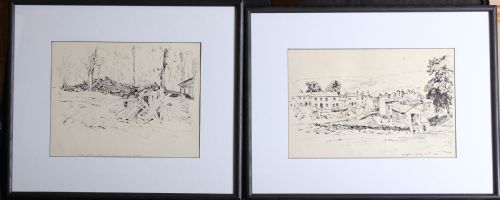
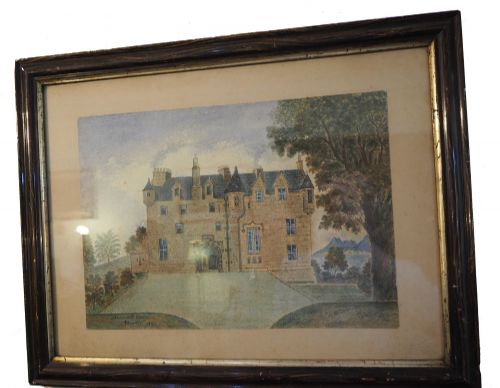
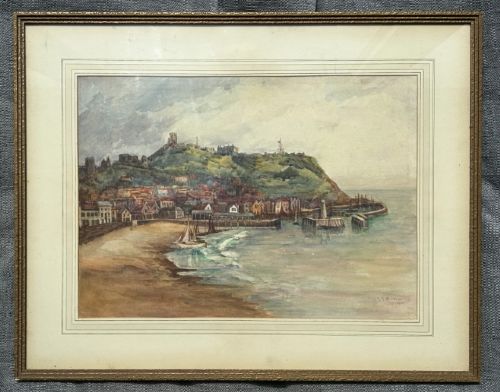
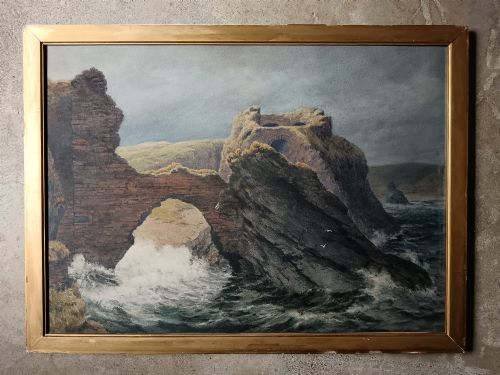
Castle landscape watercolour art captures historic fortresses and coastal strongholds across Britain through fluid pigment and delicate ink washes on paper.
Castle Landscape Watercolour Art
When you search for castle landscape watercolour art, you encounter original works on paper depicting historic British fortresses, coastal strongholds, and river settings. The selections span from the Victorian era into the twentieth century, capturing recognisable subjects such as Bolton Castle, Windsor Castle, and Bamburgh Castle.
You are most likely to meet Victorian and early twentieth-century examples on this page, executed by regional British artists and recorded schools. These works range in scale from intimate drawings to large framed exhibition pieces.
The subjects focus heavily on topographical views, ruins, and coastal landscapes set against rivers and northern hills. Many pieces document specific historic sites across Yorkshire, Northumberland, and the Thames Valley.
How they were made
The primary materials deployed across these works are watercolour pigment and watercolour paint applied to paper supports. Artists frequently utilised ink lines to define architectural details of the castles and landscape contours before laying down washes.
Finished watercolours were typically preserved under glass within wooden frames, often accompanied by gilt mounts that enhanced the depth of the composition. The technique relies on transparent washes to build atmospheric light across skies, rivers, and stone battlements.
Listings span from the eighteenth century through the Victorian period and into the mid-twentieth century, employing watercolour, ink, and paper.
What varies in quality
Quality rests on the confidence of the brushwork and the artist's command of light and atmospheric perspective. Superior examples capture the specific stonework, texture, and weather of the site rather than relying on formulaic topographical illustration.
The preservation of the paper support and the vibrancy of the original watercolour pigments also separate standard works from exceptional ones. Strong compositions maintain tonal balance between the architectural weight of the castle and the surrounding landscape.
Alfred Young Nutt·Fred Lawson·F A Roylance·John Moxon·Thomas Cooper Moore·George Graham·James Orrock·David Cox Jnr·Frank Wood·R P Noble·William Wyld·Alfred Robert Quinton·Willie Stephenson·Frederick Tully Lott·Sonia Lawson·Frank Wasley·Peter Toft·Rowland Henry Hill·J D Walker·Fred Stead·Joseph William Carey·John Arthur Dees
The Castle Landscape Watercolour Art Glossary
- Watercolour paint
- A medium consisting of colour pigments suspended in a water-soluble vehicle, applied to paper to create transparent washes of tone and colour.
- Wash
- A thin, fluid layer of diluted watercolour pigment spread evenly across paper to represent skies, water, or distant landscape expanses.
- Gilt
- A thin layer of gold or gold-coloured material applied to picture frames and mounts to accent the artwork.
- Provenance
- The documented history of ownership and origin that establishes the authenticity and background of an artwork.
Castle Landscape Watercolour Art: Frequently Asked Questions
How do I date a castle watercolour?
Dating relies on stylistic clues, framing materials, artist signatures, and inscriptions recorded on the reverse of the paper. Victorian pieces often display distinct mounting styles compared to twentieth-century works.
Examining the paper type and pigment characteristics further helps narrow the period of creation to specific decades.
Where should I hang these paintings?
Watercolours are sensitive to direct sunlight, which can fade pigments over time. Hang them on interior walls away from intense, prolonged light sources to preserve the colours.
Pairing them with traditional wooden frames enhances their historical character within a study, hallway, or living room.
How do I care for antique watercolours?
Protect the paper from moisture and extreme temperature fluctuations by keeping them behind secure glass in a stable environment. Professional framing using acid-free backing materials prevents long-term discolouration.
Avoid placing them in damp rooms such as unheated kitchens or bathrooms.
What defines British landscape watercolours?
British landscape watercolours from the nineteenth and twentieth centuries focus heavily on weather, topography, and national heritage sites. Artists utilised fluid washes to capture shifting coastal light and rural scenery.
Castles served as prime subjects because they combined architectural precision with romantic historicism.