






Cast Stone Garden Pedestal
A cast stone garden pedestal elevates planting schemes and sculpture, bringing classical line and permanent weight to lawns and terraces.
Cast Stone Garden Pedestal
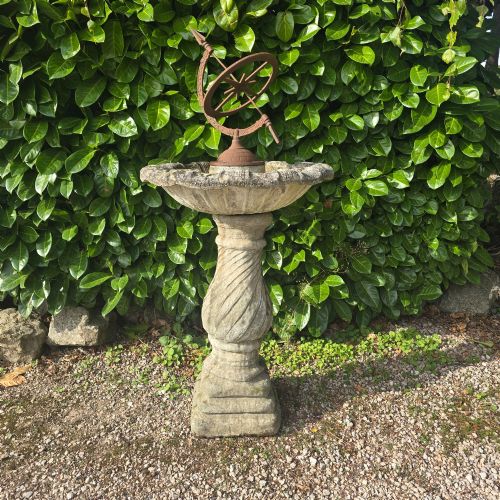
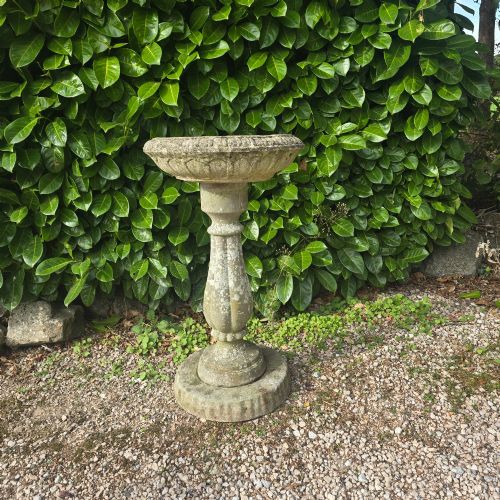
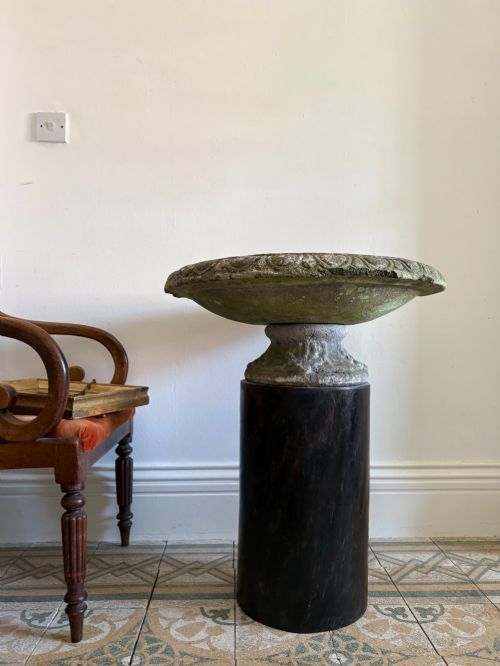
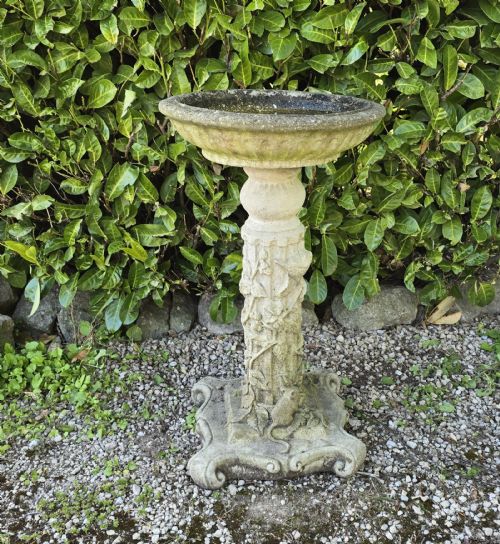
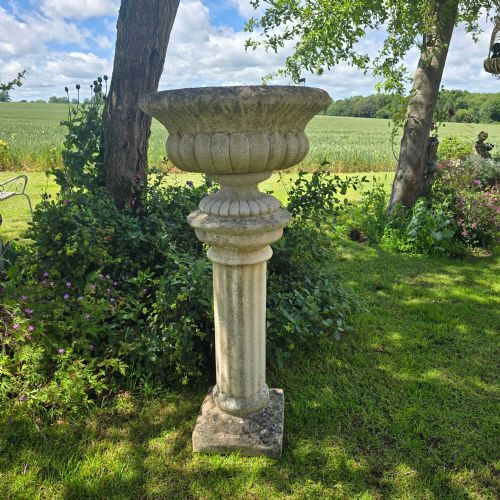
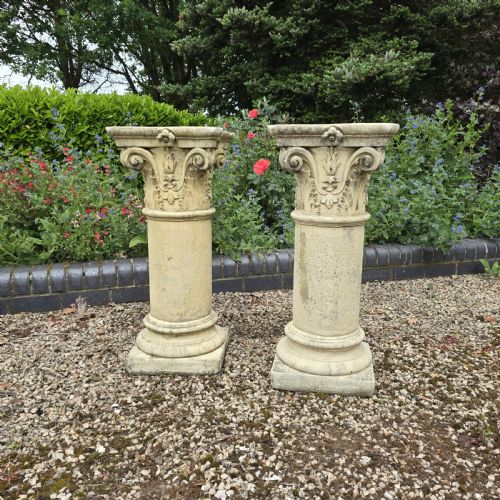
A cast stone garden pedestal provides the structural base that raises urns, figures, and sundials above the ground level of the garden. When you search for a cast stone garden pedestal, you encounter robust plinths and column forms designed to anchor architectural planting in traditional outdoor spaces.
The selection ranges from early twentieth-century neoclassical birdbath bases and Roman funerary altars to mid-century columns and plinths supporting stone busts. These architectural antiques organise the garden by creating distinct vertical focal points along pathways and terrace edges.
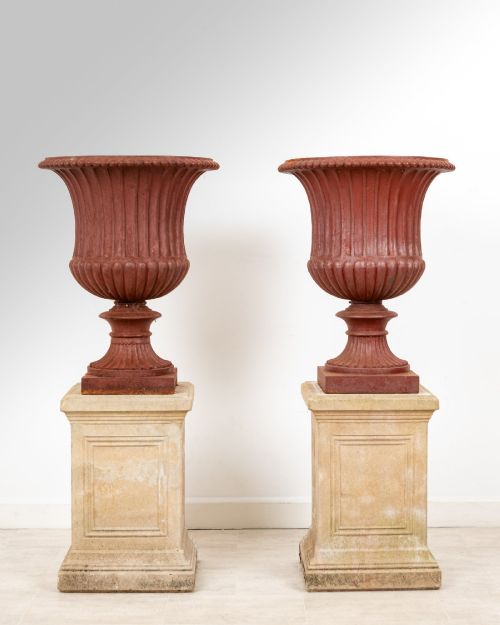
Most examples date from the Victorian period through to the middle of the twentieth century, fabricated in durable aggregates like reconstituted stone and concrete. They frequently arrive paired with campana urns, statues, or ornamental planters, establishing a formal symmetry.
How they were made
Makers utilised cast stone, reconstituted stone, and concrete poured into moulds to replicate the appearance of carved natural stone. These mixtures of cement and graded aggregates captured intricate surface detail, from acanthus leaf ornament to fluted column shafts.
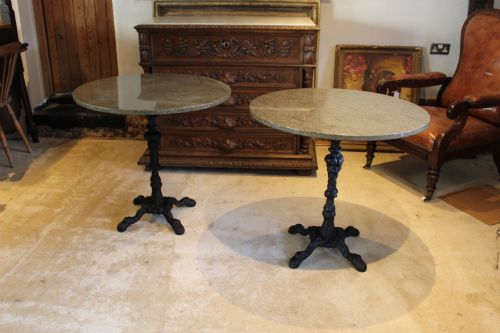
Some configurations incorporate iron or granite elements, pairing cast stone plinths with metal urns or polished tops. Surface finishes range from plain concrete to painted treatments that encourage weathering and lichen growth over decades outdoors.
Cast Stone Garden Pedestal Retail Price Guide 2026
Typical asking prices for cast stone garden pedestal among the pieces listed under this phrase on Sellingantiques today, from the lower quarter to the upper quarter. They describe what is for sale here now, not the wider market.
Listings feature items spanning the nineteenth century through the 1950s, utilising stone, iron, and concrete.
What varies in quality
Quality rests in the crispness of the moulding and the density of the aggregate used in the casting process. Finer pieces display sharp architectural relief in details like acanthus leaves and fluting, whereas lesser examples show softened edges and superficial surface pitting.
The choice of materials also dictates longevity, with well-compacted reconstituted stone resisting frost fracture far better than porous plaster or inferior concrete mixes. Proportion and balance determine visual success, separating heavy functional blocks from elegant classical columns.
Andrew Handyside
The Cast Stone Garden Pedestal Glossary
- Cast stone
- A refined building product made from cement and natural stone aggregates, intended to mimic quarried stone. It provides a durable medium for garden ornaments and architectural details.
- Campana urn
- A bell-shaped garden vessel with an everted rim and a footed base, often mounted on a stone pedestal. This classical form originates from ancient Roman metal and stone wine kraters.
- Plinth
- A heavy rectangular or square block supporting a statue, urn, or column. It lifts the principal object clear of damp soil and ground-level debris.
- Reconstituted stone
- Another term for cast stone, combining crushed stone with a binding matrix. It allows workshops to cast complex statues and birdbaths efficiently.
- Neoclassical
- A style drawing inspiration from the classical art and architecture of ancient Greece and Rome. It dominates garden statuary and pedestals through formal symmetry and restrained ornament.
Cast Stone Garden Pedestal: Frequently Asked Questions
How do I secure a heavy pedestal?
Heavy stone and cast concrete pedestals generally rely on their own substantial weight to remain stable on level ground. Placing them on a compacted gravel or paved foundation prevents uneven sinking over time.
For taller column forms or top-heavy arrangements involving large urns, contractors sometimes use discreet mortar or exterior adhesive between the sections. This secures the assembly against high winds and accidental impacts on the lawn.
Can these pedestals stay outside in winter?
Cast stone and reconstituted stone are engineered to withstand outdoor conditions, including prolonged exposure to rain and seasonal temperature drops. Their dense aggregate composition resists moisture penetration.
To maximise longevity through freezing weather, ensure the base does not sit in standing water where ice expansion might crack the material. Clearing accumulated debris from drainage holes in associated urns prevents internal water pressure.
How do I clean weathered cast stone?
Gentle washing with clean water and a soft nylon brush removes surface dirt, bird droppings, and loose debris without harming the material. Avoid harsh pressure washers that can strip away the outer skin and expose soft aggregate.
Allowing natural lichen and moss to remain is common practice among collectors, as biological weathering enhances the antique appearance. Chemical cleaners should be avoided unless strictly necessary to remove damaging organic growth.
What goes on top of a pedestal?
Traditional garden pedestals support a wide variety of items, most commonly campana urns, shallow birdbaths, and carved stone planters. These combinations create defined focal points within garden planting schemes.
Sculptural elements such as classical busts, allegorical figures like the Four Seasons, or sundials also sit upon these bases. The primary function is to elevate the decorative object to eye level for better visibility.