

Cast Metal Table
A cast metal table brings heavy utility and ornate form into domestic and garden spaces, uniting industrial resilience with decorative design.
Cast Metal Table
A cast metal table encompasses heavy garden furniture, pub tables, and bistro sets cast in iron or related alloys, alongside occasional side tables and stands. These pieces span from the nineteenth century through the interwar decades, showing the shift from utilitarian outdoor ironwork to decorative interior design.
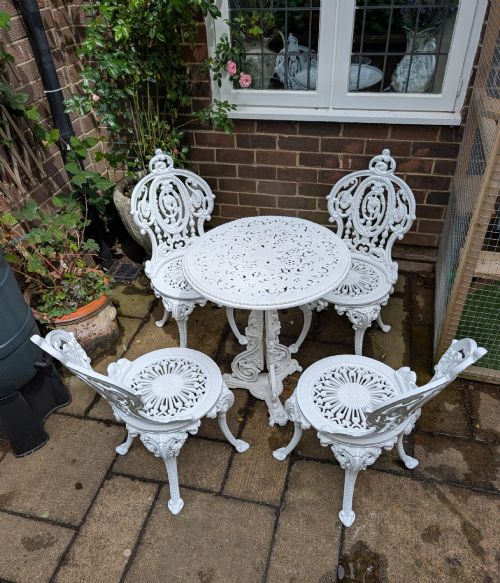
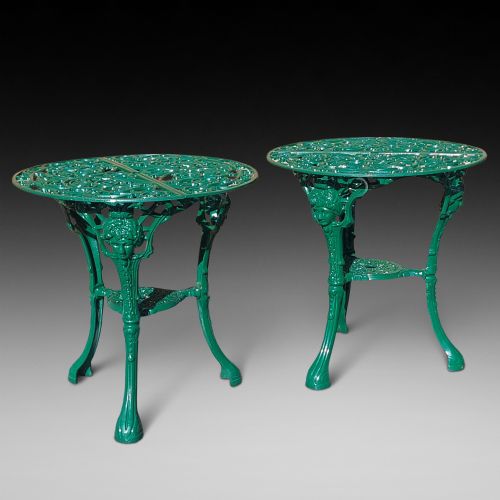
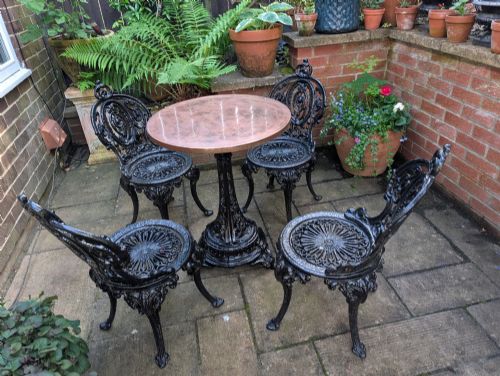
The most frequent examples on this page are nineteenth-century and Victorian garden tables, often paired with chairs and displaying pierced tops or sturdy pedestal bases. Alongside these, buyers encounter console tables and side tables influenced by industrial and classical styles, utilising durable metal castings for both domestic rooms and outdoor terraces.
How they were made
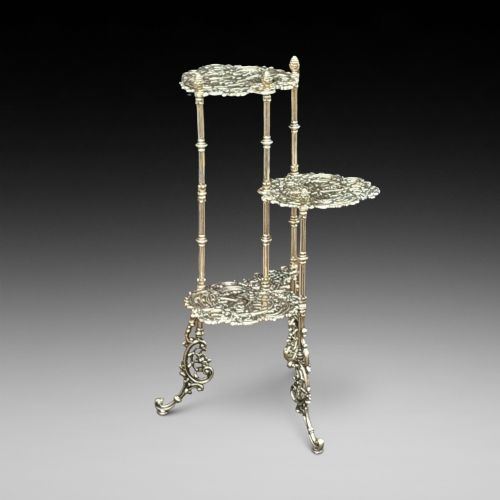
Foundries produced these items by pouring molten iron, bronze, brass, or white metal into moulds, capturing intricate decorative motifs from floral patterns to geometric industrial bracing. Many outdoor examples combine heavy cast iron frames with stone or marble tops, while smaller interior tables incorporate brass, pewter, and spelter components.
Surfaces frequently received protective or decorative coatings, including applied paint, dark patination, or specialised finishes to withstand exterior conditions or complement interior reception rooms. Construction typically relied on bolted joints and threaded rods to secure heavy pedestals to tabletops.
Cast Metal Table Retail Price Guide 2026
Typical asking prices for cast metal table among the pieces listed under this phrase on Sellingantiques today, from the lower quarter to the upper quarter. They describe what is for sale here now, not the wider market.
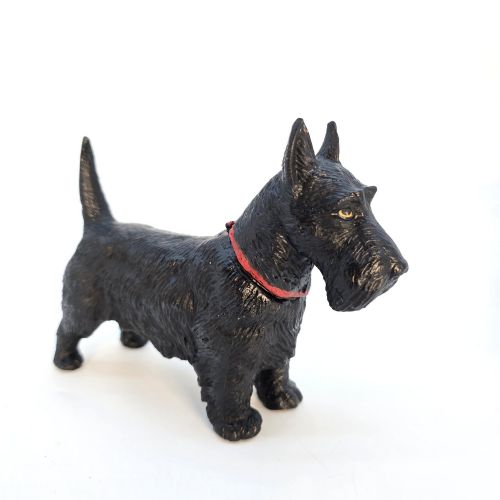
A cast metal table lighter shaped like a Scottie dog brings unexpected canine charm to the sturdy realm of foundry work.
What varies in quality
Quality rests in the crispness of the casting detail and the architectural balance of the base, where superior pieces retain sharp mould lines and clean ornamental relief without surface pitting. Finer examples display thoughtful proportion between heavy metal legs and top materials such as marble or thick glass.
The integrity of the metal structure dictates durability, distinguishing sturdy antique castings from later or heavily repaired replacements. Original surface patination and intact structural bolts further separate utilitarian survivors from standard commercial output.
Archibald Knox for Liberty and Co·Christopher Dresser·L and F Moreau·Louis Auguste Moreau·Frederic Remington
The Cast Metal Table Glossary
- Cast Iron
- An iron-carbon alloy poured into moulds to create rigid, heavy components. It forms the backbone of durable garden furniture and structural table bases.
- Spelter
- A zinc alloy frequently used as a substitute for bronze in decorative figures and lamp bases. It takes fine detail well before receiving a bronze-like finish.
- Bistro Set
- A small table accompanied by matching chairs, designed for compact outdoor or indoor dining. These sets often feature perforated metal tops and tripod iron bases.
- Patination
- The surface alteration and coloration developed on metal through age, use, and exposure. Original patination is prized by collectors for its depth and historical authenticity.
Cast Metal Table: Frequently Asked Questions
Are cast metal tables suitable for outdoor use?
Cast iron and heavy metal garden tables endure external conditions well due to their substantial mass and weather-resistant material composition.
Protecting them with appropriate coatings prevents oxidation and preserves the structural integrity through changing seasons.
How do I identify a Victorian cast metal table?
Victorian examples typically feature heavy iron construction with ornate pierced decoration, botanical motifs, or classical revival styling.
Makers from this period often utilised robust pedestal designs and industrial casting techniques tailored for garden terraces and domestic conservatories.
What maintenance do these tables require?
Regular dusting and occasional application of protective wax or rust inhibitors maintain the surface condition of indoor and outdoor metal tables.
Avoiding abrasive cleaners protects the original patination and any applied decorative finishes.
Can I use a garden table indoors?
Sturdy cast metal garden furniture transitions effectively into interior settings, particularly sunrooms, hallways, and country kitchens.
Their robust proportions anchor interior spaces while offering practical surface utility.