



Cast Iron Pedestals
Cast iron pedestals bring architectural presence to gardens and interiors, combining heavy metal casting with classical urns, statuary and tables.
Cast Iron Pedestals
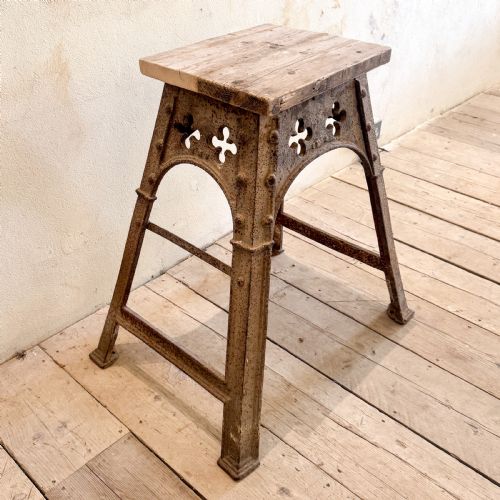
When you search for cast iron pedestals, you encounter robust structural supports and display columns designed to elevate garden urns, plant stands and bistro tables. These pieces span the nineteenth century and the Edwardian era, incorporating styles from Regency neoclassical designs to industrial workshop forms.
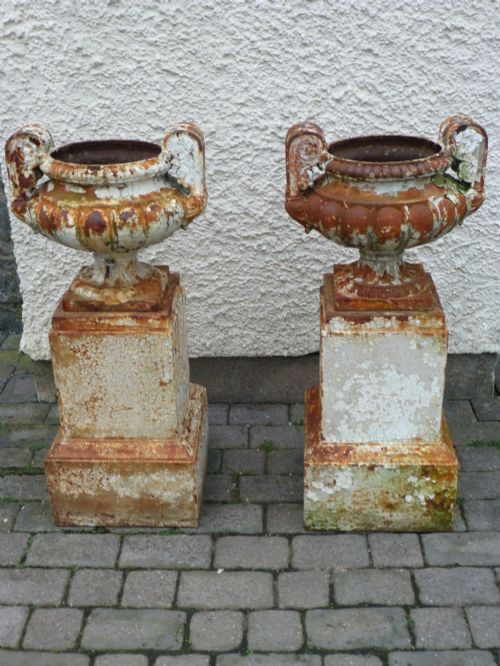
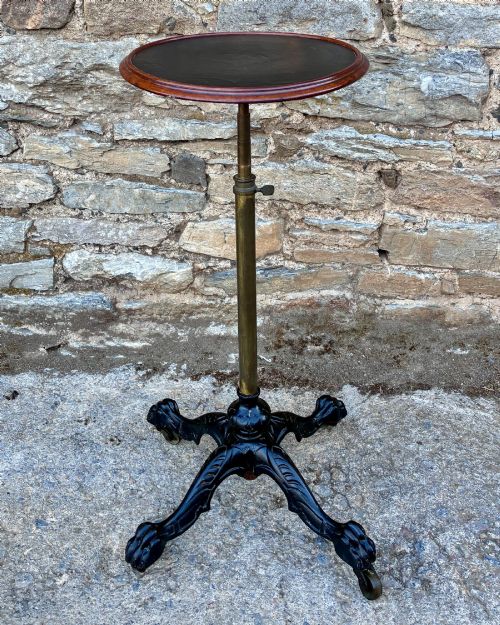
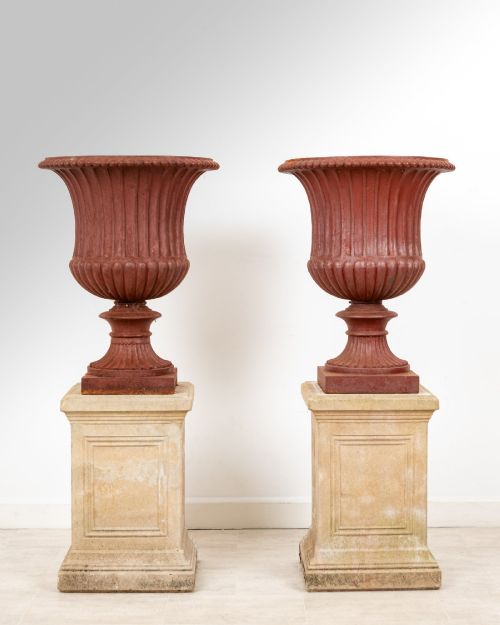
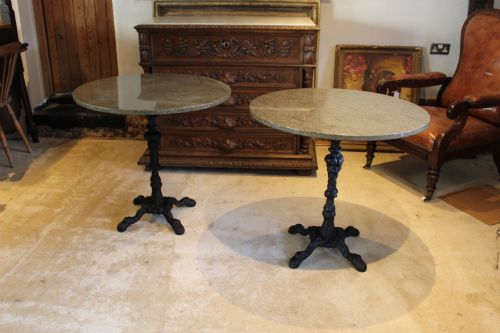
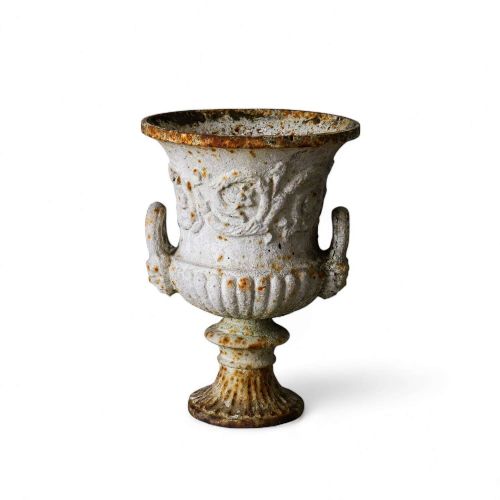
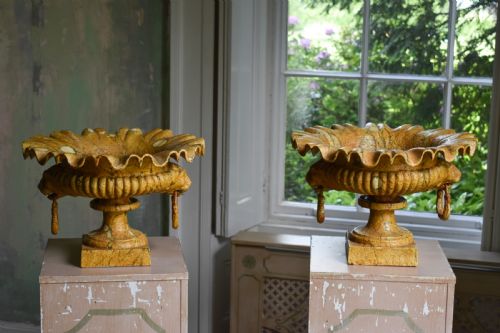
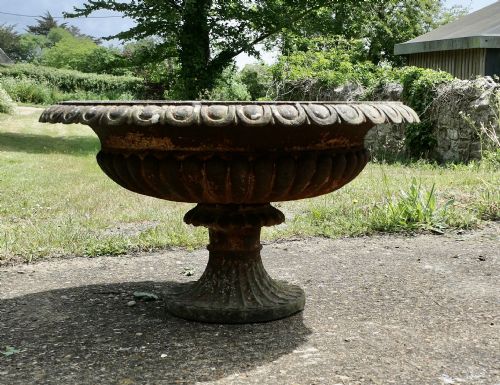
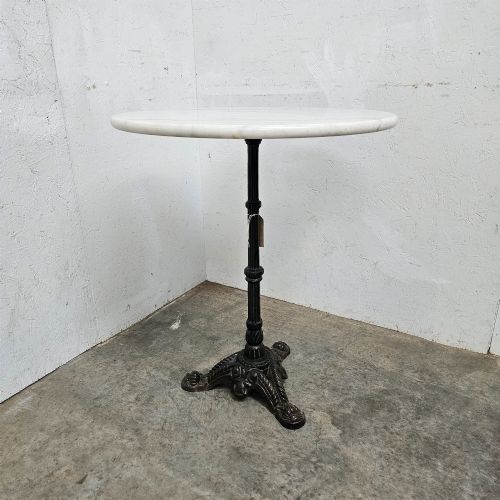
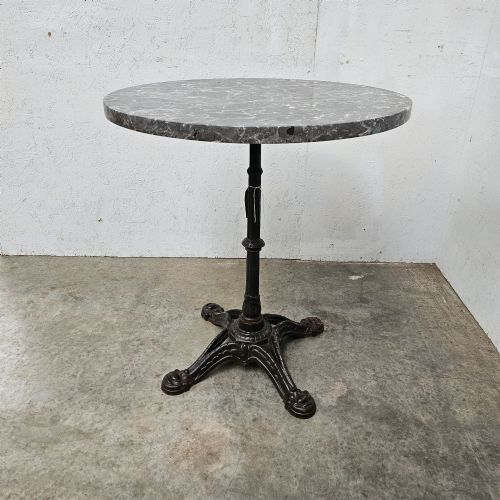
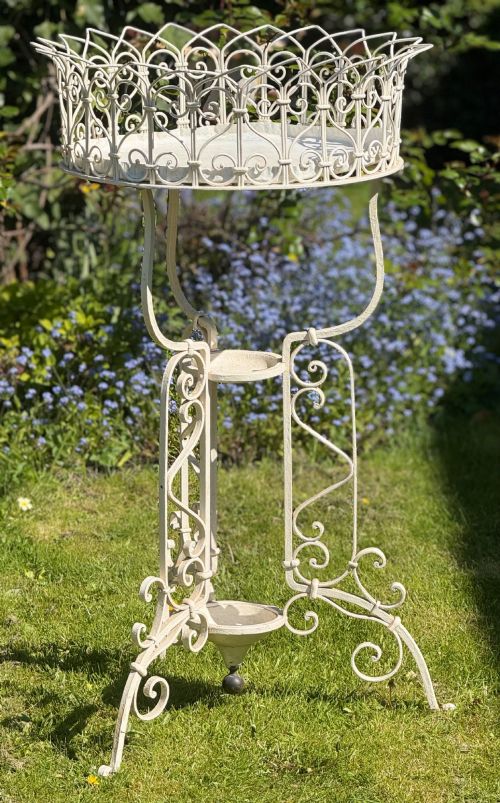
The selection on this page frequently pairs iron columns or plinths with campana urns, marble tops or revolving mechanisms. Garden ornaments and conservatory planters appear alongside cafe tables, showing the diverse domestic and landscape functions these heavy iron supports served.
Materials and casting methods
Foundries poured molten iron into sand moulds to create crisp relief details such as acanthus leaves, classical figures and fluted columns. This casting process allowed producers to replicate intricate decorative motifs consistently across matched pairs of urns and stands.
Finished ironwork received protective coats of paint or weathered naturally outdoors, while many display stands and cafe tables integrated contrasting materials like marble, stone, brass and timber to provide stable upper surfaces.
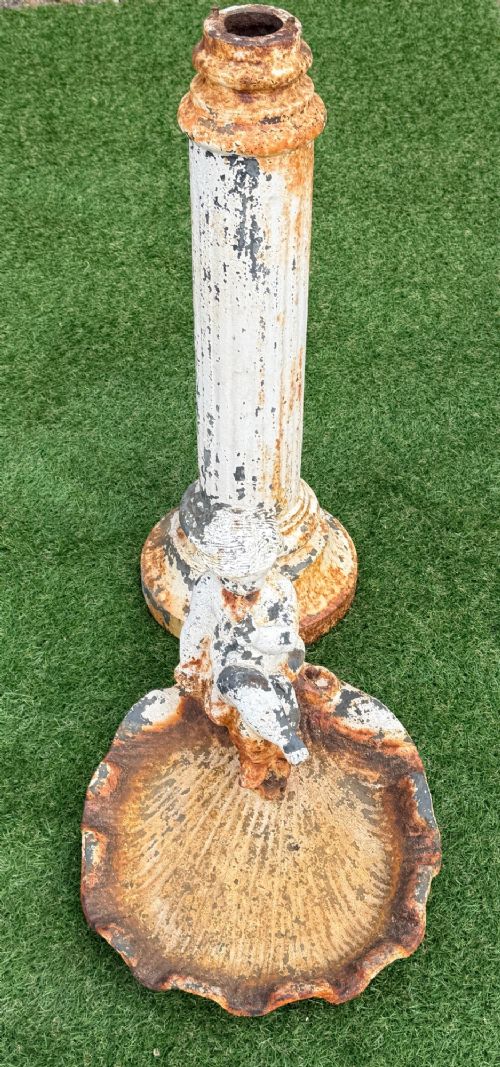
Several items include revolving chair mechanisms and shell-form bird baths watched over by seated cherubs.
Distinctions in craftsmanship
Quality rests in the crispness of the foundry casting and the depth of relief ornament. Superior examples retain sharp leaf edges and smooth background fields without excessive pitting or crude mould seams.
The integration of original supporting plinths, stable marble tops or robust adjustable mechanisms distinguishes exceptional sculptural works from utilitarian industrial bases.
Falkirk Carron foundry·Coalbrookdale·Andrew Handyside
The Cast Iron Pedestals Glossary
- Campana urn
- A bell-shaped garden vessel with an everted rim, frequently mounted on a square plinth or iron column. These classical forms originated in antiquity and found widespread favour in Victorian landscape design.
- Plinth
- A heavy base block supporting a column, urn or bust. In ironwork, matching plinths elevate garden planters to enhance their visual proportion.
- Jardiniere
- An ornamental pot or stand designed to hold live plants or floral displays. They appear in cast iron for both interior conservatory and exterior garden use.
- Neoclassical
- A revival style drawing upon ancient Greek and Roman architecture. It manifests in cast iron pedestals through motifs like acanthus leaves, classical urns and fluted columns.
Cast Iron Pedestals: Frequently Asked Questions
How do I date a cast iron pedestal?
Dating relies on stylistic clues, foundry marks, and associated materials like statuary or marble tops. Nineteenth-century examples often display deep neoclassical relief work, whereas later twentieth-century pieces incorporate simpler industrial or bistro forms.
Examining the paint layers, weathering patterns and construction bolts provides additional chronological context for identifying specific periods such as the Victorian or Edwardian eras.
Were these pedestals meant for indoor or outdoor use?
Cast iron pedestals served both domestic interiors and external gardens, functioning as conservatory plant stands, hall display columns, and patio urn supports. Heavier pieces handled exposed garden conditions easily.
Lighter tables with marble tops typically served inside or within sheltered glasshouses as cafe furniture or side stands.
Can cast iron garden urns stay outside all year?
Iron urns and pedestals withstand outdoor environments effectively due to the robust nature of metal casting. Protective paint finishes help prevent excessive oxidation.
When freezing temperatures occur, stagnant water trapped inside unsealed planters should be drained to prevent cracking the iron or stone components.
What is the difference between a pedestal and a plinth?
A pedestal generally describes a taller column or supporting stand designed to elevate an urn, bust or table top. A plinth specifically refers to the flat base block upon which a column or vessel rests.
In many listings, these terms describe integrated architectural assemblies where the base and the vessel were cast together or designed as a matched pair.