
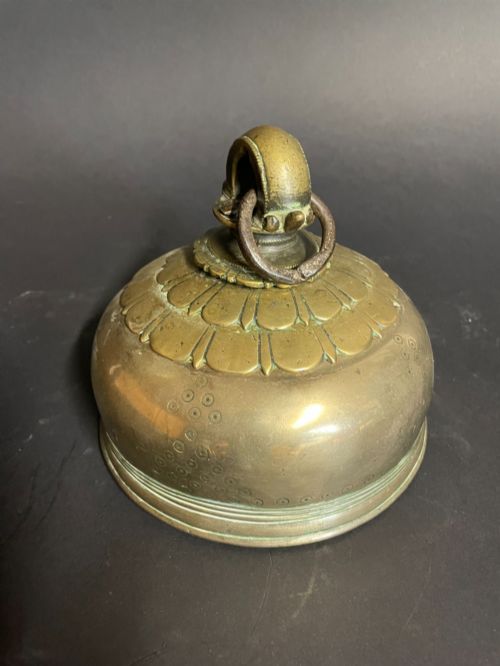


Cast Bronze Bell
These cast bronze bell examples offer resonant tones and heavy construction, spanning temple pieces to ships' fittings.
Cast Bronze Bell
When you search for a cast bronze bell, you encounter utilitarian objects and ritual instruments shaped across several centuries. The selection ranges from domestic wall bells on iron brackets to substantial tower bells and ships bells.
You are most likely to meet nineteenth-century iterations alongside eighteenth-century examples and earlier ritual pieces. Forms extend beyond standard bells to include mortars, pestles, incense burners, and novelty desk designs.
How they were made
Maker workshops utilised molten bell metal and copper alloy poured into moulds to achieve durable resonant vessels. Many examples incorporate forged wrought iron brackets, iron hanging fixtures, or attached rope for suspension.
Surface details often include cast decorative elements such as elephants at the base or religious iconography. Finishing involved hand-finishing the cast metal and pairing the bells with matching pestles or mounting hardware.
Cast Bronze Bell Retail Price Guide 2026
Typical asking prices for cast bronze bell among the pieces listed under this phrase on Sellingantiques today, from the lower quarter to the upper quarter. They describe what is for sale here now, not the wider market.
Listings feature pieces spanning the eighteenth and nineteenth centuries, alongside ritual Sino-Tibetan and Hindu temple examples.
What varies in quality
Quality rests in the purity of the alloy and the clarity of the ring resonance produced when struck. Heavy casting thickness and clean definition in decorative cast motifs separate standard utility pieces from finer examples.
The survival of original mounting brackets, hanging chains, and matching pestles elevates the integrity of the piece. Provenance marked by maker inscriptions or specific foundry attribution adds distinction to individual items.
Biron PARIS
The Cast Bronze Bell Glossary
- Bell metal
- An alloy of copper and tin specifically formulated to produce a resonant musical tone when struck. It typically contains a higher proportion of tin than standard bronze.
- Mortar and pestle
- A heavy bowl and club-shaped tool used for grinding materials, frequently cast in bronze during the eighteenth century and earlier. These share foundry techniques with bell production.
- Tower bell
- A large, heavy bronze bell designed for mounting in architectural structures to signal time or events. They are built for maximum volume and projection.
- Censer
- A vessel designed for burning incense, sometimes sharing the heavy cast bronze construction and ritual function of temple bells.
Cast Bronze Bell: Frequently Asked Questions
How do I clean a bronze bell?
Dust the surface regularly with a soft dry cloth to prevent accumulation of grime. Avoid abrasive polishes that remove historic patination.
Leave the natural oxidation undisturbed unless active corrosion threatens the metal stability. Professional conservators can advise on safe interventive cleaning if required.
How were tower bells mounted?
Tower bells required sturdy iron brackets or heavy wooden beams to support their substantial weight. Original mounting hardware often included forged iron straps and hanging chains.
Securing these pieces safely demands structural assessment of the wall or ceiling. Many collectors display them on custom stands rather than suspending them from historic brackets.
What is bell metal?
Bell metal is a specific bronze alloy containing roughly four parts copper to one part tin. This precise proportion maximises resonance and durability.
Foundries maintained strict recipes to ensure the distinctive clear tone required for signaling and ritual use.
Are mortar and pestles bells?
Mortar and pestles are grinding implements rather than sound instruments, though they share identical casting materials. Foundries making bells frequently produced heavy bronze mortars using similar foundry techniques.
Their shared alloy and heavy cast form explain their frequent association with bell collections.