


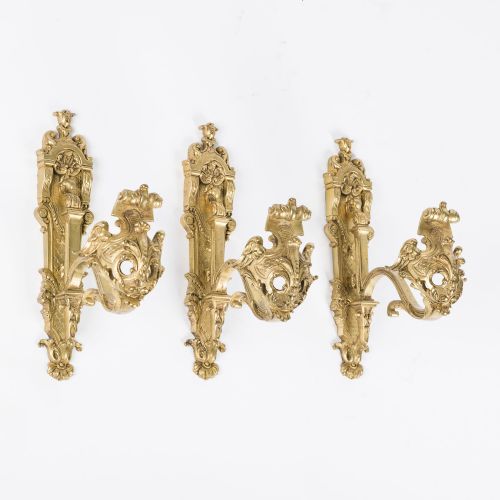


Cast Brass Wall Mounts
These cast brass wall mounts comprise practical hardware and decorative brackets forged from durable metal.
Cast Brass Wall Mounts
When you search for cast brass wall mounts, you encounter a varied selection of functional hardware and decorative fixtures spanning multiple historical periods. These pieces include coat racks, individual wall hooks, curtain tie backs, wall lights, sconces, and mechanical bells.
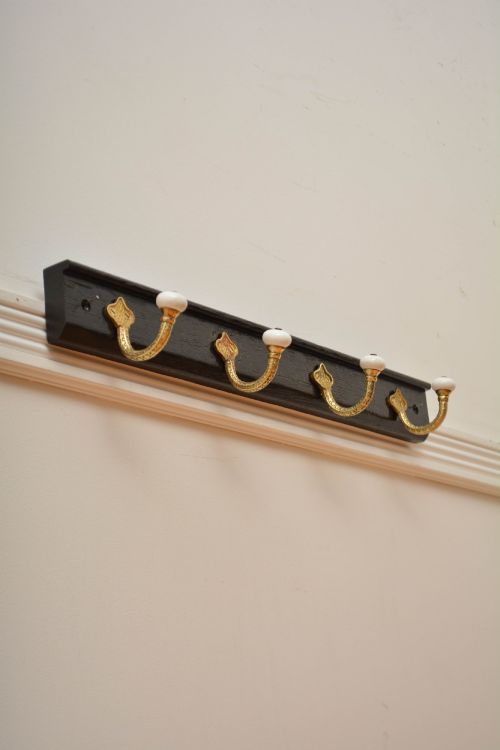
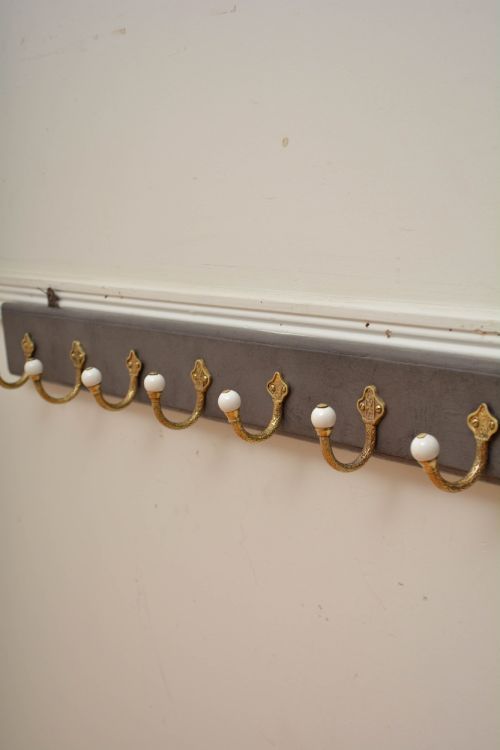
The objects stem predominantly from the nineteenth century, including Victorian, Georgian, and Edwardian eras, alongside distinct continental French designs. You are most likely to meet utilitarian coat hooks mounted on timber rails or ornate French gilt bronze appliques on this page.
Makers and workshops range from domestic British ironmongers to continental ateliers. The forms serve both domestic utility in hallways and decorative illumination in reception rooms.
How they were made
These items utilise casting techniques to shape molten brass, bronze, and gilt bronze into complex decorative profiles. Metal components are frequently combined with contrasting materials such as ceramic inserts, ebonised oak backplates, cast iron frames, and glass elements.
Surface finishes vary from polished brass and fire-gilded ormolu to patinated bronze surfaces. Heavier structural pieces integrate solid wood backings secured with traditional metal fixings.
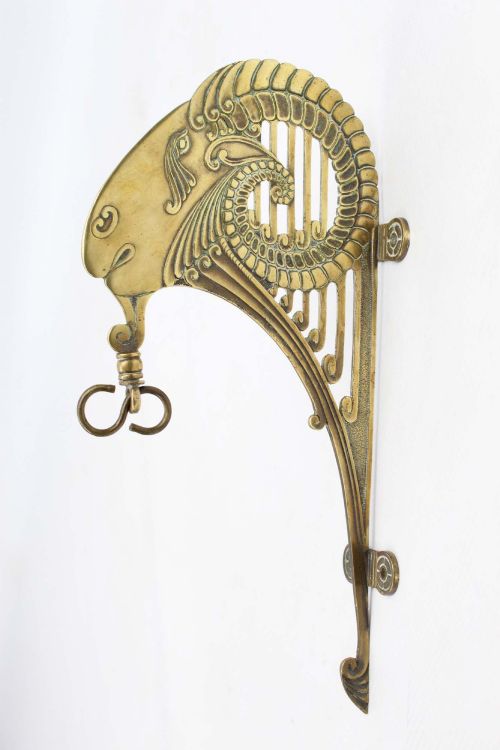
Several items double as miniature menageries, featuring solid cast ram heads and sculptural animal motifs ready to hold your hats.
What varies in quality
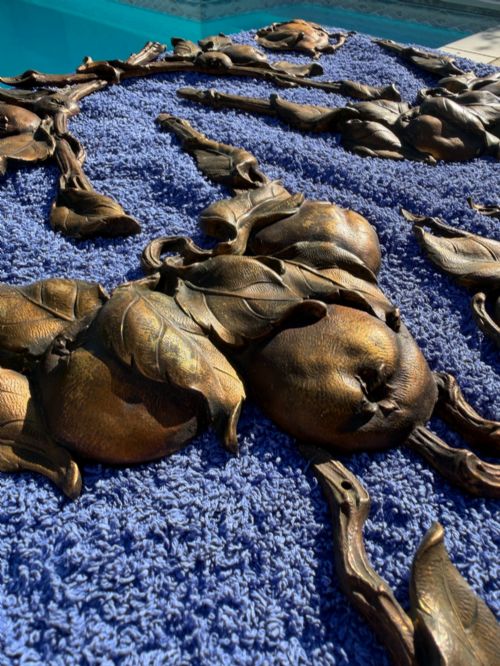
Quality in these items is determined by the crispness of the casting and the depth of detail in the metalwork. Finer examples display sharp relief modelling on decorative plates, animal heads, and floral motifs, whereas simpler utilitarian pieces maintain basic functional profiles.
The integrity of composite pieces depends upon the preservation of the original materials, such as intact ceramic insets and stable ebonised timber backing boards. Heavier bronze and gilt metal items generally exhibit superior weight and structural substantiality.
Poix Blin·Liberty
The Cast Brass Wall Mounts Glossary
- Ormolu
- Gilt bronze ornamentation produced by applying a finely ground high-carat gold-mercury amalgam to a bronze object. This French technique yields a distinctive matte and burnished golden finish.
- Applique
- A wall-mounted decorative fixture or sconce designed to hold candles or lamps. These fittings project from vertical surfaces to provide ambient illumination.
- Tie back
- A decorative bracket or hook secured beside a window to hold curtain fabric open. They frequently feature cast metal mounts matching interior hardware.
- Servants bell
- A mechanical signalling device operated by a pull handle and connected via wires to an indicator panel. These wall-mounted bells directed domestic staff within larger period properties.
- Ebonised
- Wood treated with a chemical stain or black finish to imitate ebony. This dark timber often serves as a contrasting backing board for bright brass hardware.
Cast Brass Wall Mounts: Frequently Asked Questions
How were antique coat racks mounted?
These racks typically utilise heavy mounting plates cast directly into the metal frame. Screws secure the timber backplate or metal brackets firmly to wall studs.
Heavier items require solid wall anchors to support the combined weight of the rack and hanging garments.
What is the difference between brass and bronze?
Brass is an alloy composed primarily of copper and zinc, yielding a bright yellow metallic appearance. Bronze consists mainly of copper combined with tin, producing a darker, richer reddish-brown tone.
Both metals were cast into decorative wall fixtures during the nineteenth century.
How do I clean cast brass mounts?
Dust accumulation removes easily using a soft dry cloth. Avoid abrasive metal polishes that strip historical patina and fine surface gilding.
Gentle cleaning preserves the aged surface character developed over centuries of use.
Where were servants bells placed?
Mechanical bells were installed in kitchens, sculleries, or butler pantries where staff gathered. Wall mounts held the spring mechanisms and resonating bell domes.
Pull handles located in principal rooms connected to these wall units via wire runs.
What periods do these wall mounts represent?
The pieces span the Georgian, Victorian, and Edwardian eras, extending into the early twentieth century. French nineteenth-century styles such as Rococo Revival and Art Nouveau also appear.
Each period utilises distinct casting styles and decorative motifs.