

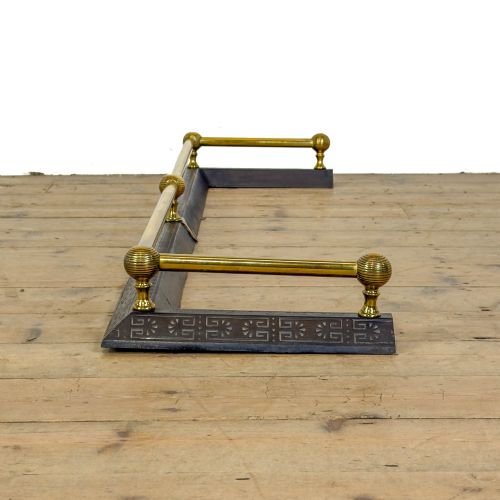
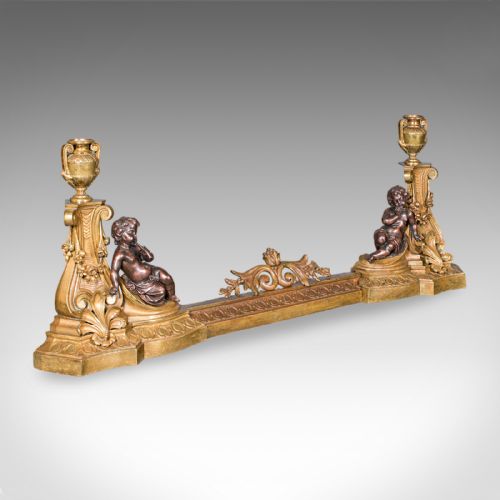

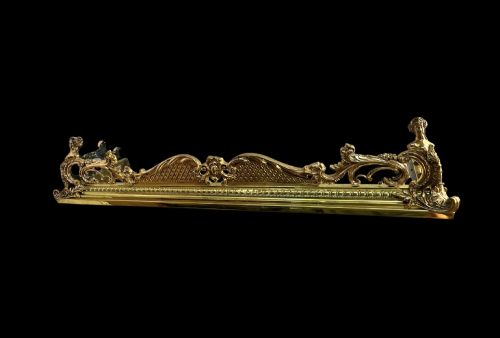
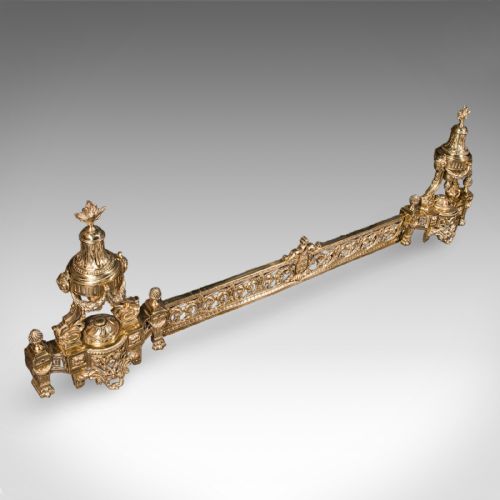


Cast Brass Kerb
A cast brass kerb anchors a hearth with weight and polish, framing open flames in period metalwork.
Cast Brass Kerb
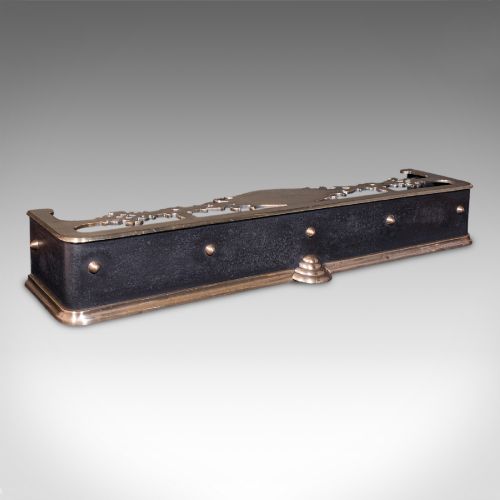
A cast brass kerb protects the room from embers while defining the hearth, appearing most often in Victorian and nineteenth-century forms. These fireplace fenders utilise substantial brass and bronze casting to edge the hearth floor.
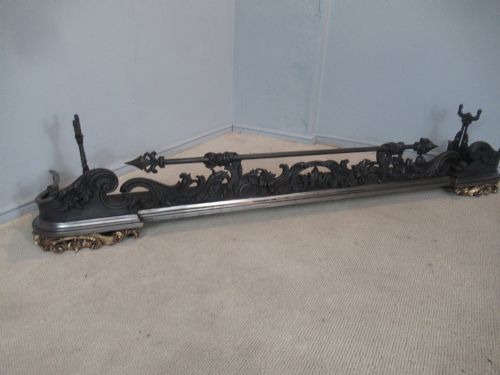
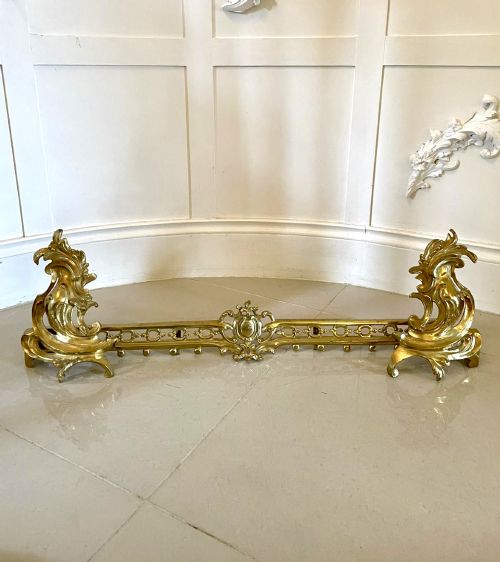
The selection here encompasses adjustable lengths, extending frames, and rigid hearth boundaries. Styles range from restrained English Victorian designs to ornate French Rococo, Louis XV, and Art Nouveau interpretations.
Makers integrated various metals into these assemblies, frequently pairing brass and cast iron or steel. The primary function remains containing the fire while bringing metallic warmth to the fireplace surround.
Materials and construction
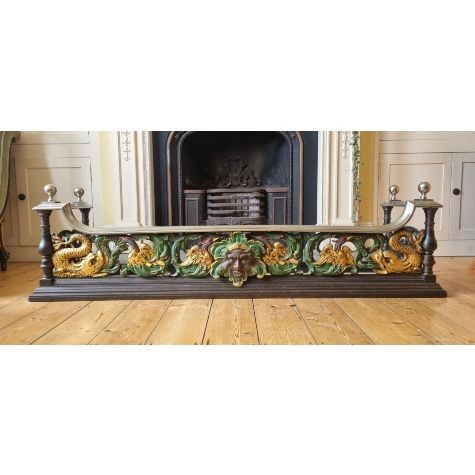
Foundry work relied on heavy-gauge casting techniques to produce thick brass components capable of withstanding hearth heat. Artisans shaped these elements into scrolled patterns, garlands, and lions, utilising bronze and gilt-brass alongside standard brass.
Many examples incorporate cast iron or steel sub-frames for structural rigidity, particularly in adjustable designs. Surface finishing involved polishing, gilding, and patination to highlight the cast ornament.
Cast Brass Kerb Retail Price Guide 2026
Typical asking prices for cast brass kerb among the pieces listed under this phrase on Sellingantiques today, from the lower quarter to the upper quarter. They describe what is for sale here now, not the wider market.
Listings span the Victorian and Edwardian eras, predominantly featuring cast brass, bronze, and iron across French and English styles.
Assessing quality in hearth guards
The distinction between standard production and superior execution lies in the depth of the casting and the crispness of the chased detail. Heavy gauge metalwork and substantial weight indicate a more robust construction that holds its shape over decades of use.
Design complexity also separates pieces, with finely scrolled mounts, applied garlands, and integrated figural elements such as lions marking out finer workshops. Extension mechanisms operate smoothly on better examples, maintaining alignment across varying hearth widths.
The Cast Brass Kerb Glossary
- Fender
- A low metal guard placed in front of an open fireplace to contain falling coals and sparks. It sits directly on the hearth floor.
- Kerb
- An alternative term for a fender, describing the low barrier framing the hearth perimeter. It provides a physical boundary between the fire and the room.
- Gilt-brass
- Brass that has been treated with a thin layer of gold or gold-coloured finish to enhance its lustre. This treatment was common on decorative nineteenth-century fireplace accessories.
- Rococo Revival
- A nineteenth-century style drawing on eighteenth-century French design, characterised by asymmetrical scrolls, C-scrolls, and naturalistic plant motifs. It appears frequently on ornate fenders.
- Adjustable fender
- A hearth guard designed with a telescoping or sliding mechanism to fit varying fireplace widths. These pieces allow the frame to extend or contract as needed.
Cast Brass Kerb: Frequently Asked Questions
What is a cast brass kerb?
A cast brass kerb is a heavy metal guard placed on the floor around a fireplace opening. It serves both a protective function against stray embers and a decorative role in framing the hearth.
These pieces appeared in various nineteenth-century styles, utilising cast brass, bronze, and iron to anchor the fireside arrangement.
How do I measure for a fender?
Measure the width and depth of your hearth area where the guard will sit. Take into account whether you need a fixed frame or an adjustable model that can expand to fit the space.
Check the internal dimensions to ensure the kerb clears your fireplace opening and any hearth rug or tiled surround.
Can adjustable fenders be locked?
Many nineteenth-century extending fenders use overlapping sliding sections that rest securely in place under their own weight. Some designs incorporate simple fastening screws or pins to fix the chosen width.
When positioned on the hearth, the weight of the heavy gauge brass generally keeps the extending parts stable.
How do I clean cast brass?
Dust the metal regularly with a soft, dry cloth to prevent soot and ash accumulation. Avoid harsh chemical abrasive cleaners that can strip historic patination from the brass or bronze surfaces.
Gentle cleaning preserves the surface finish achieved during the Victorian or Edwardian periods without damaging the underlying metal.