


Cast Brass Hearth Tools
Cast brass hearth tools bring functional metalwork to the fireplace, combining durability with period style.
Cast Brass Hearth Tools
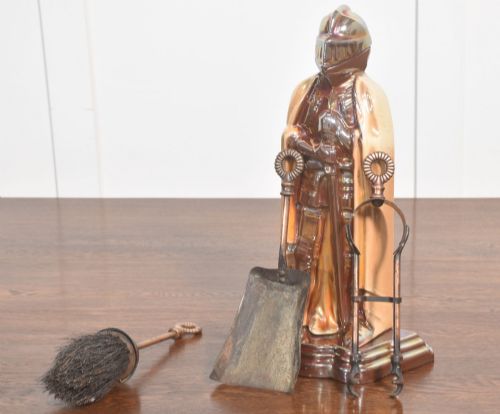
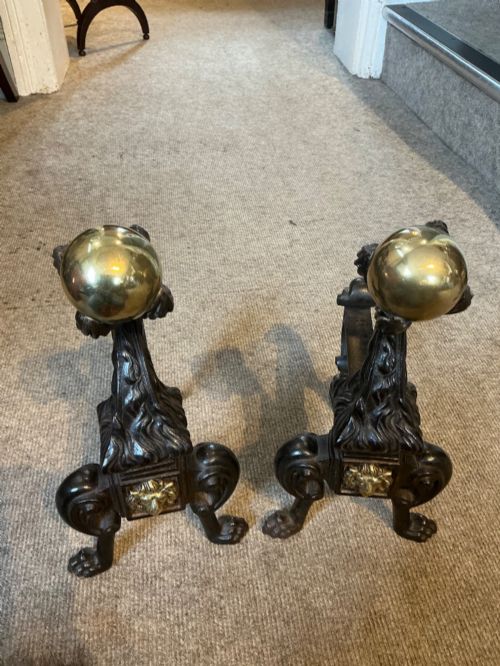
Cast brass hearth tools comprise fireside accessories designed for tending a coal or wood fire, most frequently encountered as Victorian and Edwardian companion sets, fire irons, and andirons. When searching for cast brass hearth tools, collectors encounter complete suites containing shovels, pokers, and tongs alongside paired fire dogs or rests.
The objects span the nineteenth century through the early twentieth century, taking distinct aesthetic forms from Gothic Revival and French Rococo to Arts & Crafts styles. Pieces often integrate brass with cast iron, steel, or gunmetal elements to provide structural strength where daily heat and weight demand it.
Materials and construction methods
The manufacture of these pieces relies primarily on brass casting, supplemented by forged steel and cast iron for working shafts and weight-bearing components. Handles and decorative mounts utilise brass, while business ends such as poker tips and shovel blades frequently incorporate iron or steel for resilience against fire.
Surface treatments vary from polished brass to copper finishes, occasionally paired with bristles for sweeping components within companion sets. Construction combines cast metal elements with joined or threaded assembly to withstand regular use beside the hearth.
Listings for cast brass hearth tools span from the 1860s through the Edwardian period, incorporating Victorian, Gothic Revival, and Arts & Crafts styles.
Judging quality and execution
Quality rests in the crispness of the casting detail and the substantial weight of the metal used in shafts and handles. Superior examples display clean casting lines, balanced proportions, and robust joints between handles and working shafts.
Material integration also dictates distinction, where combinations of solid brass with steel or gunmetal indicate higher grade utilitarian production. Decorative fidelity to periods like French Rococo or Arts & Crafts further separates standard utility items from finer parlor accessories.
The Cast Brass Hearth Tools Glossary
- Andirons
- Supports used to elevate logs in a fireplace, allowing air to circulate underneath for a better burn. They often feature decorative cast brass fronts that match companion tool sets.
- Fire irons
- A collective term for the poker, shovel, and tongs used to manage fuel and ash. These items frequently share a matching stand or rest.
- Companion set
- A coordinated collection of fireplace tools displayed together on a stand or rack. These sets became popular interior furnishings during the Victorian and Edwardian eras.
- Fire dogs
- Alternative terms for andirons or structural metal supports placed within the hearth opening. They occasionally incorporate rests designed to hold individual fire irons.
- Gunmetal
- A type of bronze alloy utilised alongside brass and steel in specific nineteenth-century fire tool construction. It provides distinct coloration and structural durability.
Cast Brass Hearth Tools: Frequently Asked Questions
What tools are in a standard set?
Standard fireplace sets typically include a poker, a shovel, and tongs designed for managing burning fuel and clearing ash.
Many configurations also include complementary andirons or a dedicated stand to keep the implements organised beside the hearth.
How do I date a set?
Dating relies on stylistic clues, such as heavy Victorian brass casting, Gothic Revival motifs, or cleaner Edwardian and Arts & Crafts lines.
Material combinations, including the presence of gunmetal or cast iron alongside brass, help narrow the period of manufacture.
Are these tools for daily use?
Many nineteenth and early twentieth-century pieces were built for active fireside service using durable brass, iron, and steel.
Assessing the thickness of the metal and the security of joints helps determine whether a set suits regular handling or decorative display.
What is the difference between andirons and fire dogs?
The terms are often used interchangeably to describe the metal supports placed on the hearth floor to hold logs.
Some historical regional variations prefer one term over the other, but both serve the same primary function of elevating wood.