
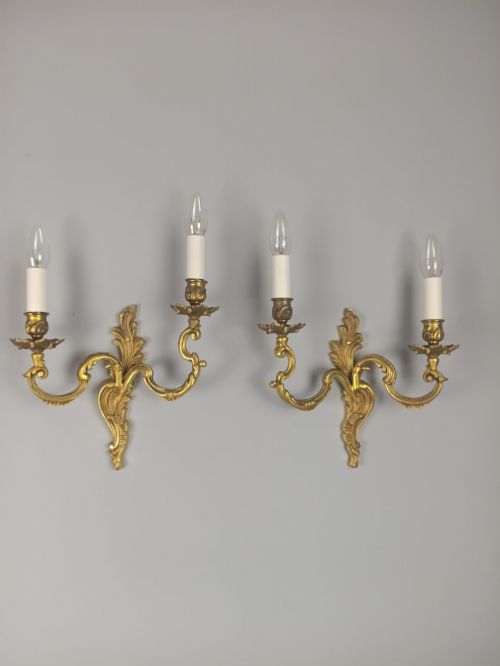
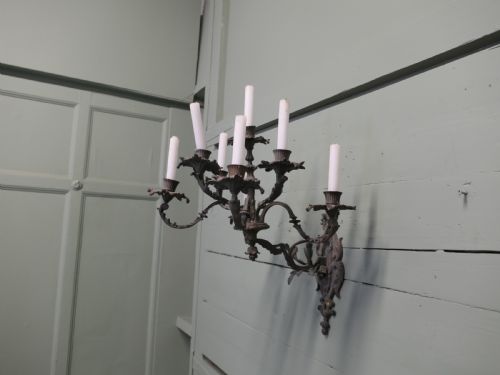


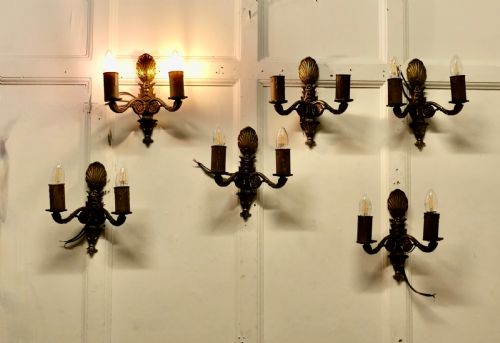

Cast Brass Candle Sconce
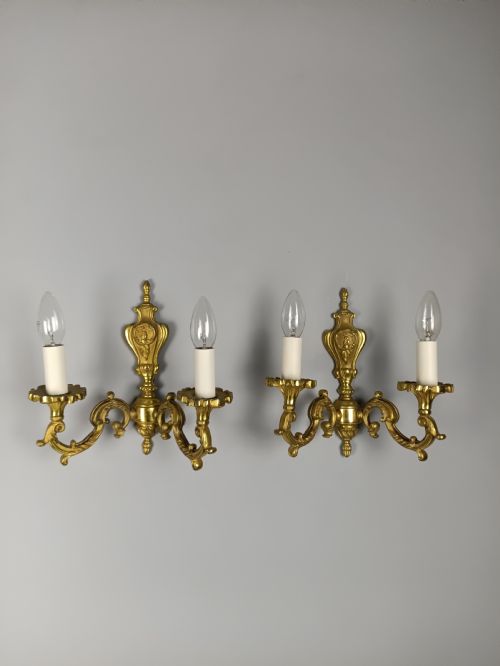
These cast brass candle sconce pieces bring warm metal reflection and period illumination to a wall.
Cast Brass Candle Sconce
A cast brass candle sconce provides wall-mounted illumination using heavy metal frames designed to project light into a room. When buyers search for a cast brass candle sconce, they encounter items configured for single or multiple candles, often wired later for electricity while retaining their original form.
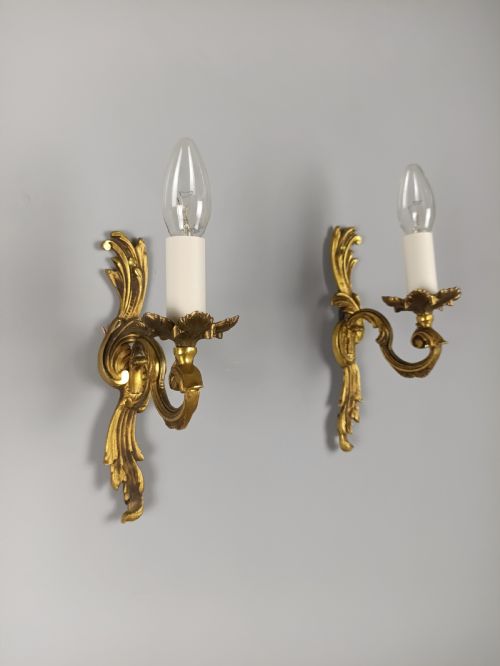
The selections span English and French workshops, encompassing wall lights and candlesticks adapted for suspension. Examples range from simple nineteenth-century brass castings to elaborate French Rococo Revival and Neoclassical designs dating from the Edwardian era back to Georgian periods.
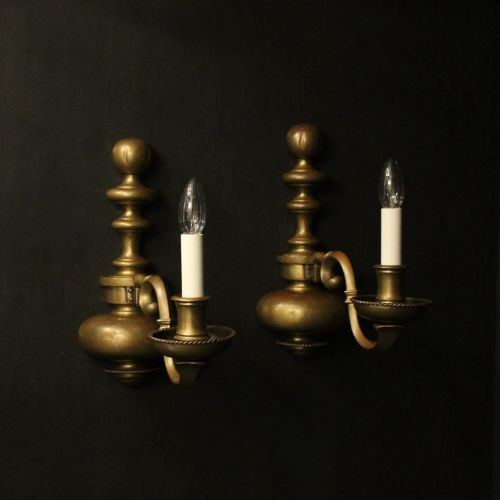
Pairs dominate the selection, offering symmetrical arrangement for flanking mirrors or fireplaces. Single sconces and larger sets of up to seven arms also appear, showing the diverse requirements of historic domestic interiors.
How they were made
Foundry workers utilised sand casting and lost-wax methods to shape molten brass, bronze, and ormolu into intricate arms, backplates, and drip pans. Metalworkers then finished the raw castings through chasing, filing, and turning on lathes to sharpen decorative details like acanthus leaves and fluting.
Surface treatments included fire gilding, chemical patination, and polishing to create bright golden finishes or aged bronze tones. Many pieces combine structural brass components with cast bronze ornaments, secured by threaded joints and small pins.
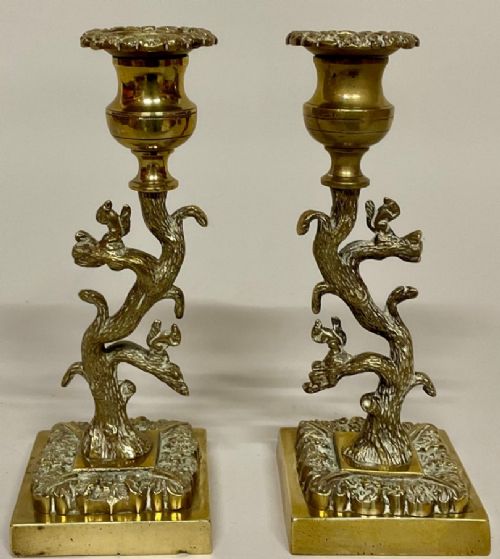
Squirrels occasionally peek from cast tree-branch stems, reminding us that nineteenth-century metalworkers loved a woodland narrative.
What varies in quality
The crispness of the casting defines the upper tier of the range, where intricate foliage and sculptural figures retain sharp edges rather than soft contours. Superior examples show careful hand-chasing after casting, removing mould seams and adding depth to feathers, drapery, and floral motifs.
Weight and structural integrity also separate standard production from exceptional pieces, with heavy gauge metal preventing flex in multi-armed brackets. Original gilding and integrated backplates preserved without replacement parts command greater regard among collectors.
The Cast Brass Candle Sconce Glossary
- Ormolu
- Gilded bronze produced by applying a mercury and gold amalgam to a bronze base and heating it. This technique creates a durable, rich golden surface found on French decorative metalwork.
- Campana
- A bell-shaped vessel form frequently used as the nozzle or drip pan on candlesticks and sconces. The flared rim catches dripping wax effectively.
- Knopped
- Having one or more rounded knobs or protuberances along the stem of a candlestick or sconce. This decorative feature also provides a secure grip for the hand.
- Rococo
- A decorative style characterised by asymmetrical scrollwork, C-scrolls, and naturalistic shell motifs. It originated in France during the eighteenth century and saw robust nineteenth-century revivals.
Cast Brass Candle Sconce: Frequently Asked Questions
How do I clean an antique brass sconce?
Dust the metal gently with a dry microfibre cloth to remove surface particles without disturbing the underlying patina.
Avoid abrasive metal polishes or harsh chemical dips, which strip historic surface oxidation and diminish the value of the piece.
Can these wall sconces be wired for electricity?
Many historical sconces have been adapted for electric bulbs over time, often running hidden internal wiring through the hollow cast arms.
Check the socket fittings and consult a qualified electrician to ensure historic fixtures meet modern safety standards before installation.
How do I mount a heavy cast brass sconce?
Secure the fixture directly into wall studs or use appropriate heavy-duty wall anchors rated for the specific weight of the metal.
Ensure the backplate sits flush against the wall surface to prevent any wobble when candles or bulbs are changed.
How do I distinguish French from English styles?
French pieces frequently display exuberant Rococo scrollwork, naturalistic flora, and gilded bronze or ormolu surfaces.
English designs often favour restrained neoclassical symmetry, Adams-style swags, or solid un-gilded brass construction.