


Cast Brass Appliques
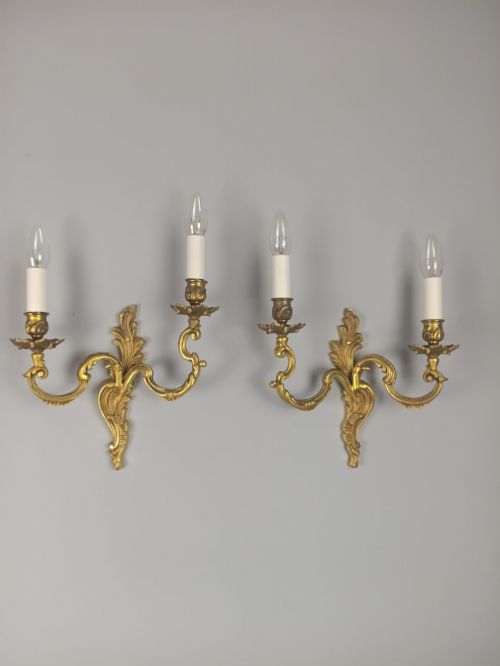
Cast brass appliques bring tactile warmth to interiors through ornate metalwork found on wall lights and furniture mounts.
Cast Brass Appliques
When you search for cast brass appliques, you encounter architectural and decorative metalwork designed for walls and furniture. The pieces on this page span the nineteenth century, Edwardian era, and early twentieth century.
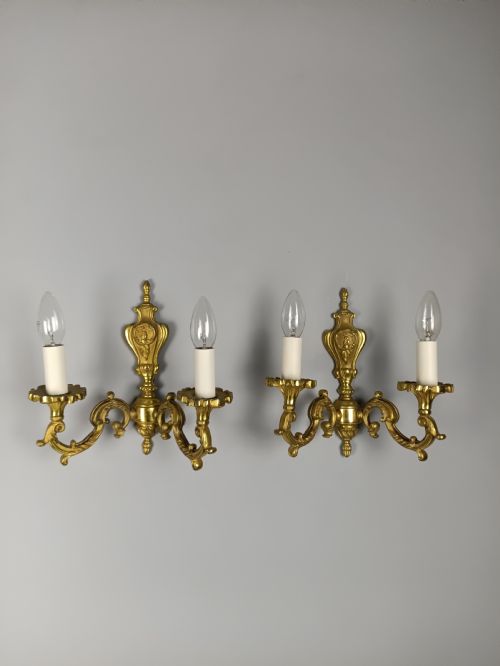
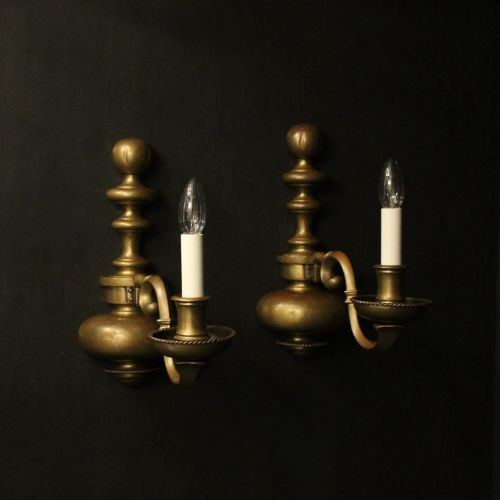
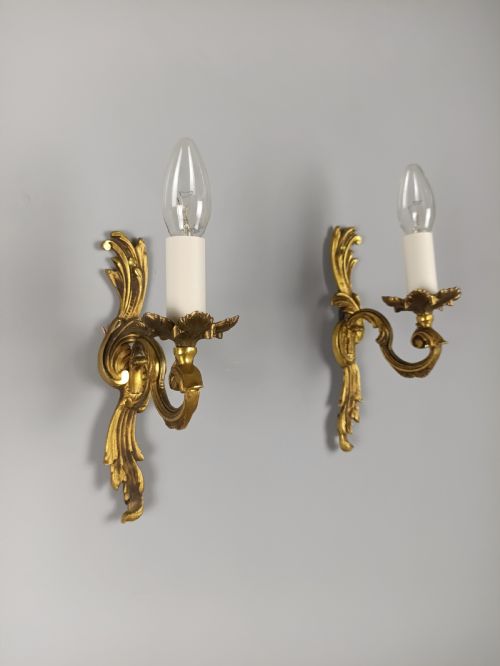
Most examples function as wall lights or wall sconces, featuring single, twin, or triple arms. Alongside lighting, furniture mounts appear as decorative metal elements.
Origins divide between French workshops, encompassing styles like Rococo Revival and Neoclassical, and English traditional designs. Liberty and Adams styles also emerge across the selection.
Judging quality and execution
The crispness of the cast detail separates superior examples from plainer work. Finer pieces retain sharp edges and deep relief in motifs such as cherubs, sea serpents, and foliage.
Surface finish also dictates distinction, particularly in the application of gilding or ormolu. Heavier proportions and integrated glass components indicate higher ambition in the original design.
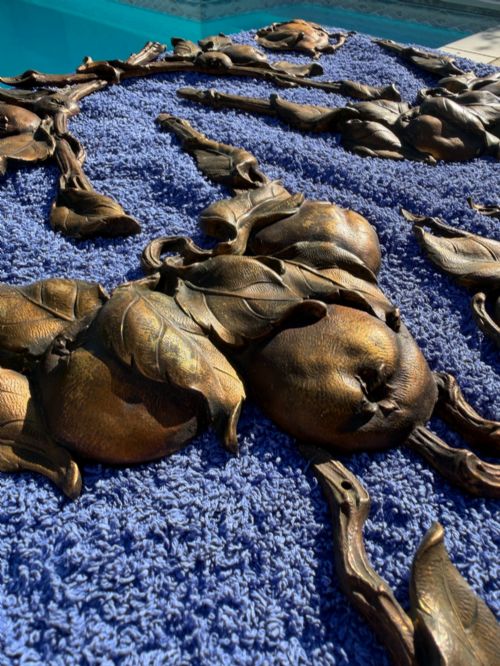
Architectural bronze sea serpents lurk among the metalwork, ready to mount a wall.
Poix Blin·Liberty·Dugué
The Cast Brass Appliques Glossary
- Cast brass
- Metal shaped by pouring molten alloy into a mould. This technique allows for complex ornamentation and repetition of decorative forms.
- Ormolu
- Gilded bronze or brass decoration applied to furniture or lighting. The technique creates a rich gold-coloured surface appearance.
- Wall sconce
- A bracket fixture fixed to a wall for holding candles or electric lamps. These fittings often incorporate multiple arms for illumination.
- Rococo Revival
- A nineteenth-century design movement favouring asymmetrical curves, scrollwork, and naturalistic motifs. It draws inspiration from earlier French eighteenth-century decorative arts.
- Neoclassical
- A style reflecting classical Greek and Roman art through symmetry and restraint. Common motifs include urns, swags, and classical columns.
Cast Brass Appliques: Frequently Asked Questions
How do I install antique wall lights safely?
Older wall lights require careful wiring updates to meet modern electrical standards. A qualified electrician should check the internal conduits and mounting brackets before fixing them to plaster or masonry.
Ensure the wall structure can support the weight of heavy cast bronze or brass fixtures. Proper anchoring protects both the historic metalwork and the wall surface.
What is the difference between an applique and a sconce?
An applique generally refers to a decorative ornamental mount applied to a surface, including furniture or walls. A sconce specifically denotes a wall-mounted lighting fixture.
In practice, many antique listings use these terms interchangeably for wall-fixed lighting. Both types share similar cast metal construction and decorative styles.
How should I clean gilded brass wall lights?
Dust the metal surfaces gently with a soft, dry brush to remove accumulated dirt. Avoid abrasive polishes that can wear away thin layers of gilding or ormolu.
Water and harsh chemical cleaners damage historic patination. Professional conservation advice is recommended for heavily tarnished or delicate pieces.
How do I identify French versus English pieces?
French examples often display elaborate Rococo or Neoclassical styling with complex cast detailing. Names like Poix Blin or Dugué point directly to continental workshops.
English pieces tend to follow traditional, Regency, or Adams styles with more restrained ornamentation. The weight, casting technique, and stylistic motifs usually signal the country of origin.