



Cased Sterling Spoon Pair
A cased sterling spoon pair brings together matched silver service and fitted presentation boxes from periods spanning the eighteenth century to the twentieth.
Cased Sterling Spoon Pair
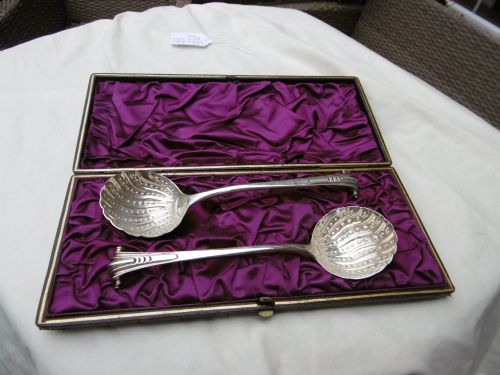
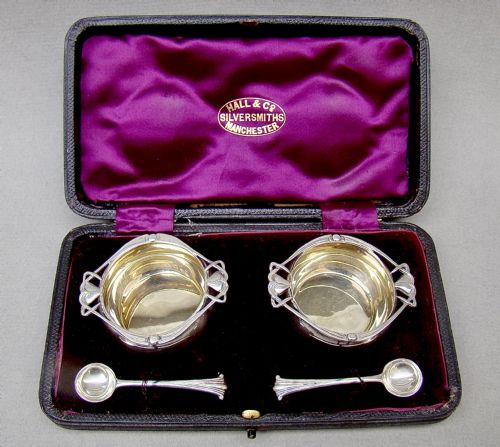
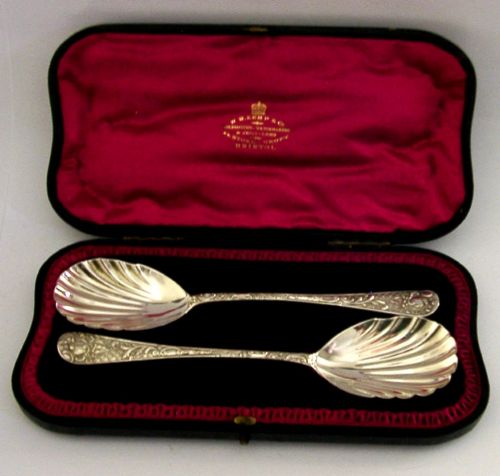
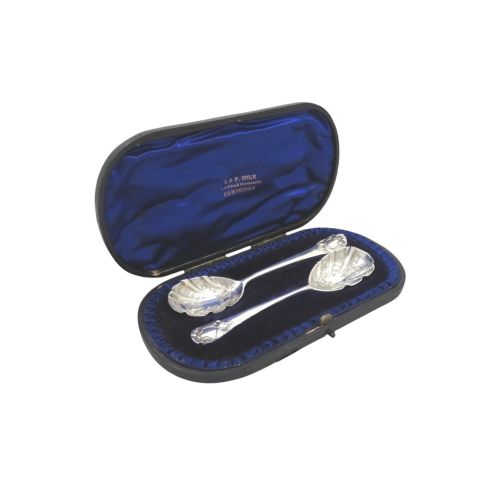
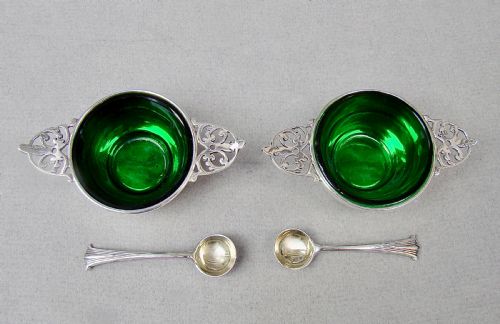
A cased sterling spoon pair consists of two matched silver spoons housed within a fitted box, designed originally for gifting, display, or formal dining service. These sets frequently take the form of serving spoons, berry spoons, jam and preserve spoons, or salt cellars paired with miniature spoons.
The evidence shows examples stretching from Georgian periods through Victorian eras and into the twentieth century, encompassing George III, George V, and Edwardian reigns. Victorian and Georgian iterations dominate the record, often featuring decorative motifs such as berry bowls, apostle figures, religious subjects, or novelty designs.
Buyers encounter these sets nestled in fitted enclosures lined with protective materials, preserving both the silver and its presentation format. The accompanying boxes range from simple protective shells to elaborate containers tailored specifically to the spoon contours.
Materials and construction methods
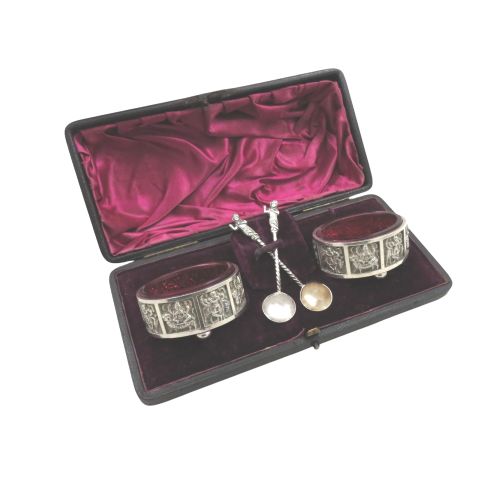
The physical construction centres on sterling silver, occasionally enhanced with silver gilt surfaces where a layer of gold coats the silver base. Makers employed techniques such as piercing, chasing, and engraving to ornament the handles and bowls, producing intricate designs like lace-back patterns or cast deity figures.
The protective cases are constructed from rigid outer shells covered in materials like leatherette, housing interior linings of velvet, satin, or silk designed to cradle the silver securely. Glass components appear in specific sets involving salt cellars, combining transparent vessels with matching silver spoons.
Cased Sterling Spoon Pair Retail Price Guide 2026
Typical asking prices for cased sterling spoon pair among the pieces listed under this phrase on Sellingantiques today, from the lower quarter to the upper quarter. They describe what is for sale here now, not the wider market.
Some sets feature tiny silver birds or Hindu deities perched directly inside the salt cellars.
Differentiating quality across examples
Distinctions in quality rest upon the depth and crispness of the hand-chased or engraved ornamentation on the silver bowls and handles. Sets featuring specialised forms, such as novelty salt cellars, detailed apostle figures, or distinct stylistic movements like Art Nouveau, demonstrate higher artisanal investment.
The integrity and original state of the fitted presentation case influence the overall standing of the set. Cases that retain their original fabric linings of silk, satin, or velvet in clean condition complement the preserved state of the enclosed silver spoons.
Josiah Williams And Co·John Locker·Bateman·Roberts Family
The Cased Sterling Spoon Pair Glossary
- Sterling silver
- A silver alloy containing 92.5 percent pure silver by mass, with the remainder consisting of other metals like copper to provide durability.
- Berry spoon
- A large serving spoon, often Georgian or Victorian in origin, featuring fruit and foliage repoussé work chased onto the bowl.
- Silver gilt
- Silver that has been coated with a thin layer of gold on its exterior surface.
- Leatherette
- A synthetic material designed to imitate leather, frequently utilised for the exterior covering of antique presentation cases.
- Trefid
- An early form of spoon characterised by a lobed and notched terminal handle shape popular around the late seventeenth and early eighteenth centuries.
Cased Sterling Spoon Pair: Frequently Asked Questions
What were cased sterling spoon pairs used for?
These matched sets served specialised dining functions, including transferring berries, serving jams, or accompanying salt cellars during formal meals.
Many sets were purchased specifically as presentation gifts for weddings or special occasions, remaining safely stored in their fitted boxes when not in active use.
How do I date a cased sterling spoon pair?
Dating relies heavily upon the hallmarks stamped into the sterling silver, which indicate the assay office, the specific year of production, and the maker.
Stylistic indicators such as Georgian berry chasing, Victorian religious motifs, or Art Nouveau handle contours also provide clear chronological markers.
What periods do these spoon sets come from?
The available examples span from the eighteenth century through the Georgian and Victorian eras into twentieth-century Edwardian and Art Deco periods.
Victorian and Georgian pieces appear most frequently in the records, reflecting the historical popularity of presenting ornate silver tableware in matched pairs.
How should I store a cased sterling spoon pair?
The original fitted case provides the primary method of storage, keeping the two matched spoons secure against movement and physical contact.
Keeping the case in a stable environment away from excessive humidity protects both the delicate interior silk or velvet linings and the polished silver surfaces.