


Cased Salt Cellar Set
A cased salt cellar set brings matched silver and fitted velvet into the dining room.
Cased Salt Cellar Set
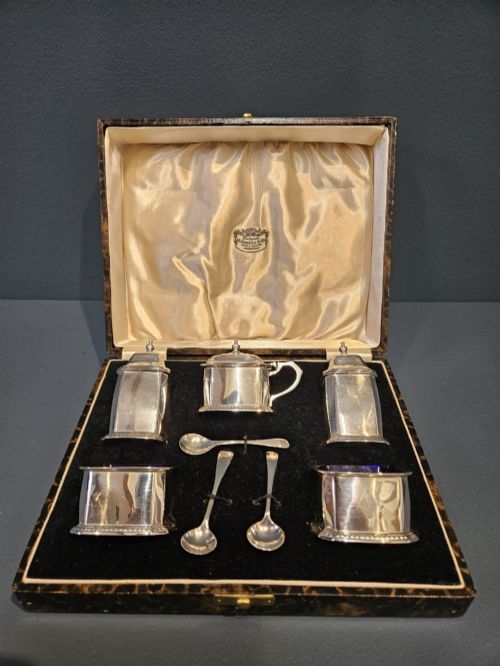
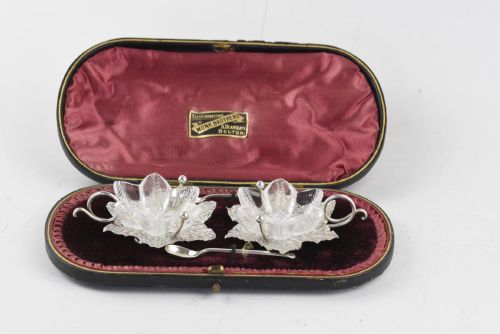
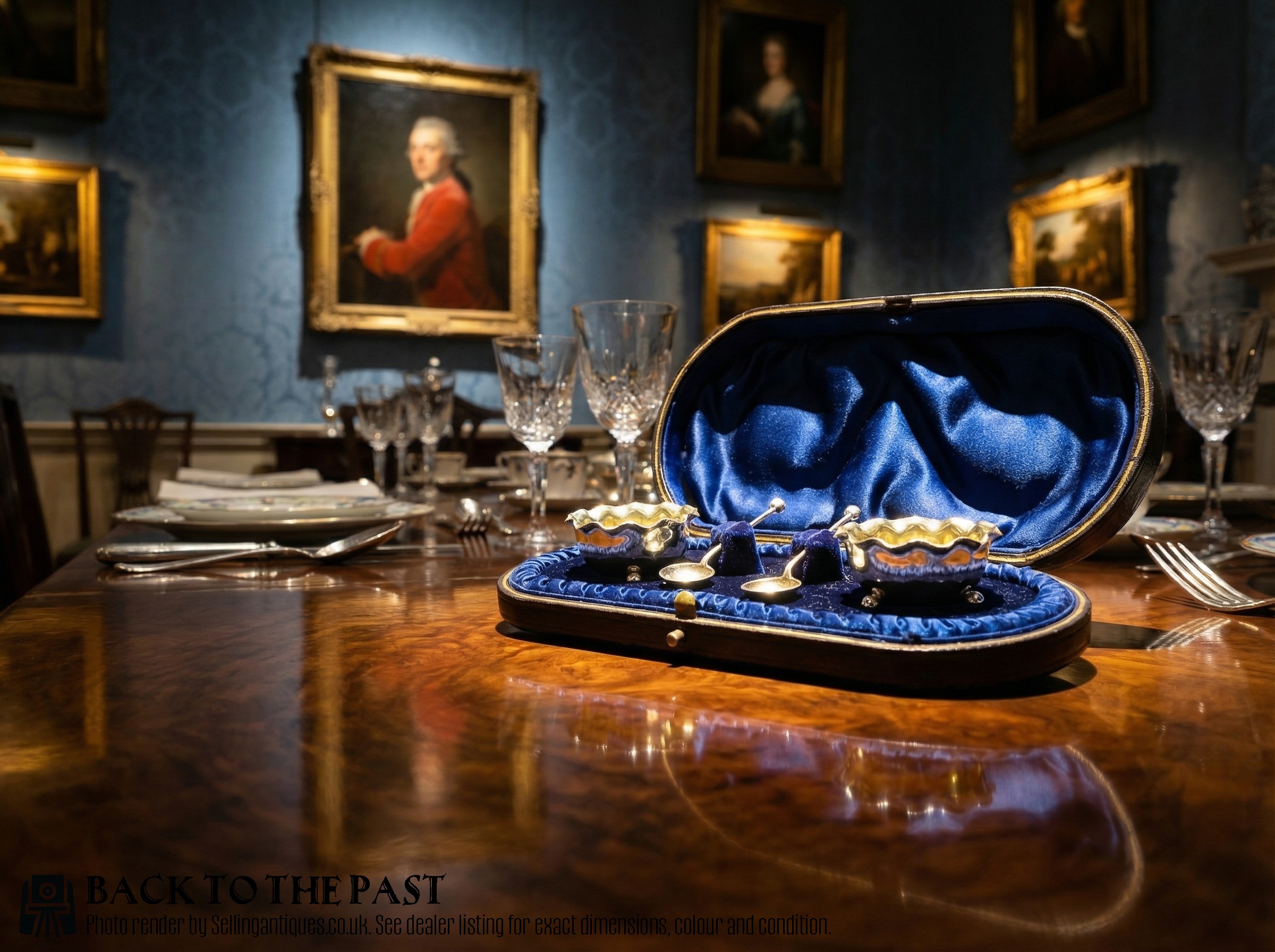
A cased salt cellar set gathers small silver vessels into a fitted presentation box lined with silk or satin. These sets appear across the Victorian, Edwardian, and Art Deco periods, housing salts alongside matching spoons.
The most common formats on this page range from pairs of open salt bowls to larger condiment sets with glass liners. Makers from the late nineteenth century onwards housed these pieces in leather-covered boxes.
Condiment sets and cruet sets often accompany the core salt cellars within these fitted cases. The styles shift from Aesthetic movement decoration to clean geometric lines of the mid-twentieth century.
How they were made
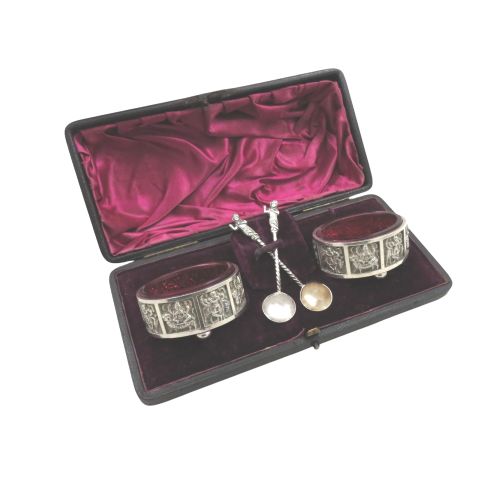
Silversmiths shaped sterling silver into bowls and cast decorative elements such as Hindu deities or bird motifs. Glass liners protected the metal from corrosion by salt, fitting snugly inside pierced or solid silver walls.
Cases combined rigid leather exteriors with soft velvet and silk interiors moulded to hold each individual spoon and vessel. Enamel work occasionally added colour to Norwegian Art Deco pieces from the nineteen-thirties.
Materials documented in these sets include cut glass, satin, enamel, and heavy sterling silver.
What varies in quality
The standard of a cased salt cellar set rests on the weight of the sterling silver and the precision of the fitted case. Heavier gauge silver resists dents and maintains crisp chasing on decorative borders.
Box construction separates standard production from finer workshop output, particularly in the quality of the silk lining and the exterior leather. Matched spoons with correct hallmarks add significant cohesion to a set.
William Neale·Wilmot Manufacturing Co·Viners·James Dixon & Sons
The Cased Salt Cellar Set Glossary
- Sterling silver
- A silver alloy containing ninety-two point five percent pure silver by mass. This material forms the primary body of the salt cellars and spoons.
- Cruet set
- A collection of small bottles or containers for condiments held together on a stand or inside a fitted box. These sets often include salt, pepper, and mustard vessels.
- Glass liner
- A removable insert placed inside an open salt cellar. It prevents the salt from coming into direct contact with the silver.
- Hallmark
- An official stamp applied to precious metals indicating the standard of purity and the assay office. These marks also reveal the year of manufacture and the maker.
- Aesthetic movement
- A nineteenth-century design style emphasising visual beauty over narrative content. Pieces from this period often feature stylised natural motifs.
Cased Salt Cellar Set: Frequently Asked Questions
How do I clean tarnished silver salt cellars?
Use a soft cloth and a dedicated silver polish designed to remove tarnish without scratching the surface. Avoid abrasive materials that can damage chased details or maker marks.
Keep glass liners clean by washing them in warm soapy water separately from the metal. Ensure liners are completely dry before placing them back into the silver bowls.
Can I use these salt cellars for daily dining?
Sterling silver salt cellars function well for everyday use provided you empty and clean them after each meal. Salt is corrosive and will pit the metal if left in contact for extended periods.
Stored safely in their fitted cases when not in use, these sets remain protected from knocks and dust. Modern table salt works just as well as historical coarse salt in these vessels.
How do I date a cased condiment set?
Examine the hallmarks stamped on the base of the salt cellars and the stems of the spoons. These assay marks point to specific towns and years of production.
Check the style of the presentation case and the interior fabric for period clues. Art Deco sets feature geometric silk layouts, while Victorian boxes often display deep velvet contours.
Why do some salt cellars have glass inserts?
Glass liners protected the sterling silver from the corrosive chemical action of moist table salt. Direct contact caused pitting and dark oxidation on the interior walls of the bowls.
Fitted glass also allowed open salt cellars to hold other liquid condiments safely. Replacements often match the original dimensions if an old liner breaks.