




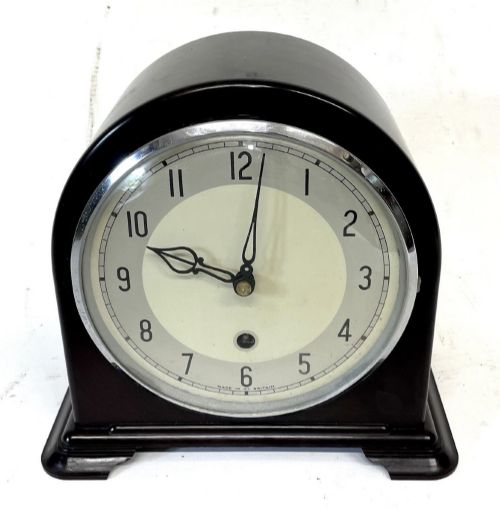


Cased Mechanical Desk Clock
A cased mechanical desk clock offers a precise timepiece housed in protective glass, brass, leather, or wood, designed to travel or sit securely on a table.
Cased Mechanical Desk Clock
When you search for a cased mechanical desk clock, you encounter portable timepieces ranging from Victorian carriage clocks to Art Deco travel pieces and mid-century mantel designs.
The selections here are dominated by brass and gilt carriage clocks featuring glass panels, alongside library clocks, skeleton movements, and atmospheric clocks enclosed in glass bell jars.
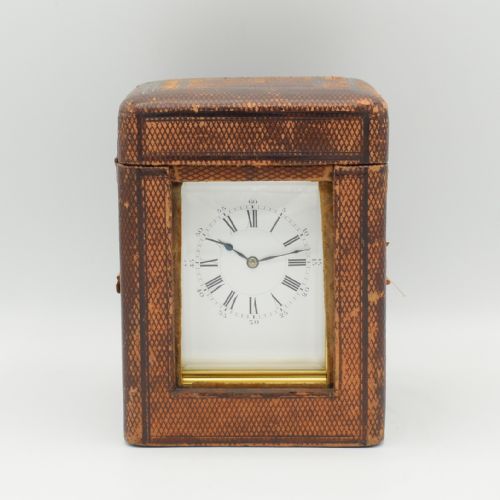
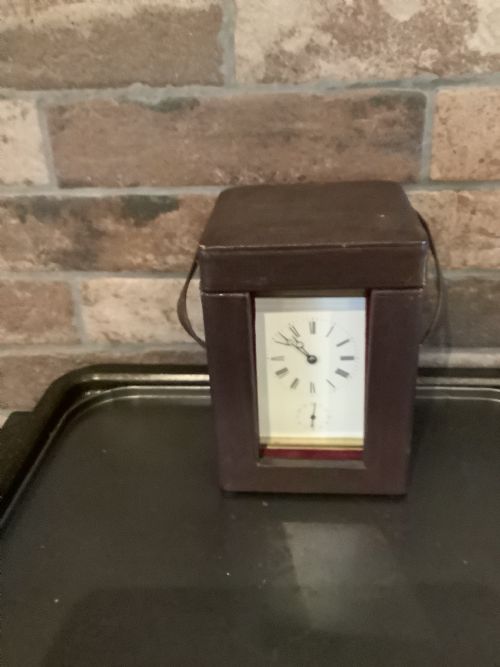
Origins stretch from nineteenth-century French and English workshops to mid-century Swiss makers, utilising leather outer travel cases or fitted presentation boxes to protect the mechanics.
How they were made
The construction relies heavily on brass, gilt brass, and steel for the internal movements and outer frames, often complemented by bevelled glass panels that reveal the escapement and gears.
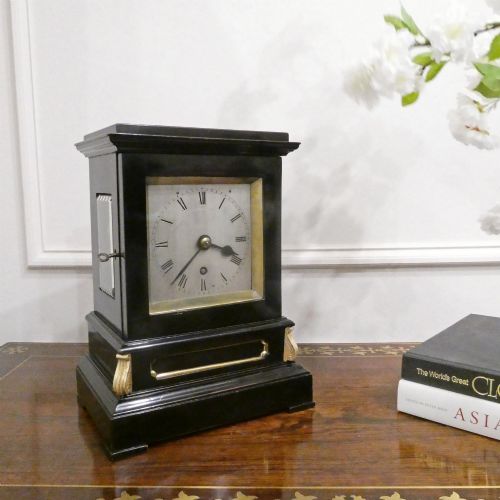
Outer protection is achieved through leather travel cases, wooden library clock housings in mahogany, walnut, or ebonised wood, and rhodium-plated finishes found in later twentieth-century models.
Enamel dials provide the face for traditional models, while later mid-century pieces incorporate metal dials, bakelite, and specialised Swiss mechanical or Atmos movements.
Listings feature periods spanning from Victorian and Edwardian eras through to Mid-Century Modern designs, utilising brass, glass, mahogany, and chrome.
What varies in quality
Quality rests upon the sophistication of the movement, separating standard timepieces from those featuring repeating strikes, alarms, moon phases, or specialised escapements.
The execution of the case materials dictates distinction, moving from cast gilt brass and engraved gorge cases to simpler plated frames and basic wood housings.
The inclusion of original fitted leather travel cases, maker signatures on the dial or movement, and preserved boxes or papers elevates specific pieces above standard examples.
Henri Jacot·Pickford of London·Drocourt Paris·Harrods of London·Jaeger LeCoultre·William Evans of Handsworth·Dwerrihouse and Bell·Richard co·Clerke Royal Exchange London·L Epee·E White·James Grohe
The Cased Mechanical Desk Clock Glossary
- Carriage clock
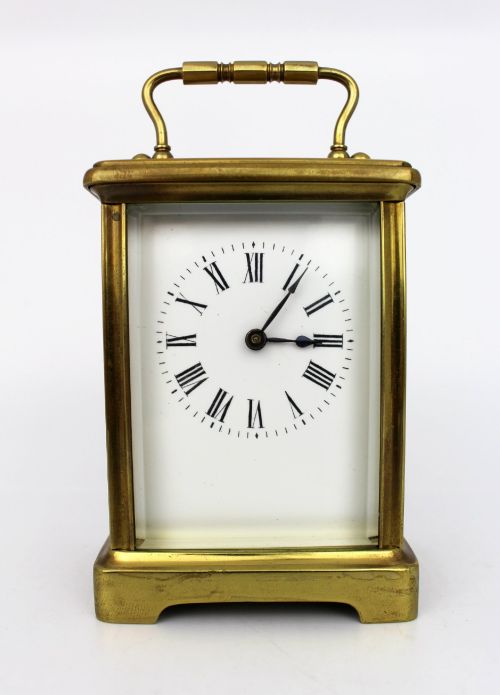
- A small, spring-driven timepiece designed for travelling, featuring a carrying handle and glass panels set into a brass frame. They originated in France during the nineteenth century.
- Fusee
- A conical pulley used in mechanical clocks to maintain even power from the mainspring as it unwinds. This mechanism improves timekeeping accuracy across the power reserve.
- Gorge case
- A distinct rectangular brass carriage clock case style with moulded top and bottom sections, often associated with fine French makers like Drocourt and Jacot.
- Escapement
- The mechanical linkage that controls the release of gear train power to the balance wheel or pendulum. Different types include lever, cylinder, and specialised detent designs.
- Atmos clock
- A mechanical timepiece driven by changes in atmospheric temperature acting on a gas-filled expansion chamber. It requires no manual winding.
Cased Mechanical Desk Clock: Frequently Asked Questions
What is a carriage clock?
A carriage clock is a portable mechanical timepiece equipped with a folding handle, designed originally for officers and travellers during the nineteenth century. These clocks are typically housed in brass frames with glass panels that display the internal gear train.
Most examples operate on a spring-driven movement, sometimes including an alarm or striking mechanism. They sit securely on desks or mantels when not packed into their leather travel cases.
How do Atmos clocks work?
Atmos clocks operate without human winding by using a hermetically sealed capsule containing a mixture of gas and liquid. Temperature fluctuations cause this capsule to expand and contract, winding the mainspring continuously.
Invented in the twentieth century, these precision Swiss timepieces require a steady environment free from disturbance to maintain their delicate balance.
What is a fusee movement?
A fusee is a conical drum connected to the mainspring by a fine chain or cord. As the spring unwinds and loses tension, the chain moves to a wider part of the cone, providing constant torque to the gear train.
This system ensures consistent force reaches the escapement, resulting in superior timekeeping accuracy compared to standard spring-driven clocks.
How do I date a brass carriage clock?
Dating a brass carriage clock involves examining the style of the case, the escapement type, and any maker signatures stamped on the backplate. Nineteenth-century French pieces often feature platform cylinder escapements and numbered gorge or corniche cases.
Later Victorian and Edwardian examples may incorporate lever escapements or added complications like alarms and striking trains, while mid-century models shift toward minimalist dials and rhodium plating.