
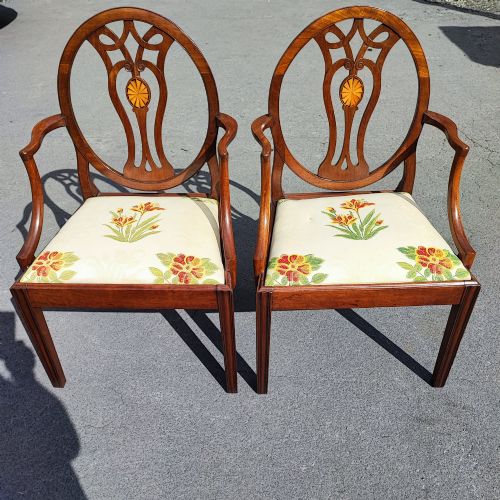
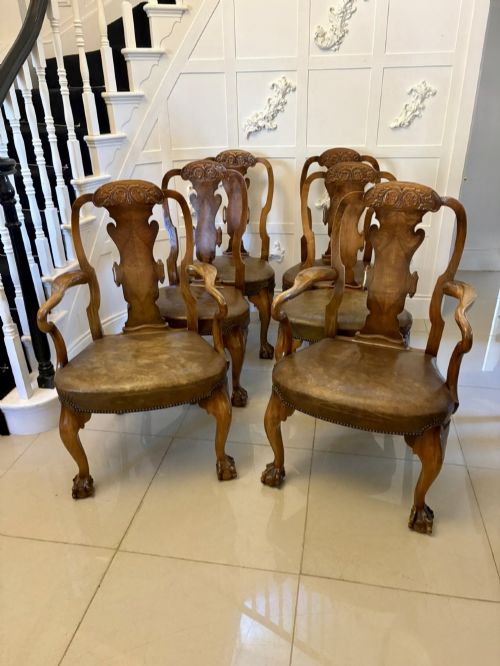
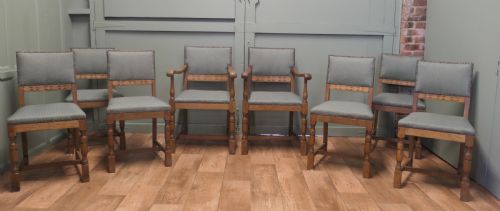
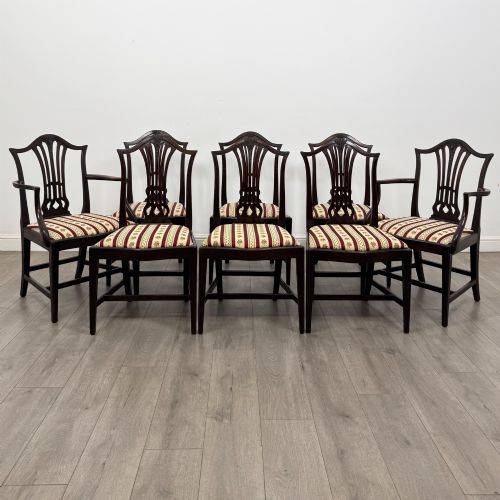
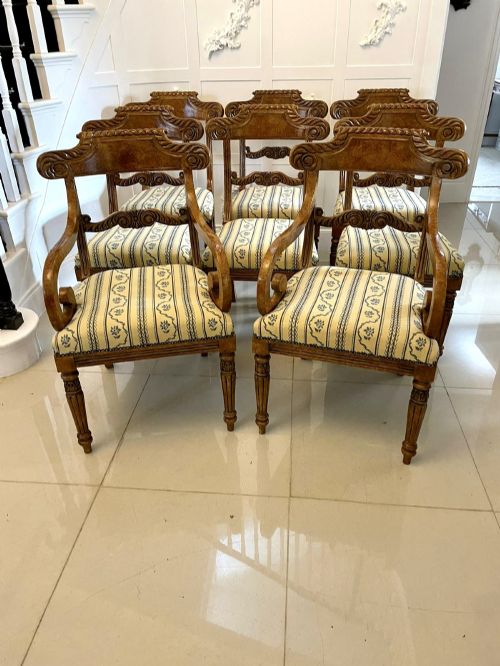
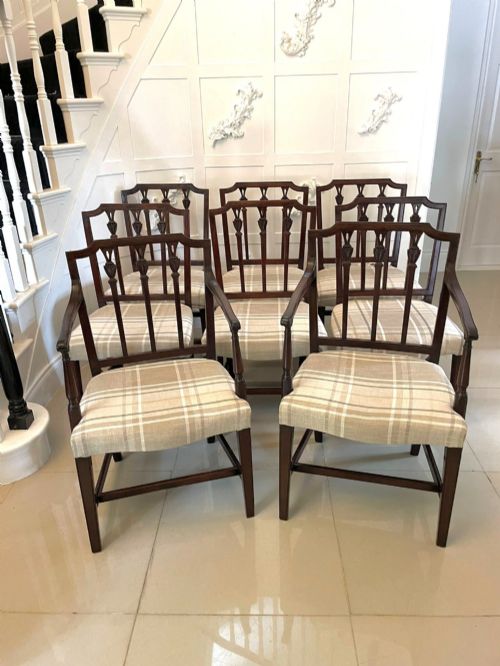
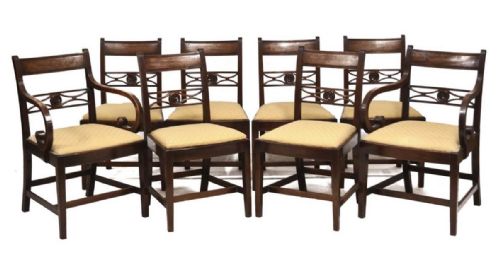
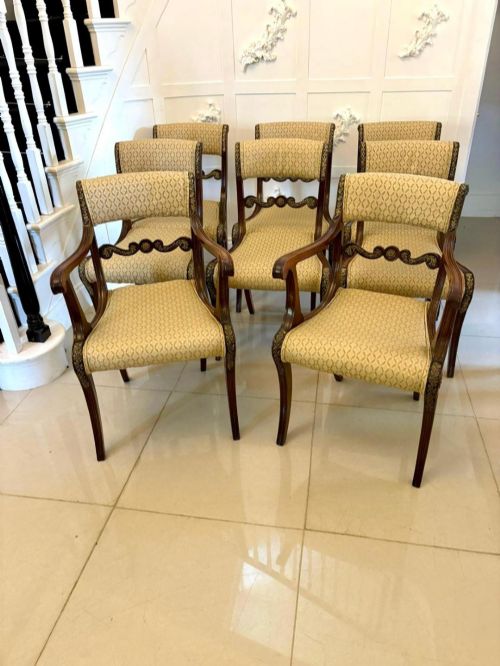

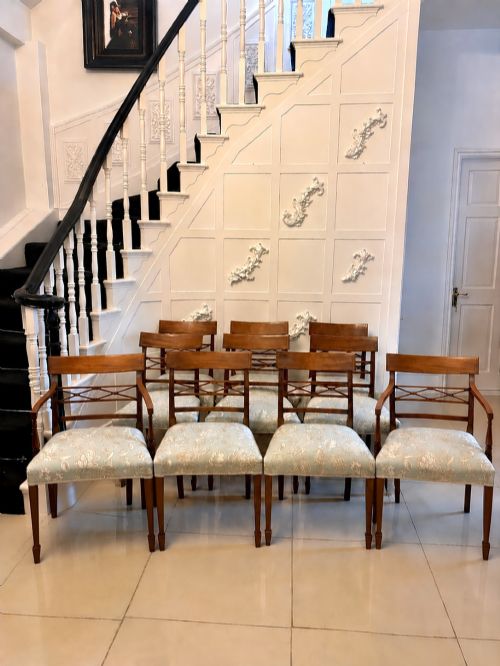
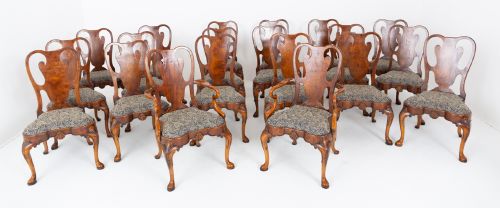
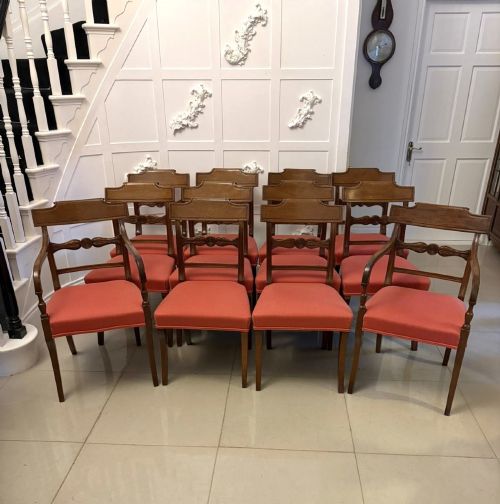
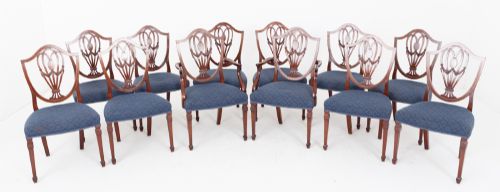
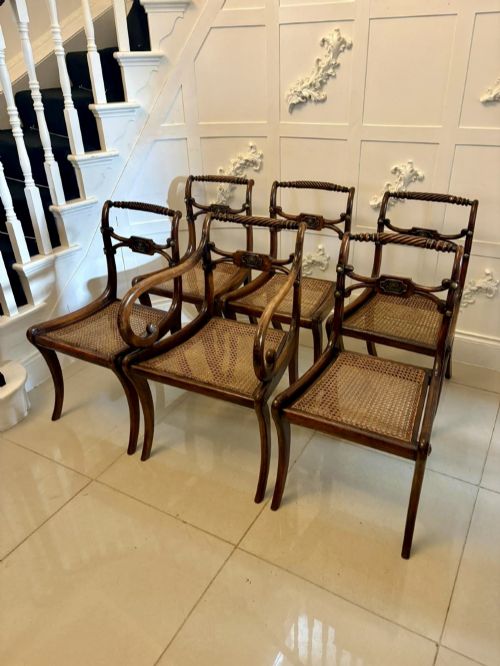
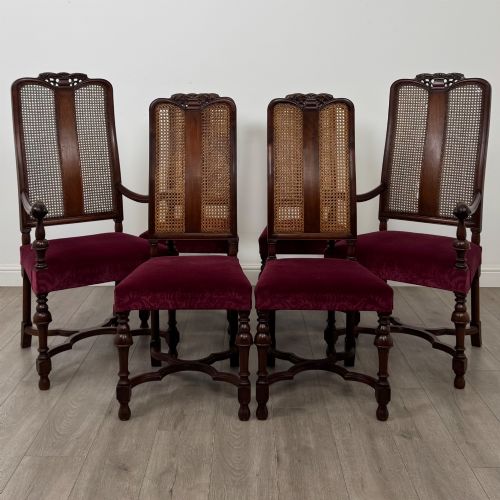
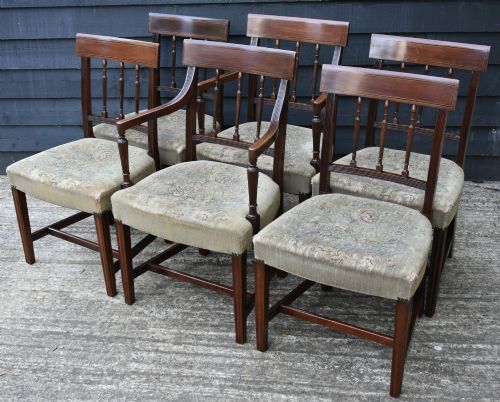
Carver Dining Chairs Set
A carver dining chairs set combines matching single chairs with matching armchairs, offering a cohesive seating arrangement for the dining table.
Carver Dining Chairs Set
A carver dining chairs set typically pairs several standard side chairs with one or two matching armchairs intended for the heads of the table. These groupings appear frequently in styles spanning from the Georgian and Regency periods through to Edwardian revivals.
Most configurations found here consist of larger sets numbering six, eight, ten or twelve pieces, designed for formal dining rooms. The armchairs incorporate supportive elbow rests, distinguishing them from the side chairs while maintaining a unified design.
Originating largely from 18th, 19th and early 20th century English workshops, these sets showcase regional cabinetmaking traditions and period revivals like Chippendale and Hepplewhite.
Materials and construction methods
Cabinetmakers predominantly utilised solid timbers such as mahogany, oak and walnut, occasionally incorporating decorative veneers like burr walnut or birds-eye maple over secondary woods.
Joinery techniques relied heavily on mortise and tenon frames, ensuring structural rigidity for pieces subjected to daily use around the dining table.
Seats were traditionally upholstered in fabrics, leather, needlepoint tapestry or cane webbing, secured over webbing or stuffed foundations.
Listings feature mahogany, oak, walnut and elm woods across Georgian, Victorian and Edwardian periods.
Factors determining quality
The distinction between standard commercial output and the finest examples lies in the crispness of hand-carved details, such as intricate ribbon backs, fluted legs or scroll arms.
Timber selection dictates overall visual impact, with figured mahogany grains and well-matched sets demonstrating superior craftsmanship by prominent makers.
Structural integrity and the preservation of original timber patination separate untouched period sets from heavily restored alternatives.
Warings·Maple and Co·Alfred Allen of Birmingham·Waring and Gillow·Thomas Clarkson and Sons·Denby and Spinks
The Carver Dining Chairs Set Glossary
- Carver
- An armchair designed with enclosed sides or elbow rests, traditionally placed at the head of a dining table. These match the accompanying single chairs.
- Single chair
- A dining chair manufactured without arms, designed to fit compactly along the sides of a dining table.
- Shield back
- A chair back design popularised in the late eighteenth century resembling the outline of a heraldic shield, often filled with pierced splats.
- Splat
- The central vertical wooden strip connecting the seat to the top rail of a chair back, frequently carved or pierced in revival styles.
- Ladder back
- A chair back featuring a series of horizontal arched wooden slats resembling the rungs of a ladder.
- Bar back
- A chair back distinguished by a horizontal curved wooden bar running across the upright supports.
Carver Dining Chairs Set: Frequently Asked Questions
What is a carver dining chairs set?
A carver dining chairs set is a matched group of dining seating that includes standard side chairs alongside one or more matching armchairs for the heads of the table.
These sets were designed to provide a uniform aesthetic for formal dining rooms while offering additional comfort at the table ends.
How were carver dining chairs used?
The armchairs were traditionally reserved for the host and hostess or honoured guests seated at either end of the dining table.
The side chairs accommodated the remaining family members and visitors during meals and gatherings.
How do I care for antique dining chairs?
Maintenance involves keeping wooden surfaces clean using appropriate furniture wax and protecting upholstery from direct sunlight and moisture.
Regularly checking the joinery prevents loosening caused by movement around the dining table.
How can I identify the period of a set?
Period identification relies on observing specific design motifs, construction techniques, and timber characteristics associated with eras like Georgian or Victorian.
Comparing the carved details and proportions against documented stylistic shifts helps narrow down the date of manufacture.