




Carver and Single Chairs
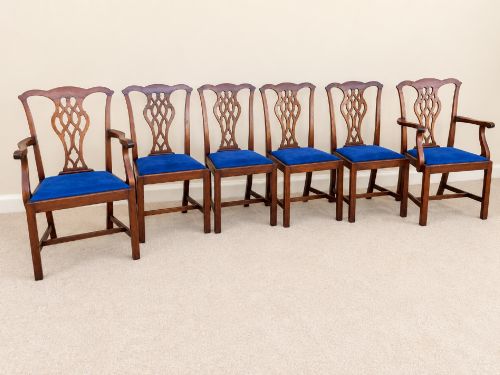
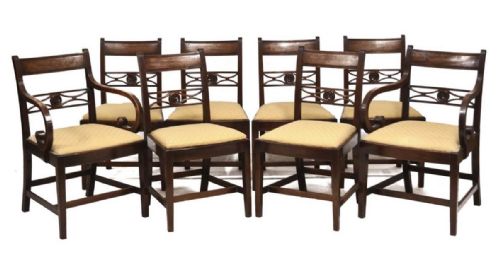
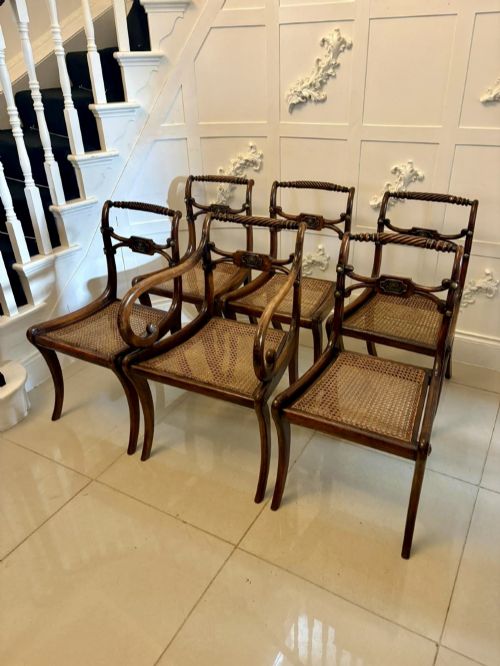
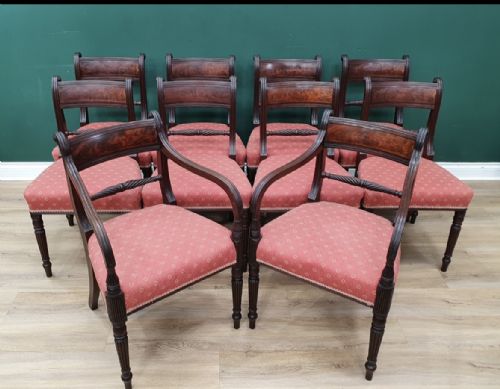
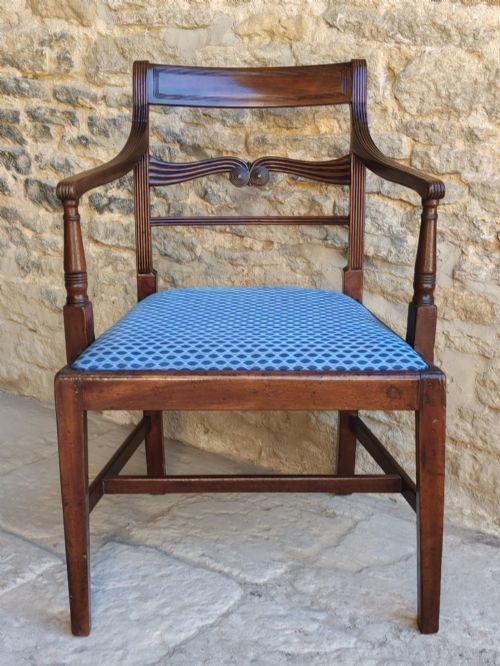
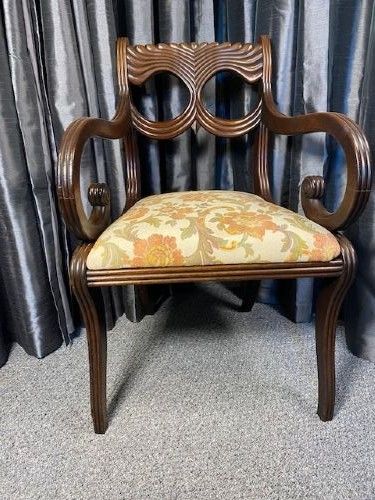
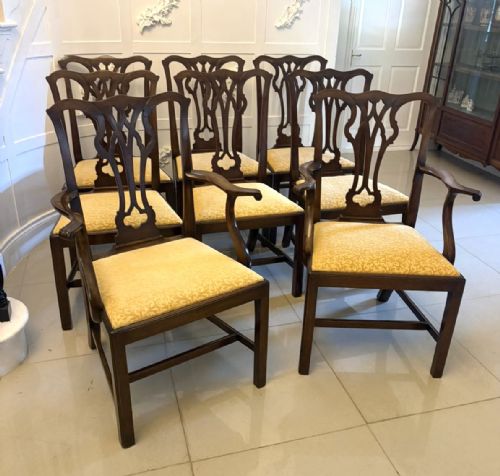
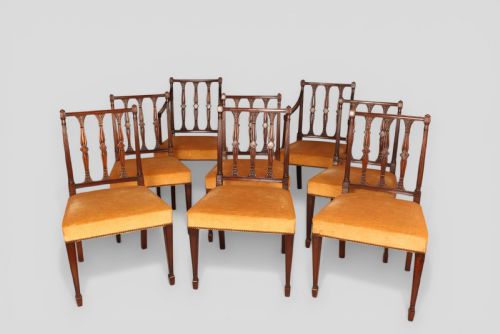
Carver and single chairs offer the traditional matched seating arrangement for a dining table, combining armed hosts' seats with armless companions.
Carver and Single Chairs
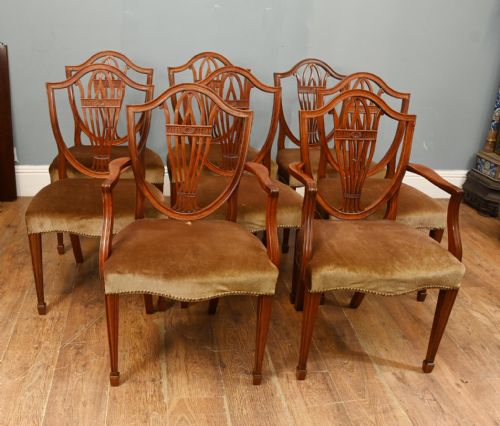
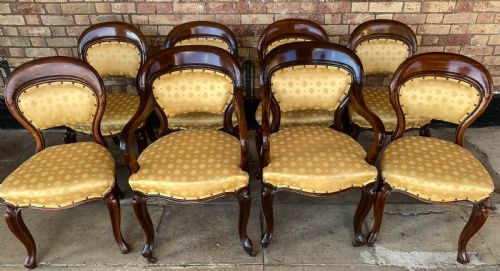
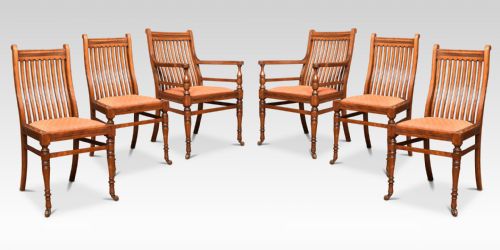
When you search for carver and single chairs, you are looking at dining sets comprising one or more armchairs alongside a larger number of armless side chairs. These combinations span the Georgian, Regency, and Victorian periods, with styles ranging from plain George III designs to ornate Chippendale and Hepplewhite revivals.
Most sets you meet pair two carvers with six or eight single chairs, though larger suites and individual carvers also appear. The forms serve the traditional dining room layout where the host and hostess occupy the carvers at the head and foot of the table.
Makers built these groupings from mahogany, utilising flame veneers and solid timber to create unified suites for formal dining. Sets often survive as groups of matching chairs, though later revivals also replicate the proportions of earlier centuries.
What varies in quality
The degree of hand carving on the back splats, rails, and legs separates standard production from superior work. Crispness in the execution of pierced splats, claw and ball feet, or fluted stiles indicates skilled workshop execution.
The selection of timber grain, particularly the choice of figured mahogany and matching across a set, dictates visual cohesion and status. Consistency across all single chairs and carvers in a suite shows careful original pairing by the maker.
Listings span the Georgian, Regency, and Victorian periods, predominantly constructed from mahogany with upholstery, leather, fabric, velvet, or cane.
James Shoolbread
The Carver and Single Chairs Glossary
- Carver
- An armchair designed specifically for use at the head of a dining table. These seats feature supportive arms to accommodate the host.
- Single chair
- An armless dining chair intended to stand along the sides of a table. These pieces match the companion carvers in timber, style, and upholstery.
- Splat
- The vertical wooden slat positioned in the centre of a chair back. Makers shaped and pierced these elements according to Georgian and revival styles.
- Cane
- Woven rattan material used for chair seats and backs. This light, flexible medium appears on Regency and 19th-century examples.
Carver and Single Chairs: Frequently Asked Questions
Why do sets include carvers?
Carvers provided the host and hostess with a more substantial, armed seat at either end of the dining table.
The remaining guests used armless single chairs positioned along the sides, allowing multiple seats to tuck neatly beneath the table surface when not in use.
How do I identify a revival set?
Revival sets display 18th-century design motifs such as Chippendale ribbon backs or Hepplewhite shield backs executed with 19th-century woodworking techniques.
Inspect the interior frame construction, timber uniformity, and tool marks to distinguish these later interpretations from genuine Georgian production.
Can I mix singles and carvers?
Historically, dining suites were commissioned as unified sets where timber, leg style, and upholstery matched across both armchairs and side chairs.
While eclectic dining arrangements exist, matching carvers to single chairs ensures correct proportions and visual harmony around the table.
What wood was used most?
Mahogany served as the primary timber for dining suites throughout the Georgian, Regency, and Victorian periods due to its strength and rich natural colour.
Cabinetmakers utilised solid stock for structural frames and applied figured veneers to prominent surfaces like crest rails and splats.