
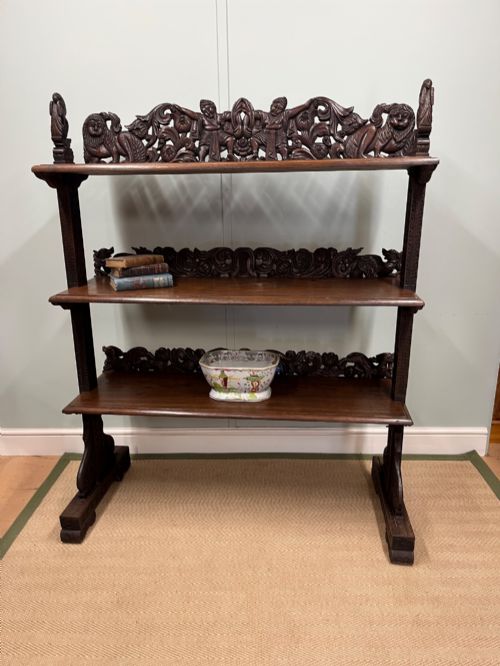


Carved Wooden Waiter
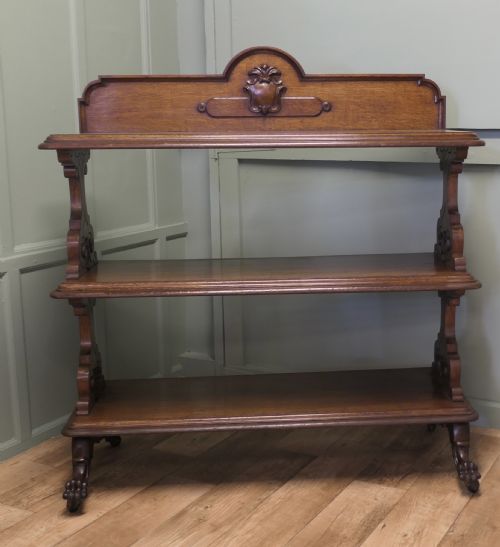
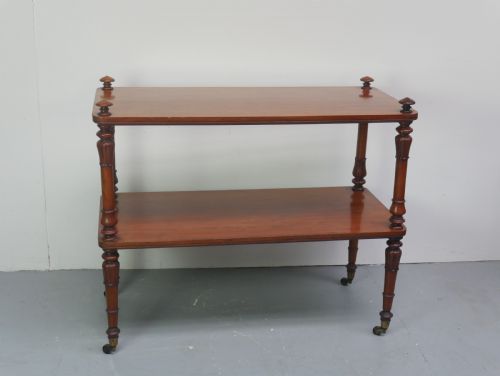
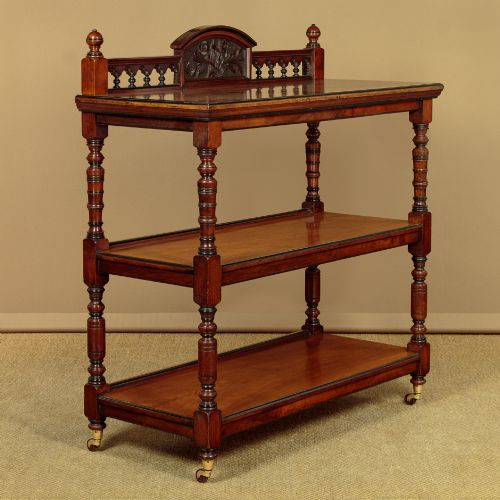
A carved wooden waiter sits ready to serve, bringing tiered mahogany, oak and walnut tiers into domestic daily life.
Carved Wooden Waiter
A carved wooden waiter encompasses tiered serving furniture, revolving lazy susans, and buffets designed for practical domestic service across dining rooms and parlours. These items emerge primarily from the nineteenth century, including Victorian and Edwardian periods, alongside Regency and William IV examples.
The forms span multi-tiered stands, revolving trays, and substantial serving tables, reflecting varied uses in nineteenth-century homes. Buyers encounter mahogany and oak pieces most frequently, alongside walnut, teak, and occasional inlaid or painted details.
Originating in diverse stylistic traditions such as English Country, Aesthetic Movement, and Anglo-Indian, these objects serve varied functions from holding food to displaying decorative items. Each piece demonstrates the craftsmanship of its specific era, balancing utility with distinct aesthetic character.
What varies in quality
The choice of primary timber sets the baseline for a piece, with dense grain and rich colour in mahogany or walnut distinguishing superior examples. Construction methods, particularly the smoothness of revolving mechanisms in lazy susans and dumb waiters, indicate the level of underlying craftsmanship.
Depth and precision in the woodcarving define the artistic merit of individual items, separating standard production from finely sculpted work. The integration of secondary elements like brass hardware or inlaid details further influences the overall refinement of the piece.
Listings feature periods spanning the nineteenth century, Victorian era, Edwardian period, and early twentieth century in mahogany, oak, and walnut.
Maple & Co
The Carved Wooden Waiter Glossary
- Dumb Waiter
- A tiered serving stand or table used to hold dishes and tableware without requiring servants at the table. These pieces often feature multiple rotating or fixed shelves.
- Lazy Susan
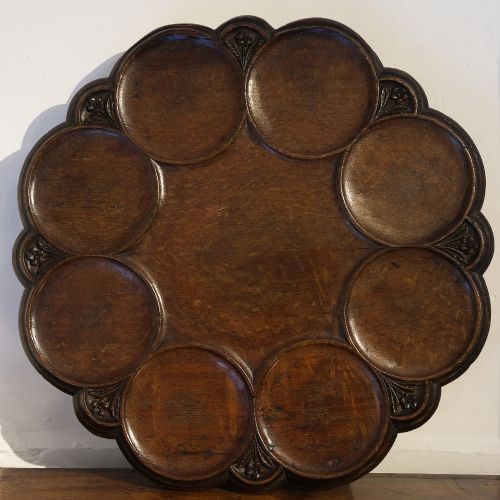
- A revolving tray or tabletop accessory designed to rotate food and condiments for easy sharing among diners. They appear in carved wood during the nineteenth century.
- Buffet
- A large piece of dining furniture used for serving food and storing tableware. Examples range from simple tiered stands to metamorphic serving tables.
- Aesthetic Movement
- A late nineteenth-century design style emphasising visual and compositional beauty over narrative content. Pieces from this movement often display refined walnut construction.
- Gesso
- A plaster-like material applied to wood surfaces as a base for painting or gilding. It appears on decorative accents within this category.
Carved Wooden Waiter: Frequently Asked Questions
What is a dumb waiter?
A dumb waiter is a multi-tiered stand used in dining rooms to hold food and service items. It allowed diners to help themselves without domestic staff present.
These pieces typically feature two or three graduating tiers supported by a central column or carved legs.
How do I use a lazy susan?
A lazy susan sits on a table or sideboard, rotating on a central pivot to bring dishes within reach of guests. They work well for communal dining and casual entertaining.
Turn the wooden tray gently to share condiments or dishes across the table without passing plates.
Where did these pieces sit?
These serving pieces stood in dining rooms, parlours, and hallways to hold tableware, food, or decorative objects. Tiered stands fit neatly into corners or alongside sideboards.
Their practical design suited both formal dining and daily household routines in nineteenth-century homes.
How do I date an oak waiter?
Dating relies on stylistic markers such as Victorian, Edwardian, or Regency design traits, alongside construction methods. Oak pieces from the nineteenth century often feature hand-carved details and traditional joinery.
Examine the timber finish, hardware materials, and tier configuration to determine the period of manufacture.