

Carved Wooden Urns
These carved wooden urns range from Neoclassical walnut vessels to decorative turned objects, offering sculptural presence for the home.
Carved Wooden Urns
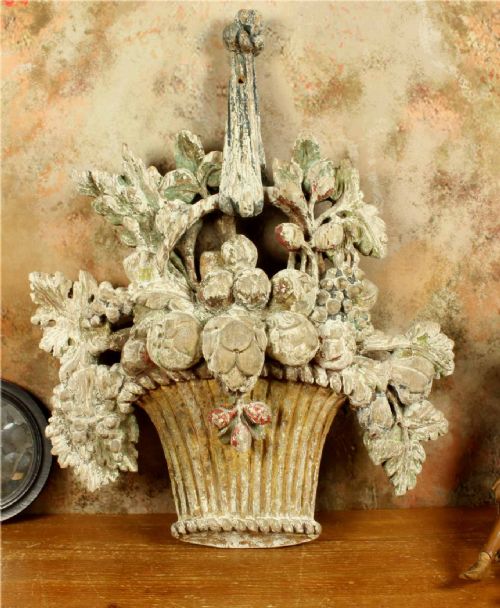
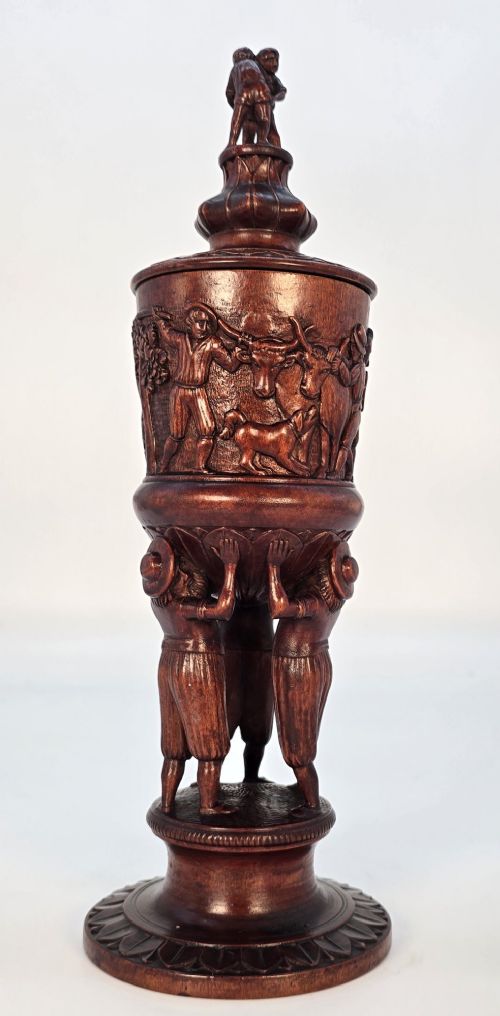
When you search for carved wooden urns, you encounter decorative vessels and related forms spanning the eighteenth century to the twentieth century. These objects include lidded chalices, floral reliefs, and sculptural vessels shaped from dense timbers, alongside broader decorative items.
The pieces appearing in this selection reflect various origins, including Italian Neoclassical workshops, Swiss carvers, and English country houses. Makers utilised traditional turning and carving techniques to produce objects that served both ornamental and functional roles in period interiors.
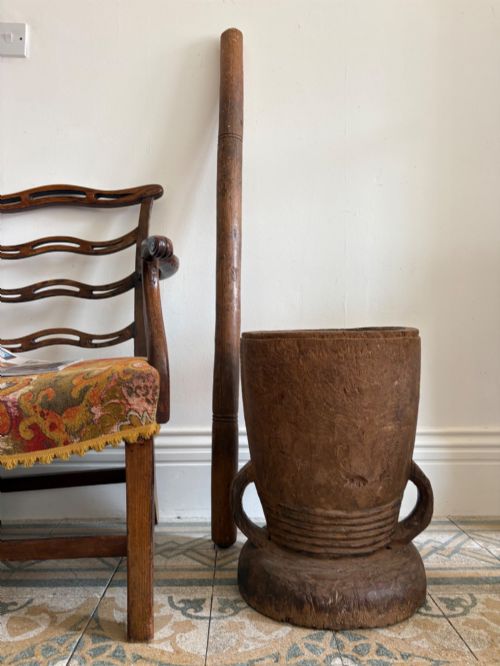
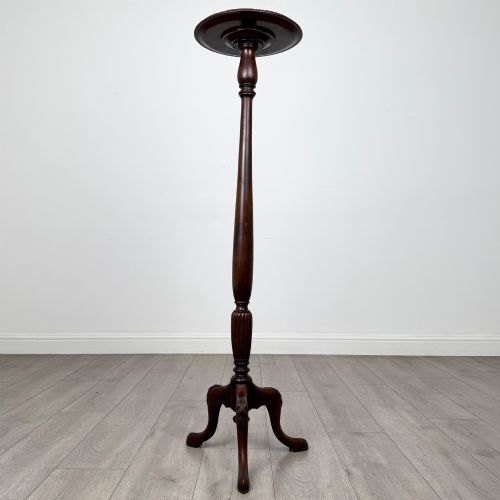
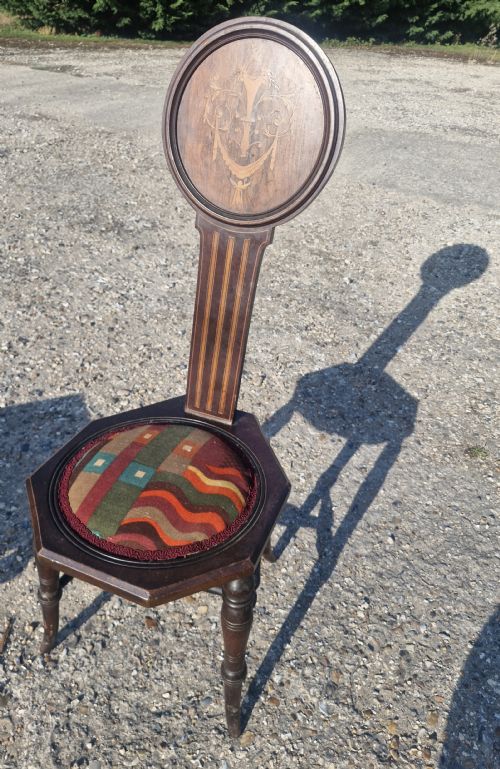
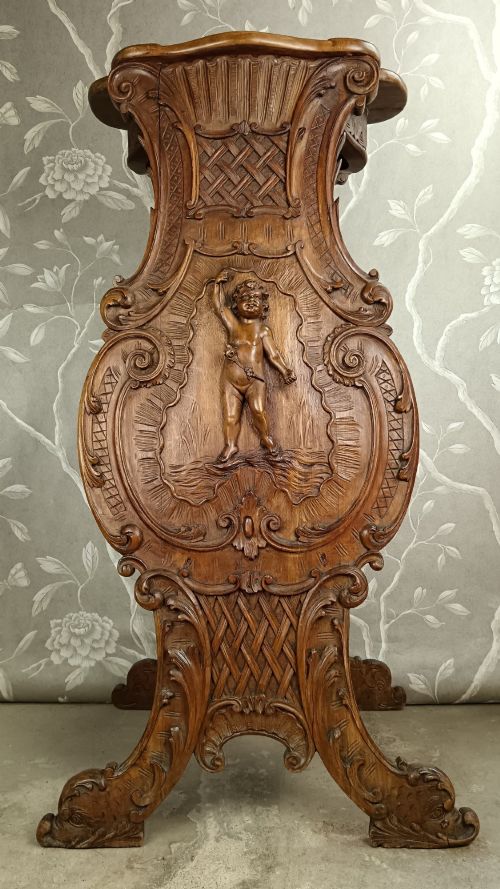
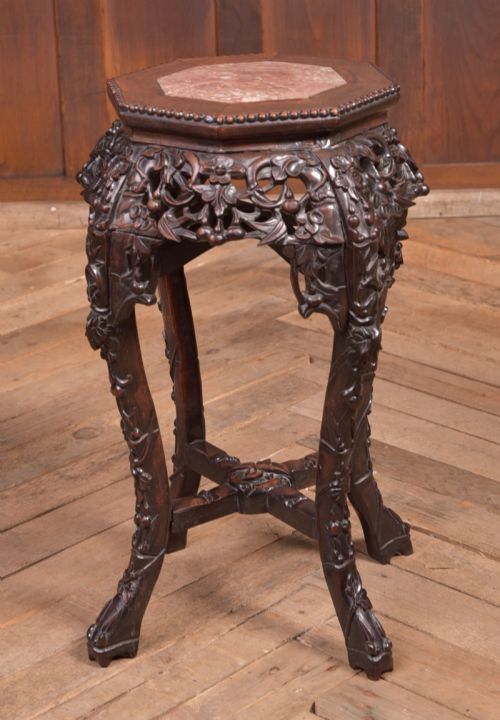
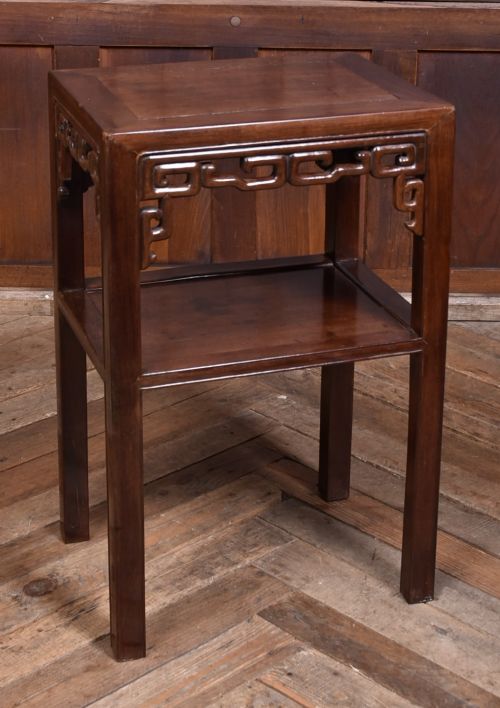
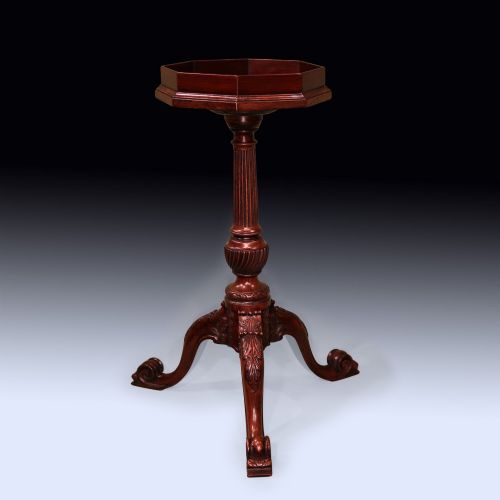
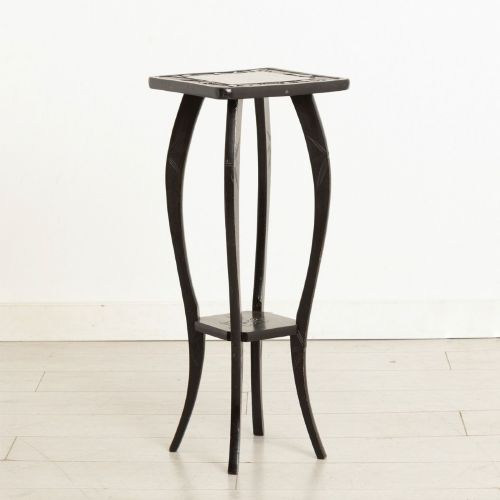
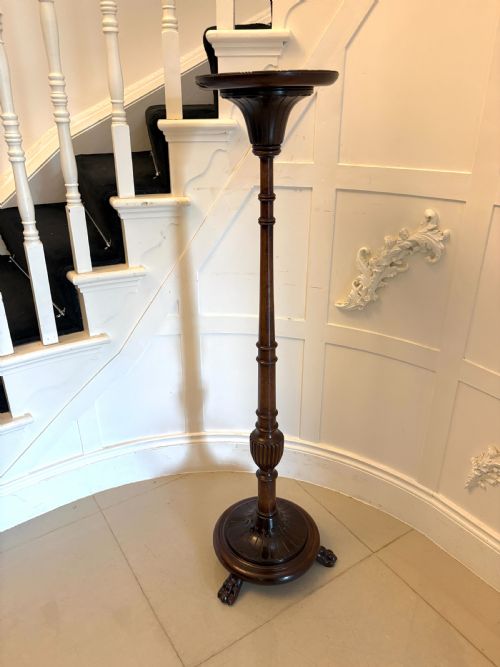
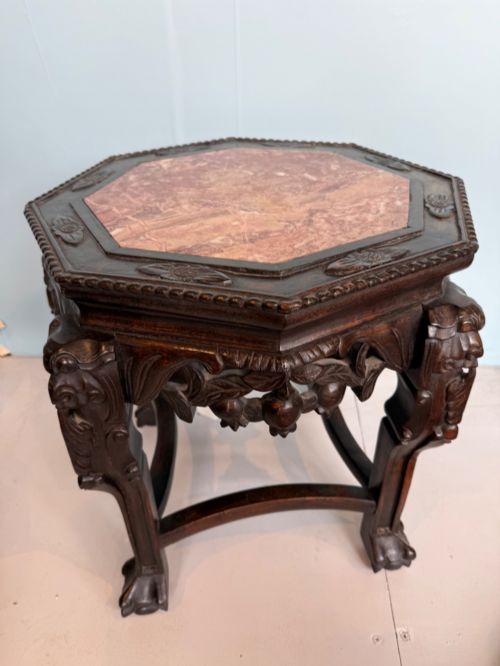
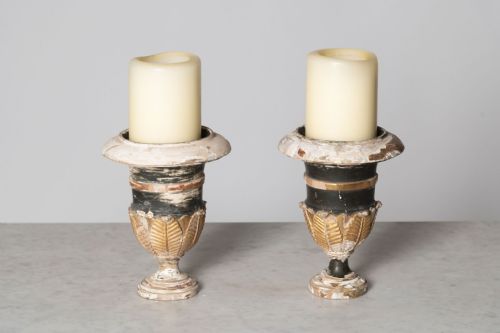
While the archive records sets and pairs of decorative urns, the wider selection encompasses related carved woodwork such as pedestals, torchieres, and stands that share the same sculptural vocabulary.
How they were made
Carved wooden urns rely on close-grained timbers such as walnut, fruitwood, and mahogany, chosen for their stability under intricate chisel work. Craftsmen shaped these woods using hand-held gouges and turning lathes to achieve smooth contours and sharp relief details.
Surface treatments vary according to the period and region, ranging from natural wax finishes that highlight the grain to gesso and giltwood layers applied for decorative emphasis. Continental examples often combine deep undercutting with polished surfaces, while English pieces demonstrate restrained carving following Georgian and Victorian design manuals.
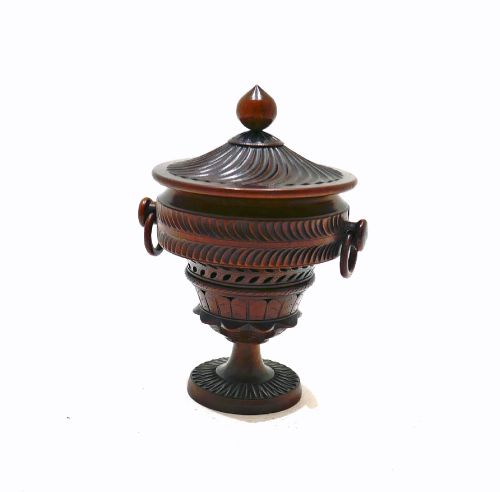
One historical lidded cup doubles as a pomander, designed to hold sweet-smelling spices and keep nineteenth-century rooms delightfully fragrant.
What varies in quality
The quality of carved wooden urns rests primarily on the crispness and depth of the hand-carved detail. Superior pieces exhibit confident undercutting and clean lines where the carver's tool has left decisive, well-defined passages without mechanical smoothing.
Material selection also dictates the standing of a piece, with dense, well-seasoned hardwoods holding finer geometric and organic motifs over centuries. The integrity of the timber, the subtlety of the proportions, and the preservation of original surface finishes separate standard workshop output from exceptional examples.
Liberty of London
The Carved Wooden Urns Glossary
- Neoclassical
- A style spanning the late eighteenth and early nineteenth centuries drawing on classical Greek and Roman motifs, frequently featuring urns, husks, and symmetrical foliage.
- Giltwood
- Timber, often gesso-coated, covered with thin gold leaf to create a brilliant decorative surface popular on decorative accessories and frames.
- Fruitwood
- Dense, fine-grained timber sourced from orchard trees like pear or apple, favoured by turners and carvers for small-scale decorative objects.
- Torchere
- A tall stand or pedestal originally designed to support a candle or light, frequently carved with reeded columns or tripod bases in Victorian interiors.
- Undercutting
- A carving technique where wood is removed beneath a motif to detach it partially from the background, creating high relief and dramatic shadow.
Carved Wooden Urns: Frequently Asked Questions
What were carved wooden urns used for?
These vessels primarily served as decorative mantel ornaments, architectural garnitures, or focal points on side tables in grand interiors. Their designs often echoed classical funerary urns or garden vessels, adapted purely for indoor display.
Over time, carvers and turners produced smaller lidded vessels that doubled as pomanders or covered cups. Their presence in a room signalled a refined taste for classical antiquity and fine joinery.
How do I date a carved wooden urn?
Dating relies on identifying the timber species, the style of the carving, and the construction methods visible on the underside or interior. Eighteenth-century pieces frequently employ walnut or mahogany with hand-turned bases, while Victorian and later examples often incorporate machine assistance or denser ebonised finishes.
Comparing the decorative motifs against known periods, such as Neoclassical swags or Victorian gadrooning, helps narrow the decade of production. Tool marks left by the carver also provide physical evidence of the period's manufacturing techniques.
How should I care for carved wooden urns?
Preserving these objects requires stable indoor humidity and protection from direct sunlight, which can dry out ancient timber and cause splitting. Dusting gently with a soft, dry brush prevents particulate accumulation in deep carved crevices without abrading the surface.
Applying a microcrystalline wax sparingly once or twice a year helps maintain the lustre of the wood and gesso finishes. Avoid liquid polishes or silicone sprays, as these can penetrate porous grain and attract dust.
Are these urns solid wood or veneer?
The majority of carved wooden urns and related sculptural vessels are turned and carved from solid blocks of hardwood or fruitwood. Solid timber was necessary to accommodate the deep relief work and sculptural turning characteristic of these decorative objects.
Certain larger associated furniture forms like stands and tabletops may employ veneered surfaces over secondary timbers, but primary carved vessels are typically monoxylous or assembled from solid turned sections.