

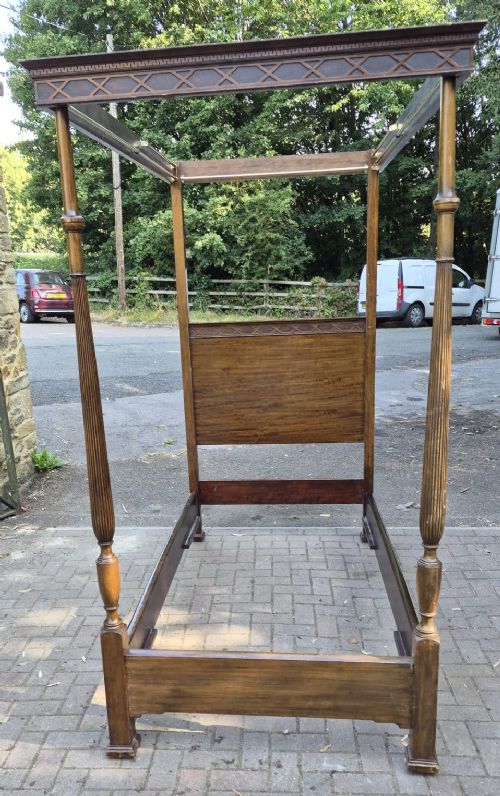
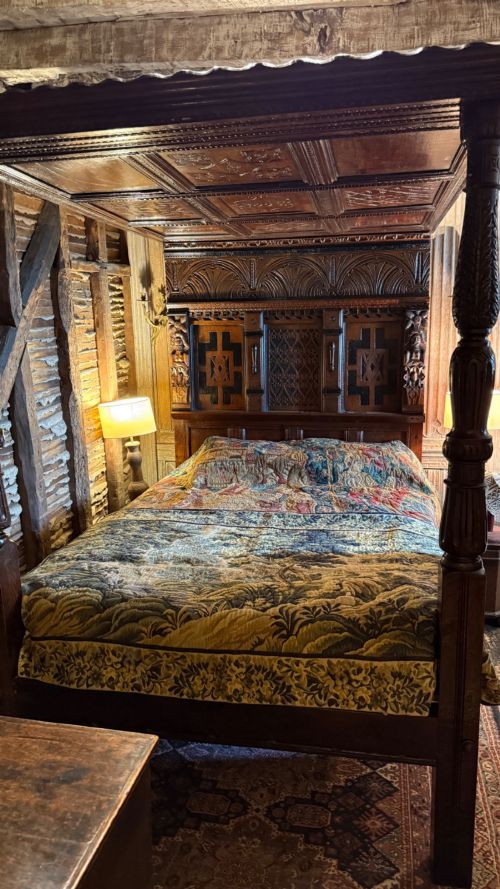


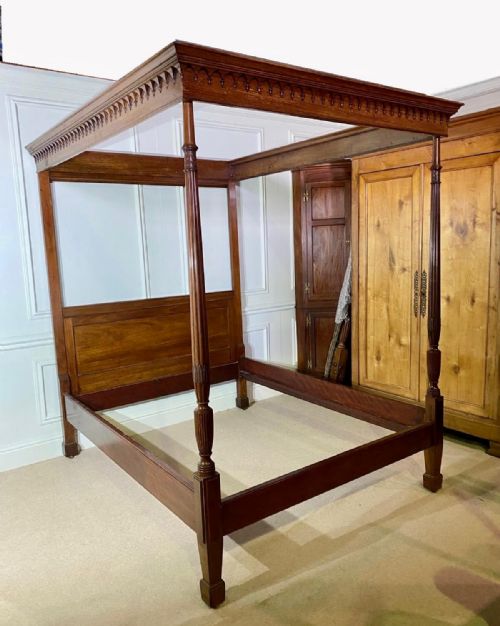


Carved Wooden Tester Bed
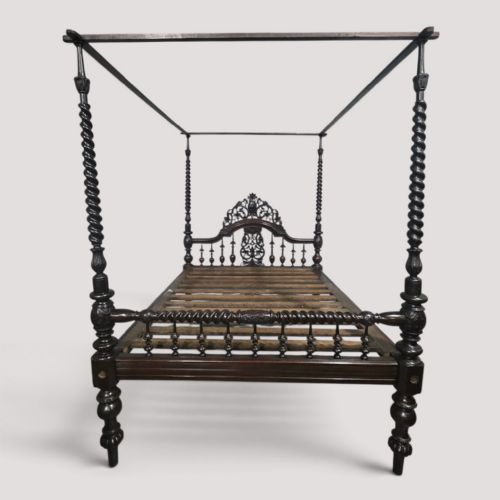
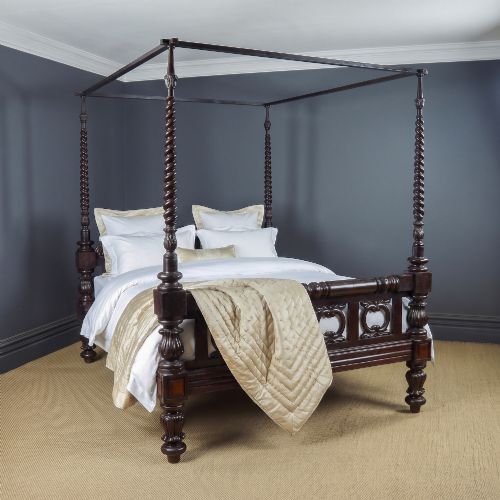
A carved wooden tester bed brings substantial architectural presence and historic craftsmanship directly into a bedroom.

Carved Wooden Tester Bed
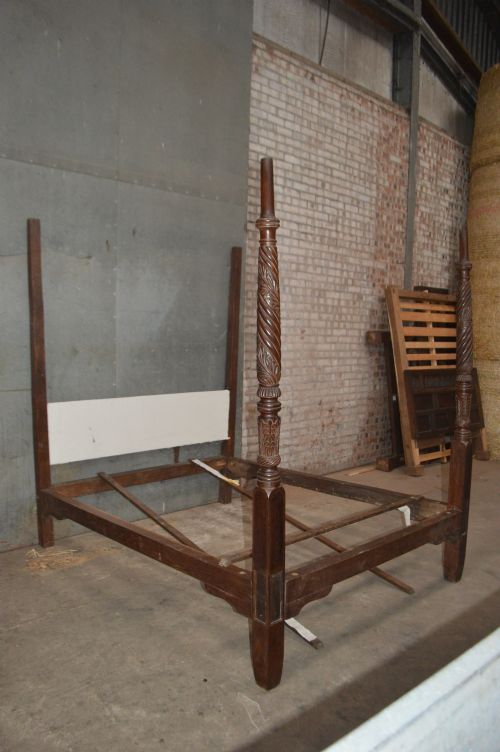
A carved wooden tester bed is a substantial framework featuring upright posts and an overhead canopy, historically designed to retain warmth and provide privacy with heavy hangings. The pieces listed under this phrase span from seventeenth-century oak examples to nineteenth-century mahogany, walnut, and painted versions.
Buyers encounter various formats including full tester beds, half tester beds, and bed canopies from periods such as the seventeenth century, Victorian era, and Regency period. Woods such as oak, mahogany, burr walnut, and teak appear frequently across the listings alongside styles like Jacobean, Anglo-Indian Colonial, and Georgian Revival.
The seventeenth-century examples typically employ heavy English oak with deep relief carving and simple geometric panels, whereas the nineteenth-century interpretations favour refined mahogany or exotic hardwoods influenced by colonial designs. Selecting a specific period version dictates the scale of the posts and the complexity of the overhead canopy structure.
How they were made
Cabinetmakers constructed these beds using solid timbers such as oak, mahogany, and pine, employing traditional joinery like mortise and tenon joints to support the heavy overhead testers. Many seventeenth-century variants incorporate fruitwood inlay or applied mouldings, while nineteenth-century makers utilised dense hardwoods like teak and mahogany to turn massive structural posts.
Carving was executed entirely by hand using gouges and chisels to create deep relief patterns along the headboards, friezes, and corner posts. Surface finishes range from traditional wax applied to raw oak and mahogany to painted treatments on Regency examples and specialised textile linings inside the tester canopies.
Carved Wooden Tester Bed Retail Price Guide 2026
Typical asking prices for carved wooden tester bed among the pieces listed under this phrase on Sellingantiques today, from the lower quarter to the upper quarter. They describe what is for sale here now, not the wider market.
Several beds incorporate fruitwood inlay, offering hidden botanical details carved centuries ago by makers working by candlelight.
What varies in quality
Quality in a carved wooden tester bed rests on the crispness and depth of the hand-carved ornamentation across the posts and headboards. Pieces featuring sharp, deeply undercut relief work from the seventeenth century or finely turned reeded columns from the Regency period stand apart from plainer or later revival iterations.
The choice of primary timber significantly dictates the grade of the piece, with dense figured mahogany, burr walnut, and well-patinated early oak commanding greater respect than secondary woods like pine. Structural integrity also depends on whether the original proportions and joinery remain unaltered by later alterations or extensions.
Howard and Sons
The Carved Wooden Tester Bed Glossary
- Half tester
- A wall-mounted or post-supported canopy that covers only the head portion of the bed rather than the entire frame. This configuration became popular during the nineteenth century.
- Jacobean
- An English architectural and decorative style spanning the early seventeenth century, characterised by heavy rectilinear forms and geometric panel carving.
- Anglo-Indian Colonial
- Furniture produced in India by local craftsmen for British residents during the nineteenth century, typically combining British forms with exotic hardwoods and intricate local carving traditions.
- Frieze
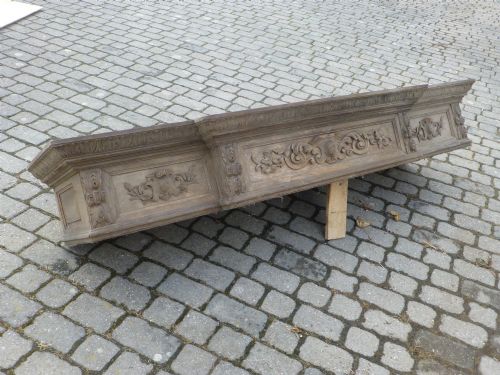
- The wide horizontal band of woodwork situated immediately below the cornice of the tester, frequently carved with floral or scroll motifs.
Carved Wooden Tester Bed: Frequently Asked Questions
How do I fit a modern mattress?
Many antique frames require custom mattress dimensions or discreet internal slat adjustments to accommodate standard modern sizes safely. A professional restorer can modify the interior rails without altering the external historic appearance of the posts.
Measuring the internal width and length precisely before purchase ensures compatibility with contemporary bases. Some larger nineteenth-century frameworks naturally accommodate king or superking sizes with minimal adjustment.
Can I install fabric hangings?
Original testers feature small holes, iron hooks, or wooden pegs designed specifically to secure drapery rings and fabric valances. Suspending textiles transforms the acoustic and visual presence of the bed within a room.
Selecting appropriate period-correct fabrics helps maintain the historical context of the timber framework. Modern fire-retardant linings should be used when hanging textiles near historical wooden structures.
How do I maintain the wood?
Routine maintenance involves dusting with a soft, dry cloth and applying occasional applications of high-grade beeswax to nourish the antique timber. Avoiding direct sunlight and stable humidity levels prevents the oak or mahogany from splitting.
Harsh chemical polishes strip the historic patina that develops over centuries of handling. Gentle care preserves the original surface texture of the hand-carved details.
How do I date an oak tester?
Dating relies on examining the tool marks, construction joints, and decorative motifs characteristic of periods like the seventeenth century. Pegged mortise and tenon joints without modern metal screws typically indicate earlier craftsmanship.
Comparing the carving style against documented examples from the same era confirms the period. Secondary woods used in internal framing also provide clues to the approximate decade of manufacture.